
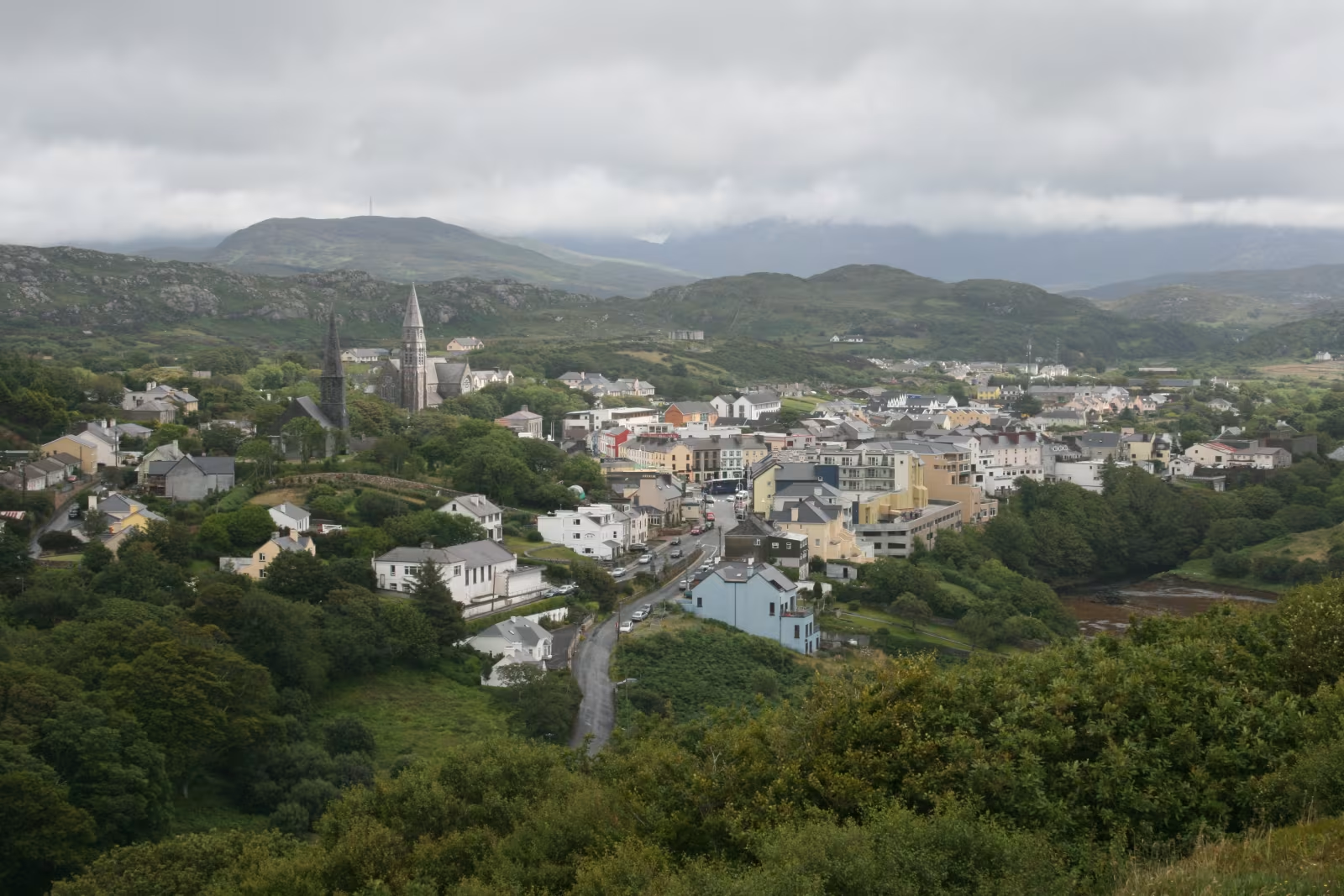
Nobody tells you how much smaller Clifden feels than you expect. After an hour and a bit driving west from Galway, through bog and granite and the occasional very committed sheep, you pull into the market town at the head of a bay and realise that the so-called capital of Connemara fits neatly around one main street and a square. That's fine. Clifden doesn't need to be big. It just needs to be itself, and at that it is deadly.
The Sky Road
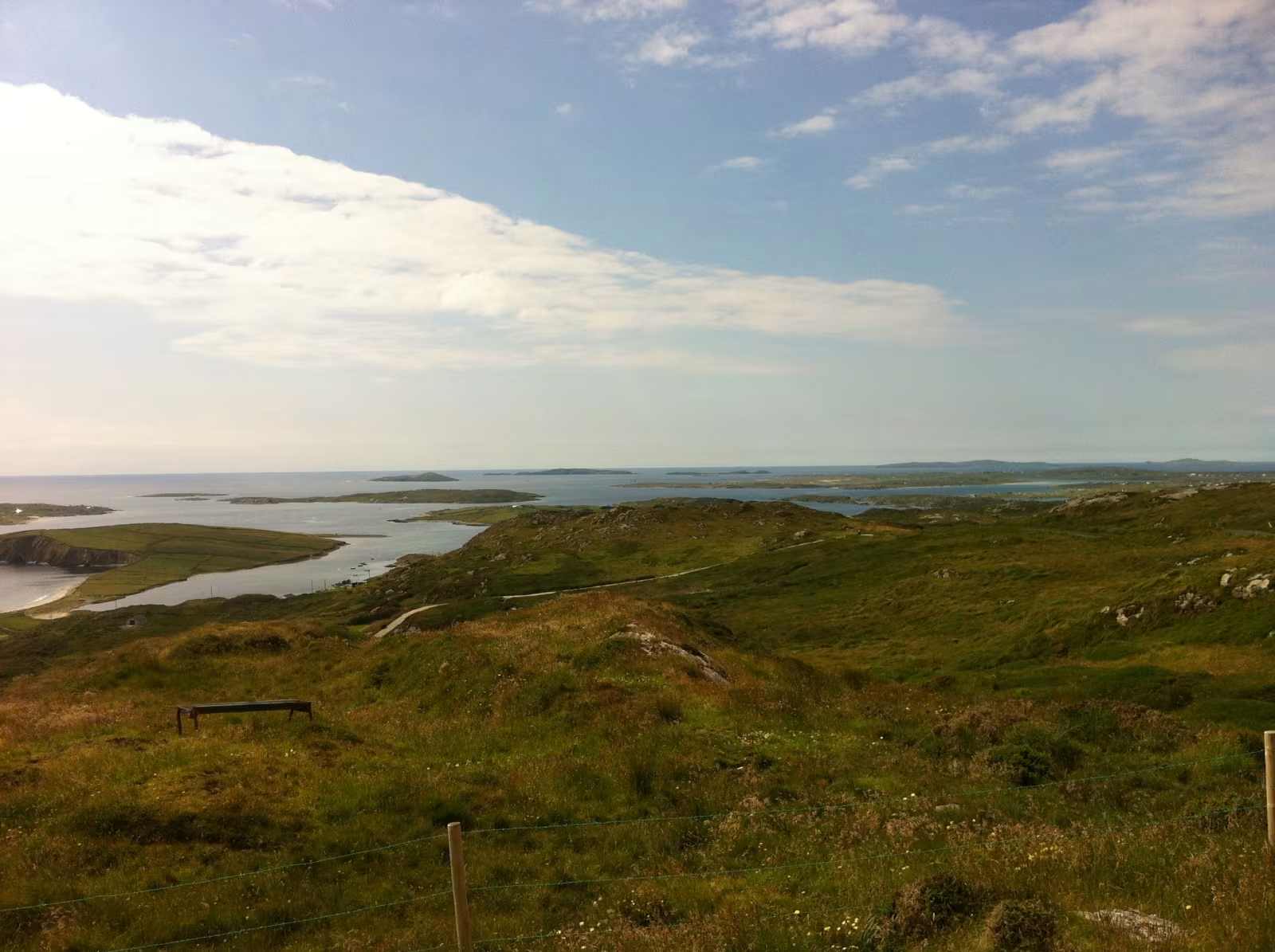
Drive to the western edge of town, follow the signs, and you're on it: a narrow, winding coastal road that climbs steadily above Clifden Bay until the Atlantic opens out beneath you and you're reminded, somewhat firmly, that there's nothing between you and Newfoundland. The full outer loop is roughly 12 kilometres, takes about an hour if you're stopping at the viewpoints (you will be, don't pretend otherwise), and throws up a new angle on the sea every few minutes. Do it clockwise. The viewpoints are better with the bay on your left as you climb, and you'll want to be on the inside of the road on the way down rather than on the outside looking at open air where your wing mirror should be.
The spot most people photograph is the high point above Clifden Bay, where on a clear day you can see a scattering of Atlantic islands laid out below you. On a less clear day (which is entirely possible, because this is County Galway in any month you care to name) you get low cloud and a different kind of atmosphere altogether. The consolation prize for bad weather on the Sky Road is actually decent. Bring a rain jacket regardless. The views will be worth stopping for either way, and you'll have your phone out within five minutes, fierce predictable of you.
Clifden itself
The town was founded in 1812 by John D'Arcy, an Anglo-Irish landlord who built a planned market town on what was essentially bog and granite and decided Connemara needed a capital. D'Arcy went bankrupt in the 1830s, which turned out to be a fairly common outcome for Anglo-Irish landlords who took on Connemara as a project. His castle, about two kilometres west of town on the Sky Road approach, is now a picturesque ruin you can walk out to in twenty minutes. It's worth the detour, particularly if the sky is doing something interesting and you want something to put in the foreground of a photograph.
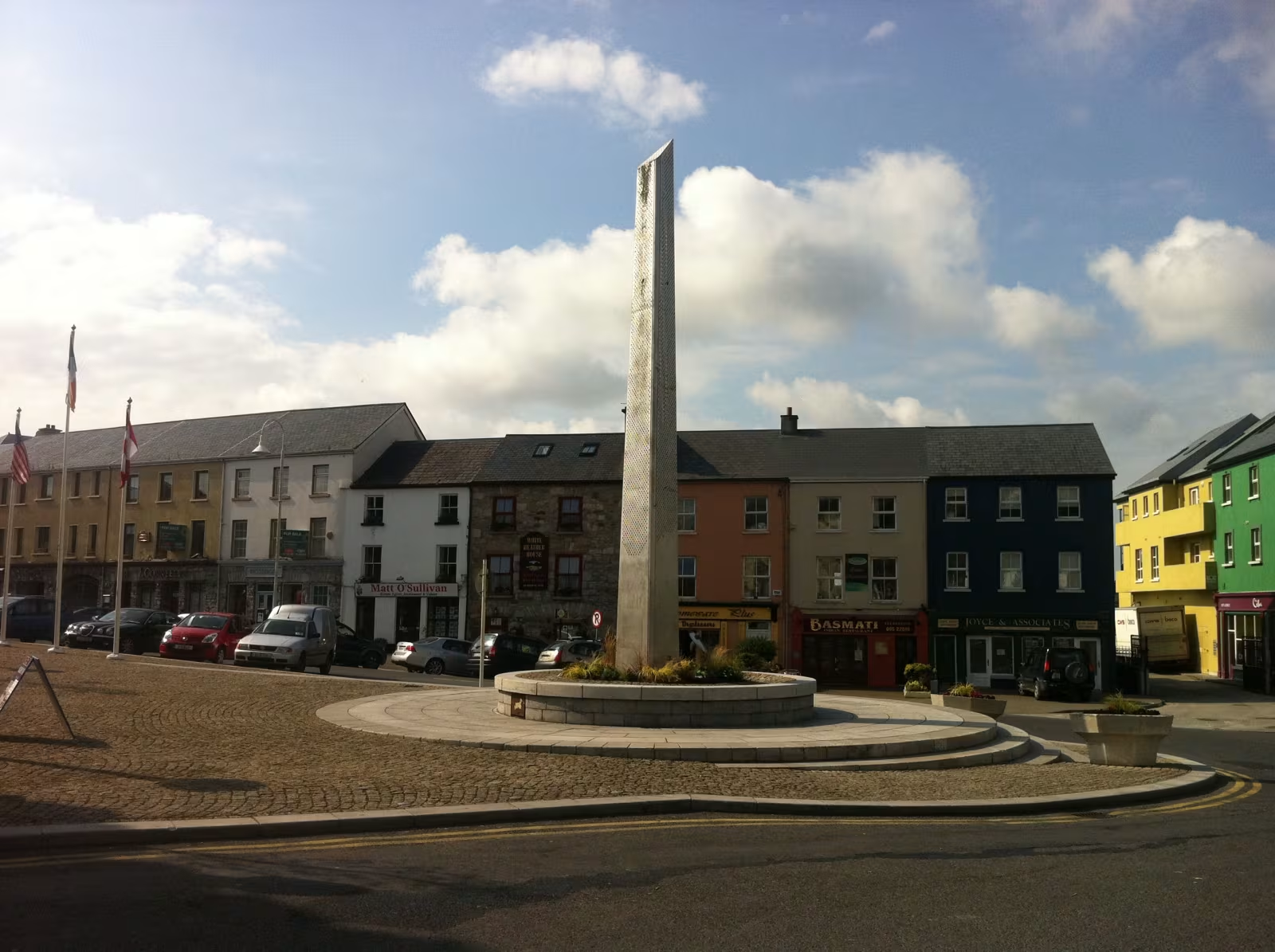
The square and Main Street are where most of the action is. There are a handful of pubs and restaurants doing fresh Atlantic seafood, a butcher's that's been there longer than anyone can remember, and a summer market that fills the square at weekends. Mannion's on Market Street is the pub for a pint and trad music without feeling like you've walked into a stage set. For food, there's enough in Clifden for a long, decent lunch. If you need a more serious meal, Galway's food scene is an hour's drive back east.
The Alcock and Brown landing site
About eight kilometres south of Clifden, in the middle of Derrygimlagh Bog, is where two men crash-landed a biplane in June 1919 and changed aviation history. John Alcock and Arthur Whitten Brown had just completed the first nonstop transatlantic flight, roughly 3,000 kilometres from St John's in Newfoundland, in a Vickers Vimy biplane, in sixteen hours and twenty-seven minutes. They thought they'd spotted a solid green field to land in. It was a bog. The aircraft nosed over into the peat. Both men walked away unhurt. Fair play to them.
There's a cairn memorial at the landing site and a three-kilometre looped walking trail around Derrygimlagh that also takes in the remains of the Marconi wireless station, which operated here from 1907 until it was burned in 1922. The bog walk is an easy hour, completely flat, and the combination of aircraft history and ruined stone buildings in the middle of nowhere is quietly excellent. You'll have it almost to yourselves on a weekday morning, and the bog itself is something to look at properly rather than drive past.
Dog's Bay and the beaches
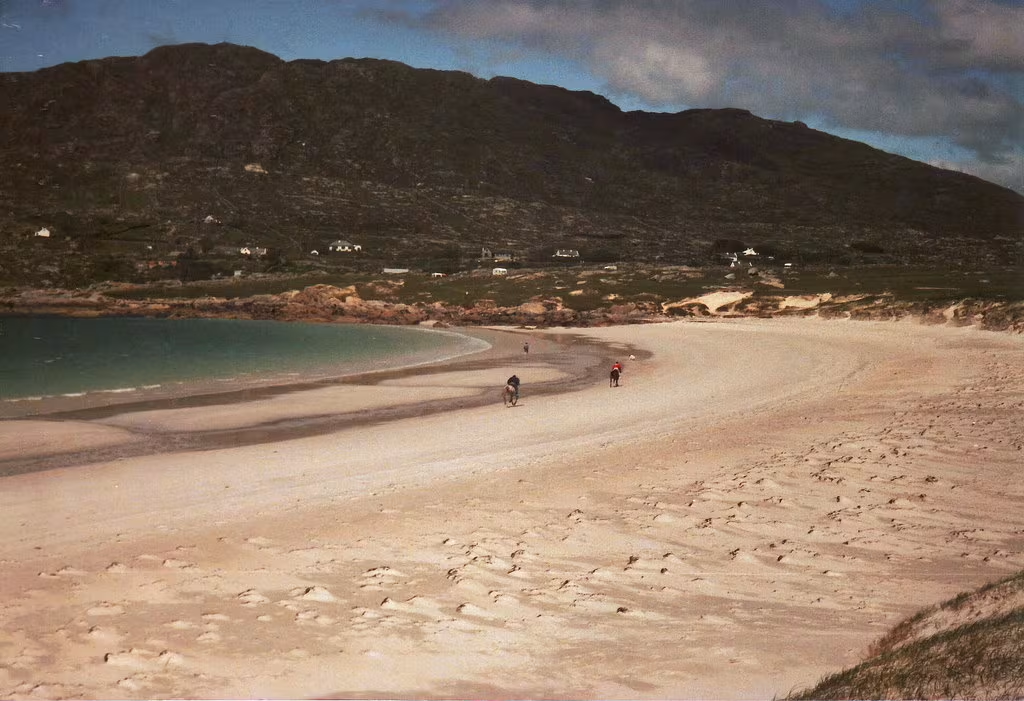
Twenty kilometres south of Clifden, just past Roundstone, Dog's Bay is one of the stranger beaches in Ireland in the best possible way. The sand is white and fine but it's not quartz sand. It's made almost entirely of tiny broken shell fragments, which gives it an unusual texture and an almost tropical colour when the sun's out. The bay forms a double horseshoe shape, two arcs of beach separated by a low headland, facing south and sheltered enough that swimming is manageable. Manageable meaning cold but tolerable, not warm, because this is the Atlantic and let's not overclaim.
The Connemara Pony Show
Every August, Clifden hosts the Connemara Pony Show. The Connemara pony is the only native Irish horse breed, a compact, hardy animal that managed to survive the landscape here for centuries without making too much of a fuss about it, which puts it ahead of most. The show runs for two days and draws entries from across Ireland and abroad. The craic is good, the judges take it extremely seriously, and there's something genuinely infectious about a crowd of people being very invested in whether one grey Connemara pony is more correctly built than another. Galway has plenty of festivals running through the summer, but the Pony Show is the one where Clifden is properly the centre of things.
Getting there and how long you need
Clifden is about 75 kilometres west of Galway city, roughly an hour and fifteen minutes by car on the N59. There's no rail or practical bus connection for a day trip, so you'll need a car. If you're based in Galway and want to include Clifden in a broader Connemara loop, the Connemara day trip guide covers the full route from Galway through Kylemore Abbey and back via Clifden. You can extend that into a full day by adding the Sky Road, Derrygimlagh and a stop at Dog's Bay, but you'll need an early start.
If you can stay overnight, do. The town changes character after the day-trippers leave, and an evening here in summer is a different thing entirely. For places to stay, accommodation options in the area range from B&Bs with sea views to guesthouses right in the town. Book early for July and August, and especially for Pony Show week.
How long does the Sky Road take to drive?
The full outer loop of the Sky Road is roughly 12 kilometres and takes about 45 minutes to an hour with stops at the viewpoints, which are the whole point. The road is narrow in places and requires patience if you meet a campervan coming the other way. Allow more time than you think you need and you'll enjoy it properly.
Is there parking in Clifden?
Yes, and it's free. There's parking on the square and along the main street. In high summer it fills up by midday at weekends, so arriving before noon or after four makes things significantly easier. For the Sky Road itself, there are small pull-off points at the main viewpoints where you can stop safely.
Can you walk to Clifden Castle?
Yes. The castle is about two kilometres from the town centre on the road towards the Sky Road. You can walk from town in roughly twenty minutes each way, or drive out and park near the start of the trail. There's no entrance fee and no guided tour. It's an atmospheric ruin and a pleasant walk, particularly in the morning before the day warms up.
Is Dog's Bay suitable for swimming?
Yes, in calm conditions. It's an Atlantic beach, so the water is cold rather than warm, even in August. The bay faces south and is sheltered from north winds, which makes it more comfortable than many west coast beaches on a breezy day. There are no lifeguards, so check conditions before getting in.
When is the Connemara Pony Show in Clifden?
The Connemara Pony Show is held each year in Clifden in August, typically running over a Thursday and Friday. The exact dates shift slightly from year to year, so check the Connemara Pony Breeders Society website for the confirmed schedule before you go. The showgrounds are a short walk from the town centre.