
Trinity College Dublin and the Book of Kells is one of those Dublin experiences that sounds like a school tour but turns out to be genuinely brilliant. Even people who grew up here and avoided it for years come away quietly impressed. Fair play to the monks, honestly.
Trinity sits right in the centre of the city, on College Green, and it's been there in one form or another since 1592 when Queen Elizabeth I founded it. The campus itself is a kind of pocket universe, a few minutes' walk from the Luas and the buses, and yet once you pass through the front arch the noise and the traffic seem to drop away. You're still in Dublin, but Dublin with better grass.
Most people come for two things: the Book of Kells and the Long Room. They're housed together in the Old Library, and the combination is worth every cent of the admission. If you're visiting Dublin and skipping it to save time, you're doing yourself out of something genuinely special.
The Book of Kells: What It Actually Is
The Book of Kells is an illuminated manuscript of the four Gospels, created around 800 AD by Celtic monks, most likely on the island of Iona off the west coast of Scotland. It's 340 folios of vellum, which is calfskin, bound across four volumes. Two of the four are on display at any one time, one opened to show the ornamentation, the other to show the text.
After Viking raids began hammering Iona in the late 8th and early 9th centuries, the monks moved their work to Kells monastery in County Meath, which is where the manuscript gets its name. It arrived at Trinity College sometime in the 1660s, and it's been there ever since.
Up close, it's one of those objects that makes you feel a bit strange. You're looking at individual brushstrokes made by someone over twelve hundred years ago, working by candlelight on an island. The carpet pages are full-page designs of interlocking knotwork and spirals so tight and precise they look like they were printed, not drawn by hand. The colours are still vivid, blues and reds and greens that have no business looking that good after twelve centuries. It's gas, in the best possible way.
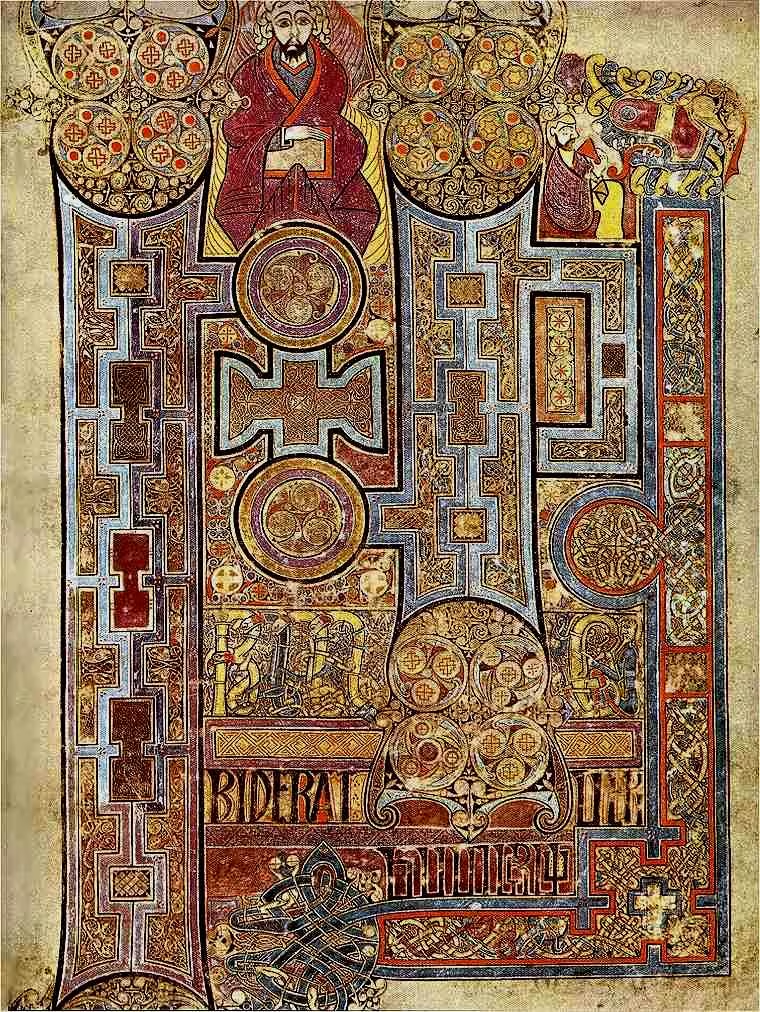
The exhibition space leading up to the manuscript is well done too. It gives you the historical and religious context without being dry about it, and it means you're not just standing over a glass case going "right, old book." By the time you reach the manuscript itself, you actually care about what you're looking at.
The Long Room
If the Book of Kells is the headliner, the Long Room is the act that nearly steals the show. Built between 1712 and 1732, it's a barrel-vaulted cathedral of a library, 65 metres from end to end, lined floor to ceiling with approximately 200,000 of the college's oldest books. The barrel-vaulted ceiling you see today wasn't original. It was added in the mid-19th century when the library needed extra height for an upper gallery. They got that right.
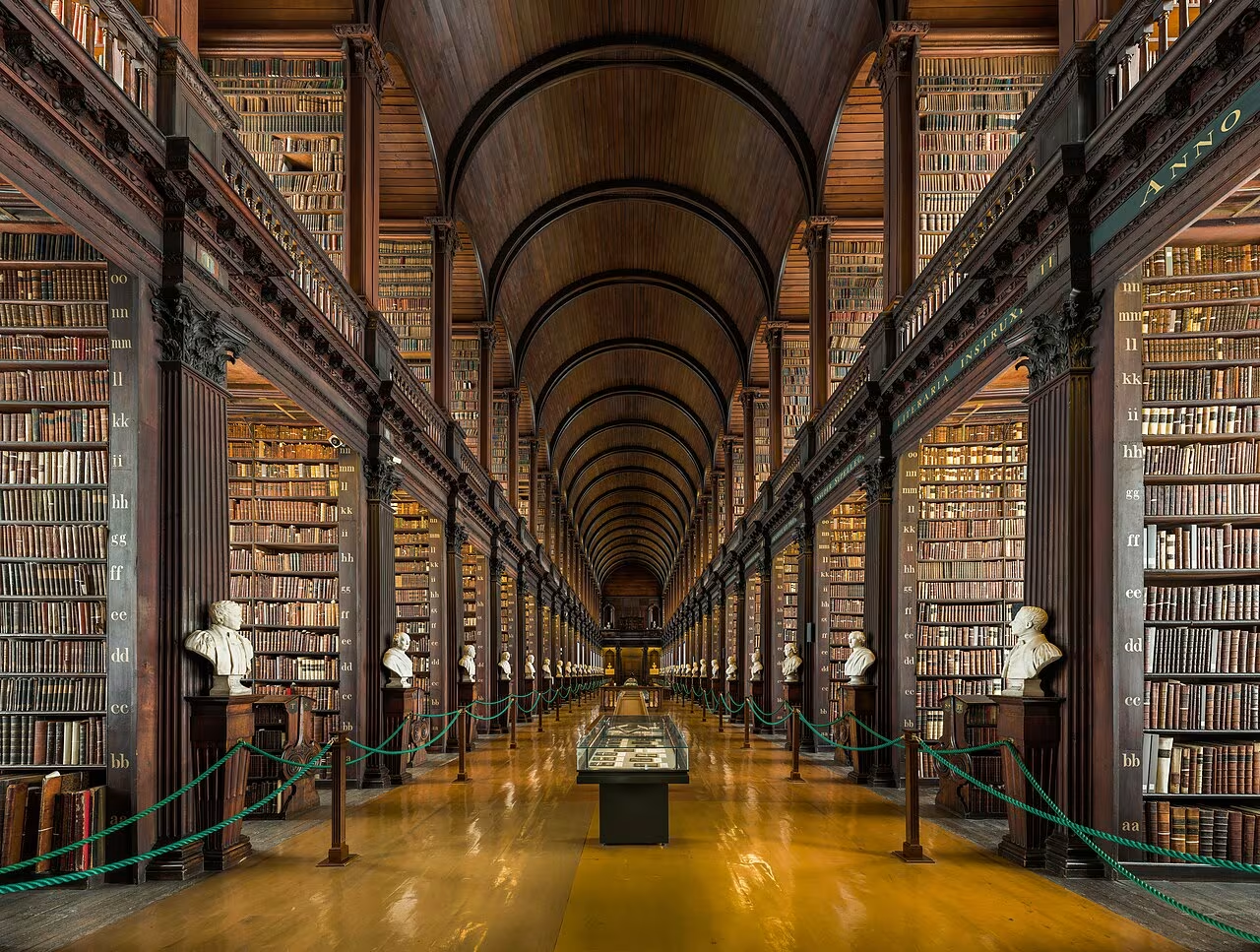
You may have a vague sense you've seen this room before, and there's a reason for that. The Long Room was a major visual reference for the Jedi Archives in Star Wars. Whether that adds or detracts from the experience probably depends on how old you were when you first saw Episode II, but it's a bit of craic knowing it when you're standing there.
Running along the length of the room is a series of marble busts of philosophers, writers, and thinkers: Homer, Plato, Aristotle, Swift. They were added in the 18th century and they do the job. The room already has plenty of presence on its own.
Also in the Long Room: Brian Boru's Harp, the oldest surviving Irish harp, dating to the 14th or 15th century. The name is a historical myth. Brian Boru died in 1014, and the harp was made hundreds of years after his time. But the association stuck, and it's now the model for the Irish national symbols you'll see on euro coins and passports. It's a small object, surprisingly so, but it has a quiet kind of weight to it.
Front Square, the Campanile, and the Grounds
Here's something a lot of visitors miss: you don't need a ticket to walk the Trinity campus. The grounds are free and open to the public, which makes them worth a wander even if you've already done the Old Library or you're coming back on another day.
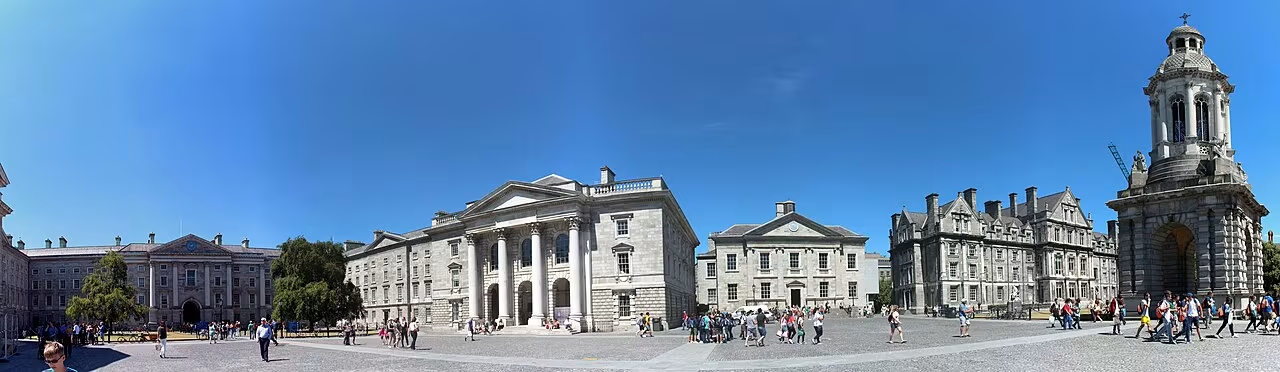
Front Square is the main cobbled courtyard you enter through the front arch, and the Campanile, the tall bell tower in the centre, was built in 1853. There's a college tradition that if you're standing under the Campanile when the bell rings, you'll fail your exams. Students give it a wide berth during exam season, which is either a bit of harmless superstition or very sensible risk management, depending on your outlook.
Beyond Front Square there's New Square, the Science Gallery, and several quieter courtyards worth finding if you're not in a rush. The college also has a rugby pitch and a cricket ground tucked away further back, which is where the campus starts to feel genuinely enormous for a place sitting in the middle of the city centre.
Dublin is well worth a few days, and Trinity slots in neatly with other central stops. If you're planning your time, you might also enjoy reading about Phoenix Park, which is a completely different pace but equally worth a proper visit. And for something that hits harder historically, Kilmainham Gaol is one of those places that stays with you.
Practical Bits: Tickets, Timing, and Getting There
Admission to the Book of Kells and Long Room is around €18 for adults in 2026. Students and under-18s get a discount, and under-12s are free. Book in advance through the Trinity College visitors website. You don't strictly need to book on quieter days in winter, but in summer, especially July and August, it fills up and you'll be waiting around if you haven't sorted it beforehand. The calmest time to visit is a weekday morning, before about 11am.
For getting there: the DART to Tara Street or Pearse Street puts you about a five-minute walk away. Plenty of bus routes stop on College Green or Nassau Street, right outside the front gate. There's genuinely no need to drive in, and parking near Trinity is the kind of stress nobody needs.
Photography is allowed in the Long Room and on the campus grounds, but not in the Book of Kells exhibition itself. The no-photos rule around the manuscript is enforced and worth respecting, not just because they'll ask you to stop, but because the space is better without everyone's phone in the way.
Allow at least 90 minutes for the Old Library visit at a comfortable pace. The Old Library shop at the exit sells decent prints of the manuscript pages if you want something to take home. For a sit-down lunch nearby, the Arts Building cafe is a sound option. If you're building a full day of Dublin history, combining Trinity with Kilmainham Gaol works well. For getting around the city without a car, the guide to Dublin day trips covers the buses and DART well. And when you're done and ready for a pint, the pub guide beyond Temple Bar will steer you somewhere worth the walk.
Do I need to book the Book of Kells in advance?
In summer (June to August) and around public holidays, booking in advance is strongly recommended. Timed entry slots do fill up, and walk-up tickets may not be available during busy periods. In spring and autumn, same-day booking is often possible, but advance booking is still the safer option. Book through the Trinity College visitors website.
How much does it cost to see the Book of Kells?
Adult admission to the Book of Kells exhibition and Long Room combined is approximately €18 in 2026. Students and visitors under 18 pay a reduced rate. Children under 12 are admitted free. Check the Trinity College website for current prices before visiting, as they can change year to year.
How long does it take to see the Book of Kells and Long Room?
Most visitors spend between 60 and 90 minutes covering both the Book of Kells exhibition and the Long Room. If you want to read the panels and spend time in the Long Room, allow closer to two hours. The campus grounds outside can add more time if you choose to explore them afterwards.
Is the Book of Kells on display at Trinity College the original manuscript?
Yes. The manuscript on display is the original Book of Kells, not a reproduction. It has been at Trinity College since the 1660s, having spent centuries before that at Kells monastery in County Meath. Two of the four volumes are on display at any one time. The other two are preserved in archival conditions.
What is the Long Room at Trinity College Dublin?
The Long Room is the main chamber of Trinity College's Old Library, built between 1712 and 1732. It is 65 metres long and houses approximately 200,000 of the college's oldest volumes. The barrel-vaulted ceiling was added in the mid-19th century to accommodate an upper gallery. The room also contains marble busts of scholars and thinkers, and Brian Boru's Harp, the oldest surviving Irish harp, dating to the 14th or 15th century.
Can I visit Trinity College Dublin for free?
The campus grounds, including Front Square, the Campanile, New Square, and the Science Gallery, are free to enter and open to the public. There is no charge to walk around the college. The Old Library, which includes the Book of Kells exhibition and the Long Room, requires a paid ticket.