If you've never stood two metres from a giraffe with nothing between you and had it regard you with the mild authority of something that knows it's the tallest thing in the field, Fota Wildlife Park is going to sort that out. It's on Fota Island in Cork Harbour, fifteen kilometres east of the city, and it works on a different principle from a conventional zoo. Most of the animals wander the grounds freely alongside you. The giraffes are not behind a fence. The ring-tailed lemurs are not behind a fence. Your man who shows up expecting tidy enclosures to file past is in for a different kind of afternoon.
Getting there
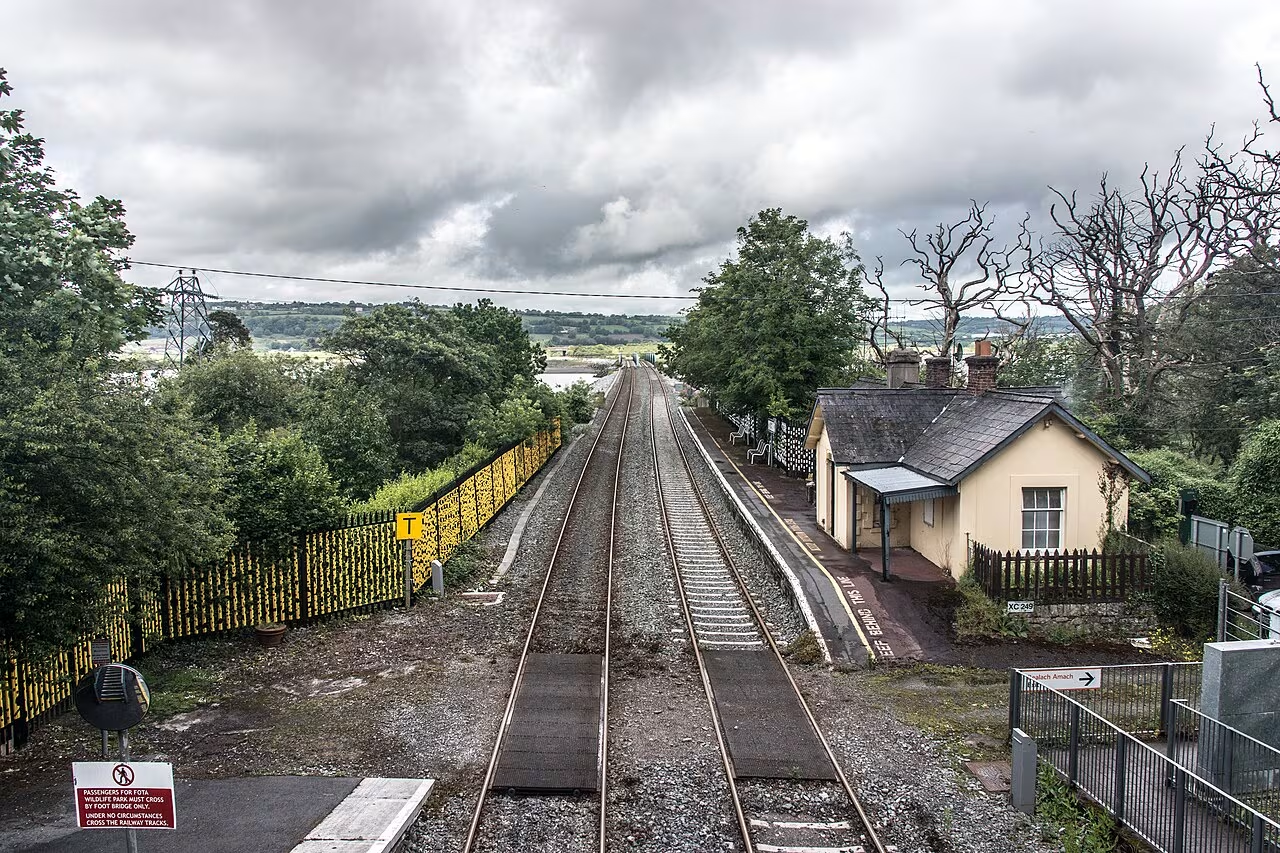
The train is the right call. Cork Kent Station to Fota is twelve minutes on the Cork to Cobh commuter line and Fota station is a two-minute walk from the park entrance. Trains run roughly every half-hour in the morning, less often in the afternoon, and fewer on Sundays. Return ticket is around eight euros. It's honest value, and it means you're not circling a car park on a busy August Saturday while everyone else does the same.
If you're driving, take the N25 east from Cork and follow the signs for Fota Island. Parking is on site and costs a few euro. It's about twenty minutes from the city centre in light traffic.
What you'll actually see
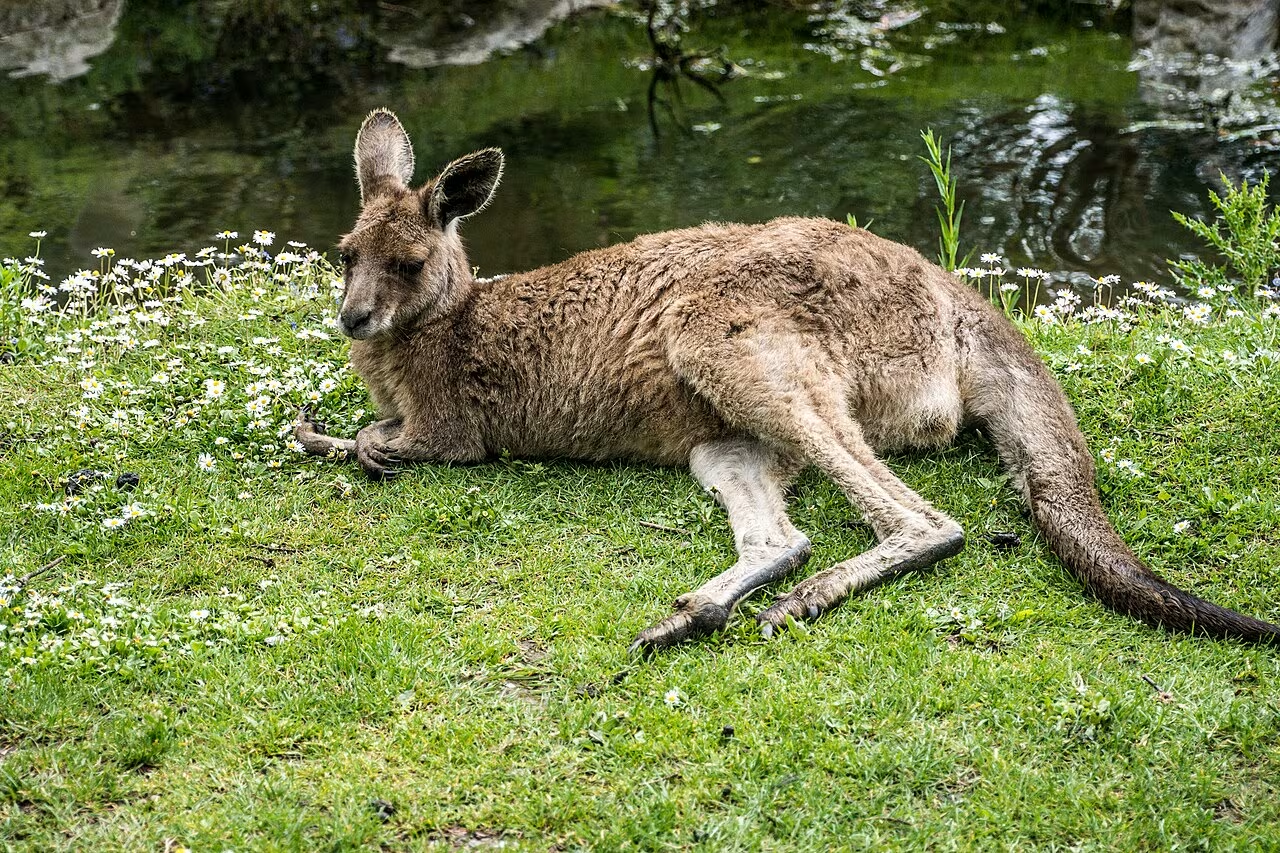
About ninety species across roughly one hundred acres of open parkland. The headline animals are the giraffes and cheetahs, but the day-to-day experience is stranger and better than a headline list suggests. Kangaroos move through the park at their own pace and you walk past them, not the other way round. Flamingos stand in the shallows of the lake with the impractical confidence of birds that have never looked in a mirror. Peacocks patrol the paths as if they're doing you a favour by being visible, which at some level they are. Ring-tailed lemurs live on a small island in the middle of a lake, no fence required, since lemurs do not swim and have apparently never tried.
There are ostriches and macaques and emus and red pandas and kookaburras in the tropical house. There's a walk-through section where some of the smaller animals are close enough to touch (not that you should). The park has been running since 1983, started as a conservation project and still operates as one. The cheetah breeding programme is internationally recognised, which becomes relevant in about twenty minutes.
The cheetah run
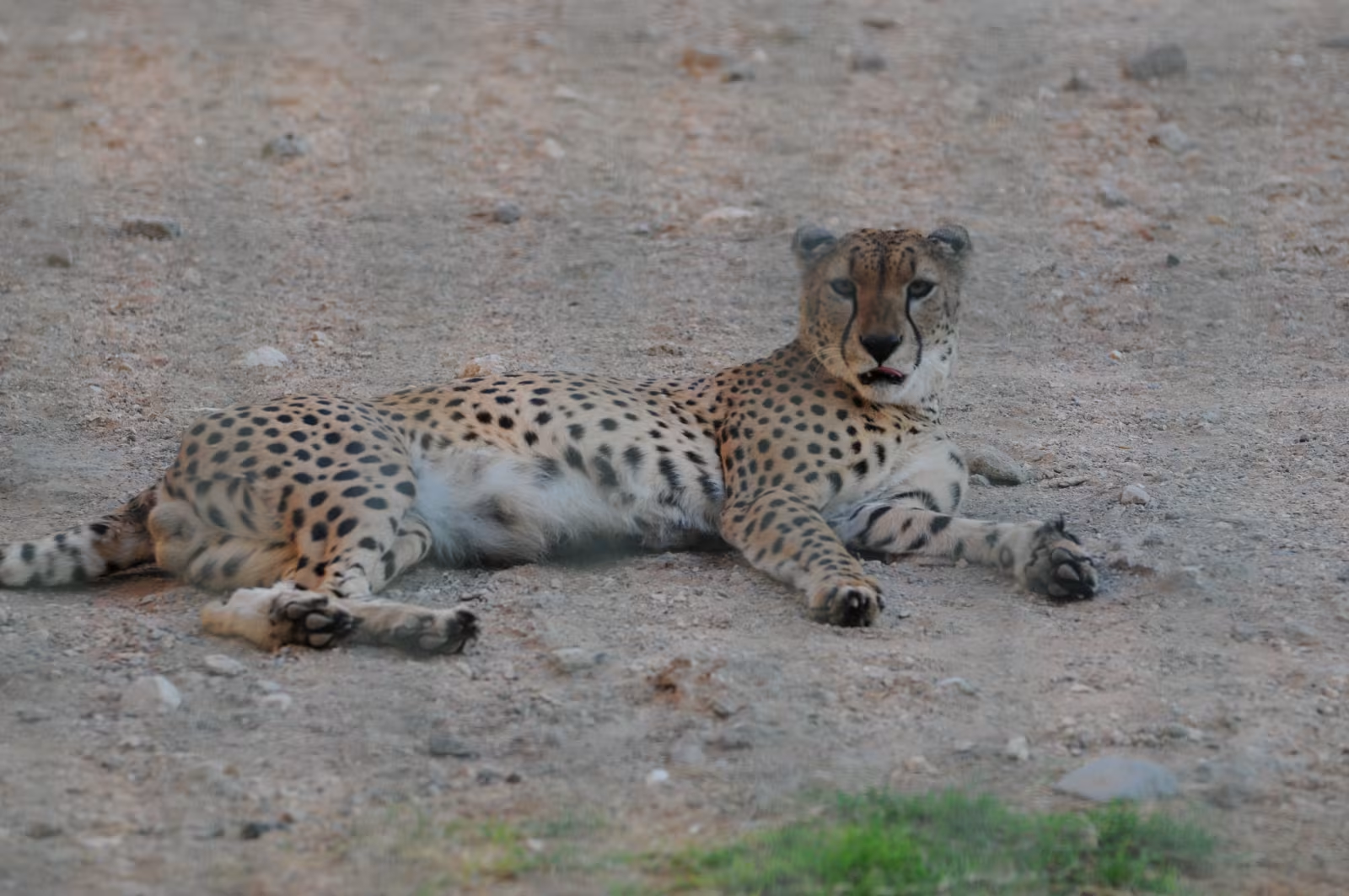
Build your day around this. Twice daily at set times (check the board at the entrance), the cheetahs are released to chase a mechanical lure along a track. They cover sixty metres in about three seconds. Your phone's portrait mode will not be ready in time, so put it away now and use your eyes instead. The crowd is small enough to actually see what's happening and the keeper's talk beforehand is genuinely informative rather than the usual laminated-sign experience you get at these things. Arrive at least ninety minutes before the run is scheduled so you've already seen the rest of the park. The cheetah run is the natural end to the day, not the start.
Planning your visit
Two to three hours is the right amount of time for a comfortable walk-through. With young children, allow three hours: they will stop at the macaques for longer than you planned and the correct response is to let them. Tickets are around €21 for adults and €14 for children (under-threes go in free). Timed entry is worth booking in advance in July and August when the park gets busy. There's a café roughly in the middle of the park, a picnic area if you've brought your own lunch, and a gift shop near the exit. Bring waterproofs. The weather in Cork does what it wants and the animals are out in all of it.
For more to do in County Cork during your trip, browse activities and experiences on Visit Ireland. If you're staying in Cork and want to know where to eat in the city, our Cork food guide covers the local spots worth your time.
Fota and Cobh in the same day
Fota is on the Cork to Cobh commuter line, which makes Cobh a ten-minute train ride further on. Cobh is the pretty harbour town at the end of the line, all pastel Georgian houses stacked up the hill and St Colman's Cathedral with its forty-nine-bell carillon rising above everything. It was also the last port of call for the Titanic in April 1912, and the Titanic Experience museum is one of the better small museums in Ireland. A day that starts at Fota, catches a lunchtime train to Cobh, and gets back to Cork by five is a grand day out and requires no car at any point. Our guide to Cobh covers what's worth doing and what to skip. For a wider picture of Cork before you start planning your days there, our introduction to the city is a good starting point.
How long does Fota Wildlife Park take?
Two to three hours covers the park well at a relaxed pace. Plan your visit around the cheetah run, which happens twice daily. Arrive ninety minutes before it starts, walk the rest of the park first, and finish at the cheetah track. With young children, allow the full three hours. There is enough to see that you will not be watching the clock.
Can you get to Fota Wildlife Park by public transport?
Yes. The Cork to Cobh commuter train stops at Fota station, a two-minute walk from the park entrance. The journey from Cork Kent Station takes twelve minutes and costs around eight euros return. Trains run roughly every half-hour in the morning. On a busy summer day this is the better option: the car park fills up, the train runs on schedule.
Is Fota Wildlife Park suitable for toddlers?
Very much so. The open-range design means young children encounter animals at something close to eye level rather than at the top of a wall or through glass. The macaques are reliably entertaining for small children. The kangaroos and wallabies are placid. Meeting a giraffe with no barrier in the way tends to produce a reaction that costs nothing to arrange and plenty to photograph. The paths are pushchair-friendly throughout.
Can you combine Fota Wildlife Park with Cobh on the same day?
Yes, and it makes a natural full day. Fota is on the Cork to Cobh rail line, so Cobh is ten minutes further on the same train. Spend the morning at Fota, travel to Cobh around midday, have lunch on the waterfront, and do the Titanic Experience in the afternoon. You are back in Cork by early evening. It covers two very different places without a car at any point.