
There's a portal tomb standing on a bare limestone hill about twenty kilometres from Doolin that's been there since roughly 3800 BC. That's older than Stonehenge, older than the pyramids at Giza, older than any timeline that makes intuitive sense when you're actually standing in front of it. Two upright portal stones, one enormous capstone balanced across the top, and nothing around it but the Burren stretching off in every direction. It costs nothing to visit, there's a car park, and you'll almost certainly feel something you weren't expecting to feel.
What you're looking at
Poulnabrone is a Neolithic portal dolmen: the Irish translates roughly as "hole of the millstone" or "hole of sorrows," depending on who you ask, and both feel apt when you're standing in front of it. It was built during the Neolithic period as a communal tomb. When archaeologists excavated it in the late 1980s, they found the remains of somewhere between sixteen and twenty-two people inside: children, adults, elderly individuals. Not a monument to one important person. A community's long house for the dead, used for centuries before being sealed. The bones had been there for over five thousand years before anyone opened it again.
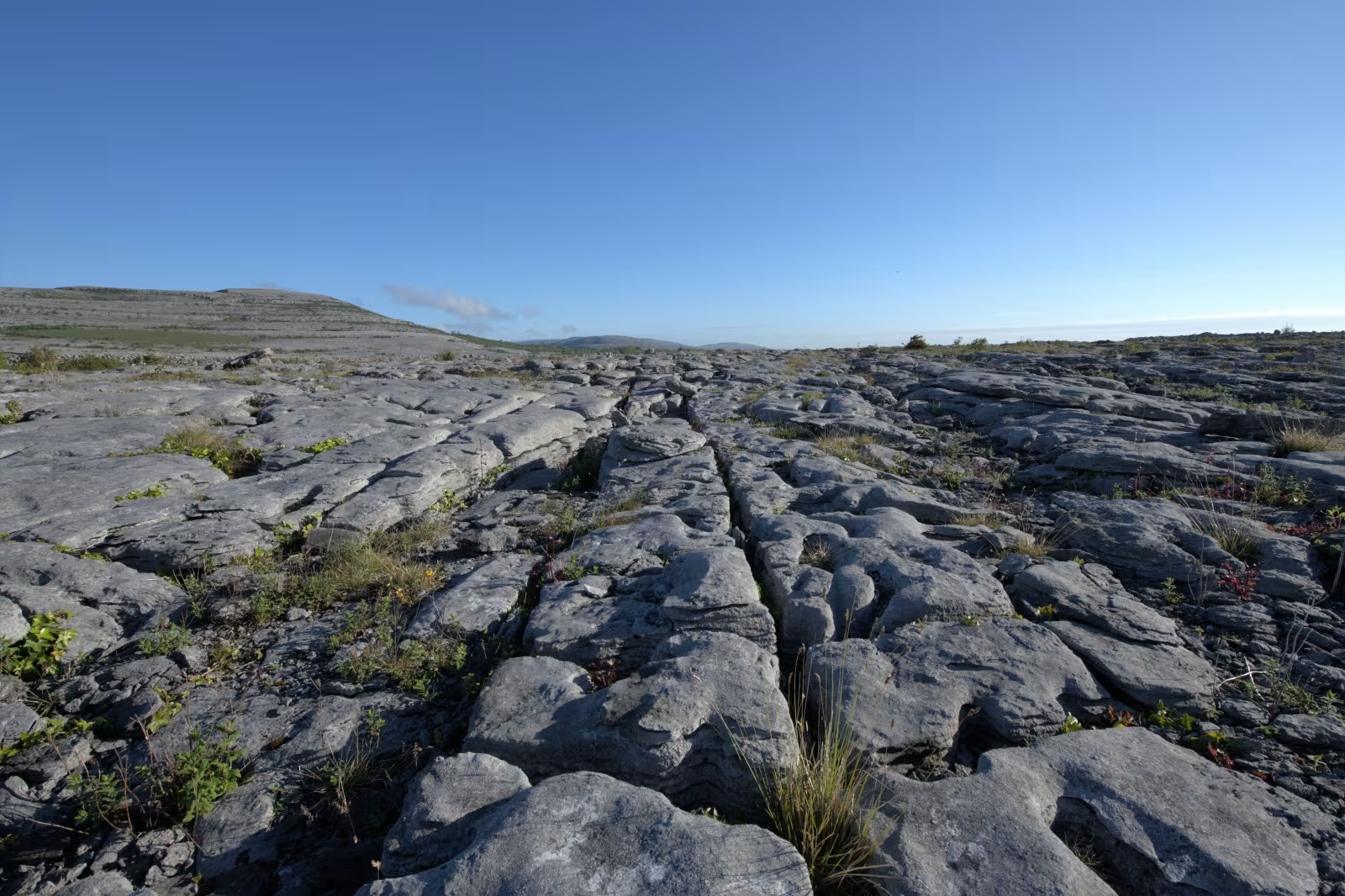
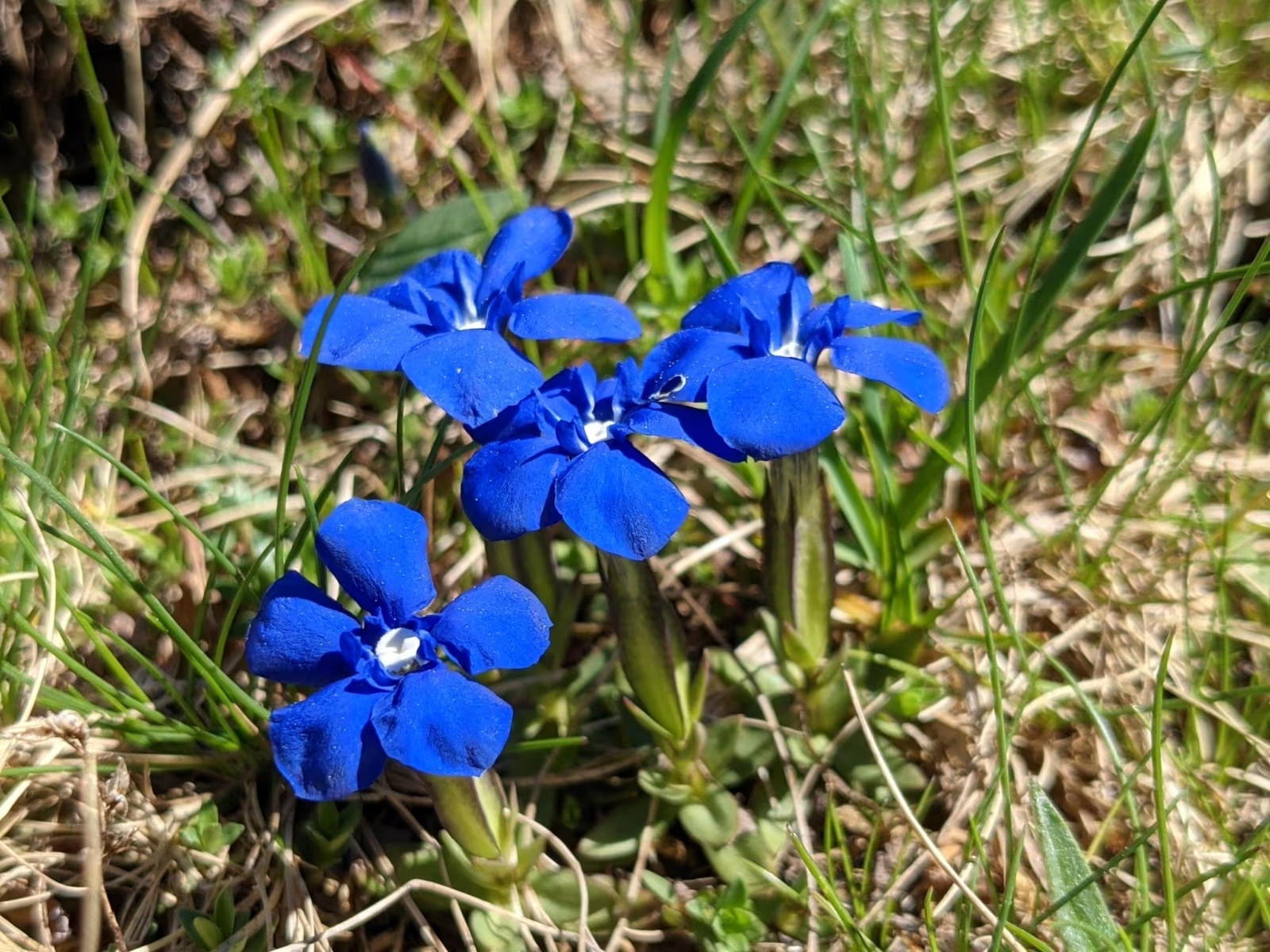
The landscape around it is doing something unusual. The Burren looks at first glance like a construction site that ran out of funding before the topsoil arrived. But slow down and you'll see wildflowers pushing out of every crack in the limestone: spring gentians that are a specific shade of blue you'll never quite nail afterwards, mountain avens that have no business being here if you go by the atlas (their normal habitat is the Arctic), bloody cranesbill, orchids. The reason they all co-exist on the same hill is that the Burren's microclimate doesn't follow the usual rules: the limestone holds heat and the groundwater chemistry runs its own way. It's one of the only places in the world where Arctic, Alpine and Mediterranean plants grow side by side. In May and June it's genuinely class.
Getting there from Doolin
Take the R479 south from Doolin toward Lisdoonvarna (about six kilometres), then at Lisdoonvarna pick up the R480 and head south into the Burren. Poulnabrone is signposted from the R480, about twenty kilometres from Doolin in total, roughly half an hour's drive. There is a car park on the roadside and a short walk across limestone to the dolmen. The path is fine. You don't need special footwear, though the Burren being the Burren, water sits in the grikes and boots are always a sensible idea.
If you're cycling rather than driving, the R479 between Doolin and Lisdoonvarna is a reasonable road with moderate traffic. Beyond Lisdoonvarna the R480 goes quiet quickly. Buses do not serve Poulnabrone, which is a significant part of why so many Doolin visitors never make it out there despite it being so close.
Stop at Caherconnell on the way
About fifteen kilometres from Doolin on the R480, before you reach the dolmen, is Caherconnell Stone Fort: a well-preserved ring fort from the Iron Age and early medieval period. It has a visitor centre, admission is a few euros, and in summer they run sheepdog demonstrations in the field outside. This sounds like the kind of thing you'd half-heartedly agree to watch and then be slightly amazed by. Your man running the dogs takes it extremely seriously, the dogs are genuinely extraordinary at their work, and the whole thing is quietly gas in a way that is hard to explain in advance.
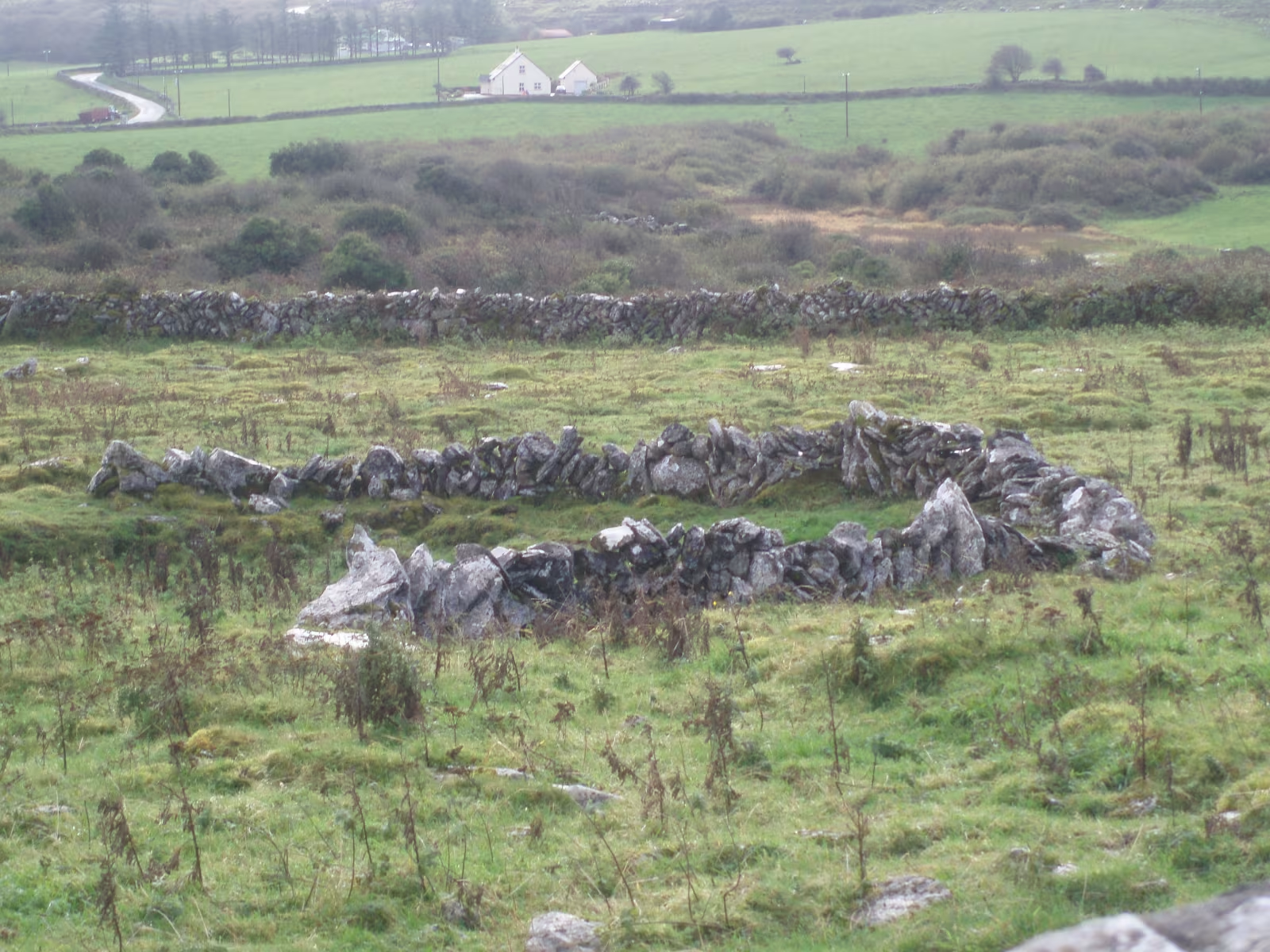
The visitor centre at Caherconnell gives you useful context for the Burren's human history going back thousands of years, and the fort itself is in remarkably good shape for something built in the first millennium AD. Allow twenty minutes to an hour depending on how much you want to poke around. From there it's another five kilometres on to Poulnabrone. Doing both in one morning is comfortable and leaves you the afternoon free.
Practical things to know before you go
Poulnabrone is free, open all day every day, and managed by the OPW (Office of Public Works). There are no opening times, no tickets, no barriers. There's also no café, no toilets, and nothing in the way of facilities, so arrive with something to drink particularly in summer when the pale limestone bounces heat around in a way that takes you by surprise after a morning on the coast. The car park is small and free. On peak summer weekends around midday it fills up, so early morning visits are better for photographs and for having the thing to yourself, which is worthwhile.
There is a low wooden railing around the base of the dolmen. Please don't climb on the capstone or place anything on it. The stone has hairline fractures the OPW monitor. It has stood for six thousand years; give it a reasonable chance at another six thousand.
Making a day of it
The Burren loop works well as a half-day or full day from Doolin. Caherconnell in the morning, Poulnabrone by midday, then continue north on the R480 toward Ballyvaughan for lunch if you want to stay out longer. Alternatively, Lisdoonvarna is on the route back and has options for food without the extra driving. The Doolin Cave, with the world's longest free-hanging stalactite, is a kilometre from the village itself and fills a solid hour in the afternoon. In a single day, between the cave, the stone fort, the dolmen, and the wildflower-covered limestone pavement, you will have covered a fairly impressive arc of geological and human time. Roughly 350,000 years of stalactite plus 6,000 years of prehistoric monument. Not bad for one outing.
If you're staying in Doolin for a few nights, the ferry to the Aran Islands is worth building a whole day around. The ferry from Doolin pier runs to all three islands and Inis Mór has its own extraordinary prehistoric fort at Dún Aonghasa on the clifftop. Having just seen Poulnabrone puts Dún Aonghasa in a different kind of perspective: both built by people with no written language and extraordinary skills, separated by a few thousand years and a stretch of Atlantic. You can see the Burren from the islands on a clear day.
In the evening, Doolin's three pubs do what they've been doing for decades. If you haven't sat in on a proper trad session before, knowing what to expect makes the whole thing better and saves you from accidentally requesting a song (don't do this). The coastal walk to the Cliffs of Moher is another option if you still have legs left, though after the Burren drive most people are happy to sit down and let the fiddles do the work.
Is Poulnabrone Dolmen free to visit?
Yes, Poulnabrone is free and open year-round, every day. There are no opening times, no entry fee, and no barriers. A small free car park sits on the R480 road with a short walk to the dolmen. There are no facilities at the site, so bring water, especially in summer. The OPW manages the monument and there is a low railing around the base to protect the structure.
How old is Poulnabrone Dolmen?
The dolmen dates from the Neolithic period, built somewhere between approximately 3800 and 2900 BC, making it in the region of 5,500 to 6,000 years old. It predates Stonehenge and the Egyptian pyramids. Excavations in the late 1980s found skeletal remains of between sixteen and twenty-two individuals inside, suggesting it served as a communal tomb over an extended period of use.
How far is Poulnabrone from Doolin?
About twenty kilometres by road, roughly half an hour's drive. From Doolin take the R479 south toward Lisdoonvarna, then pick up the R480 south into the Burren. Poulnabrone is signposted from the R480. Caherconnell Stone Fort, worth stopping at on the way, is about fifteen kilometres from Doolin on the same route.
When are the Burren wildflowers at their best?
May and June are the peak months for wildflowers across the Burren, with spring gentians, mountain avens, bloody cranesbill, and various orchid species all out at once. The Burren's unusual microclimate means Arctic, Alpine and Mediterranean plants coexist, which is a combination found almost nowhere else in Europe. Earlier in spring, from March onward, the first gentians appear. Summer into July still has good flowering but less of it. The winter Burren is a different experience entirely: stark and quiet, with the limestone pavement showing clearly without the distraction of everything growing out of it.
What else is there to see in the Burren near Doolin?
Caherconnell Stone Fort, about fifteen kilometres from Doolin on the R480, is the most accessible site and worth stopping at on the way to Poulnabrone. It has a visitor centre and runs sheepdog demonstrations in summer. Further into the Burren, the Aillwee Burren Experience near Ballyvaughan combines a cave system with a bird of prey centre. The limestone pavement itself, particularly the flat expanses visible from the R480 and the lanes off it, is worth stopping for. The Burren Way walking route also passes through the area for those wanting to explore on foot.