
It is going to lash. Not every day, not all day, but at some point during your trip to Dublin the sky will go the colour of wet slate and the rain will come in sideways off the Liffey and that is just the deal. The trick is not pretending it won't happen. The trick is having a list, and the list being good. Dublin's indoor day is genuinely one of the better ones in Europe, partly because some of the best museums in the country are free, and partly because the city is small enough that you can hop between three of them in an afternoon without ever needing a bus.
Here is the honest version, not the brochure version. What's worth going to, what to skip when it's bucketing down, and how to string a few stops together so the day still feels like a proper one. Bring a coat, fold it up small inside your bag, and head for Kildare Street.
The free museums on Kildare Street and around
The National Museum of Ireland has three branches in the city centre and they are all free, every day, no booking needed. Start with Archaeology on Kildare Street if you only do one. That is where the Tara Brooch lives, and the Ardagh Chalice, and the Cross of Cong, and a long room of bog bodies that is going to occupy a teenager for longer than you think. The building itself is worth the visit on its own, all mosaic floor and rotunda, and you will spend at least an hour without noticing. Two if you let yourself look at the gold properly.
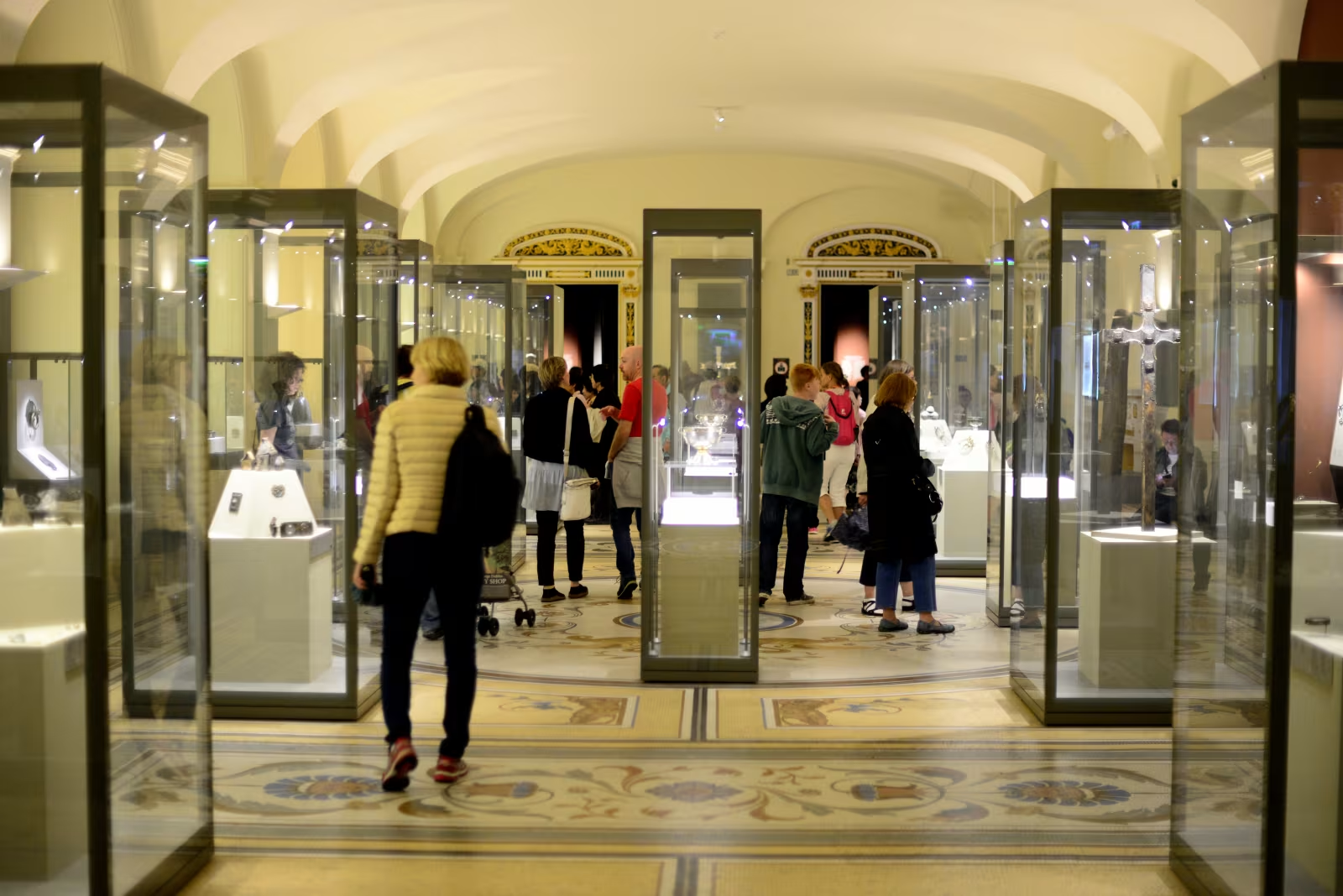
Five minutes' walk from there is the National Gallery on Merrion Square. Also free. The Caravaggio is the headline (the Taking of Christ, found in a Jesuit dining room in Dublin in the 1990s, no, really), but the Irish rooms are where most visitors lose track of time. Yeats and Lavery and Orpen, and a room of Jack B. Yeats that hits harder in person than on any phone screen. Plan to stay an hour minimum. Toilets are grand, café is fine, gift shop is good for postcards.
Round the corner is the Natural History Museum, which everyone in town calls the Dead Zoo, and which has barely been redecorated since the Victorians built it. That is not a complaint. It is the actual draw. Two floors of glass cases packed with stuffed animals and articulated skeletons, plus an Irish Giant Deer hanging over you with an antler span that has to be seen to be believed. Smaller than the other two, takes about forty minutes, and it is the one kids will talk about on the plane home.
If you've a slow afternoon and the rain is settling in for the night, the third branch of the National Museum, Decorative Arts and History at Collins Barracks, is a short Luas ride west. Less busy, more breathing room, and a permanent exhibition on the 1916 Rising that does the job properly without going moody on you.
The big paid ones, ranked honestly
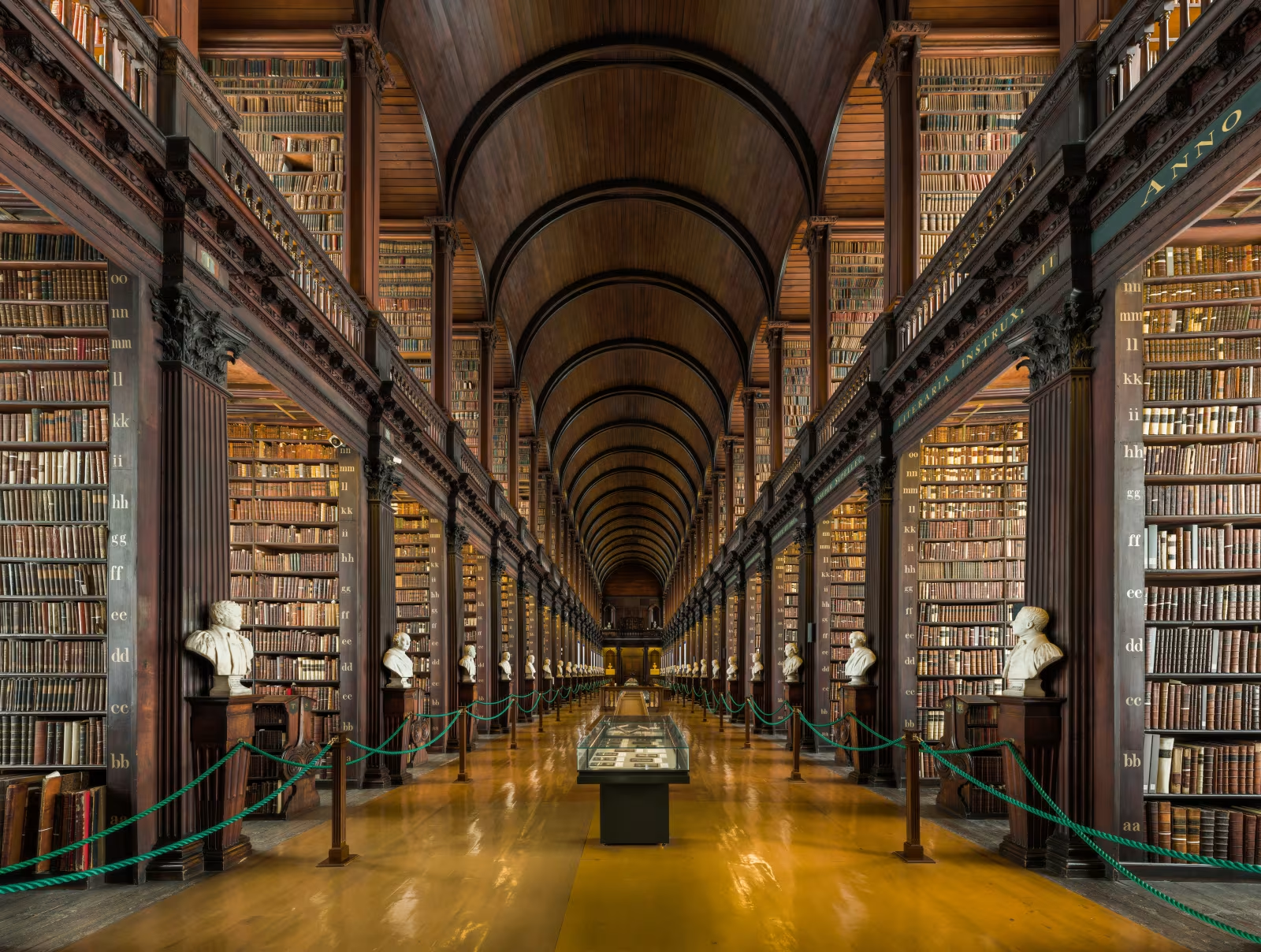
The Book of Kells exhibition and the Long Room at Trinity College Library is the headline. Yes, the Book itself is a thumbnail of a thing under glass, two pages on view at a time, and yes, there's a queue. The Long Room above it is the room you came for, and it is genuinely as good as any photo you have seen. Book online for a timed slot, do it before you go, and walk in past the crowds. Around twenty euros at the time of writing for adults, a little less for students. There is a separate Book of Kells Experience with a projection show now, which is fine if it's bundled, and not the thing you came to see if it's not.
Kilmainham Gaol is the other one to plan ahead for. It is on the west side of town, a fifteen-minute Luas ride from the centre, and tickets sell out days in advance in summer. Worth the planning. You get the Victorian East Wing with the iron walkways and the natural light coming down through the glass roof, and you get the courtyard where the leaders of 1916 were executed, and somewhere between those two things you stop talking. Good guides, every one of them. It is not a happy hour, but it is one of the most important rooms in modern Irish history and there is no real alternative for understanding the place.
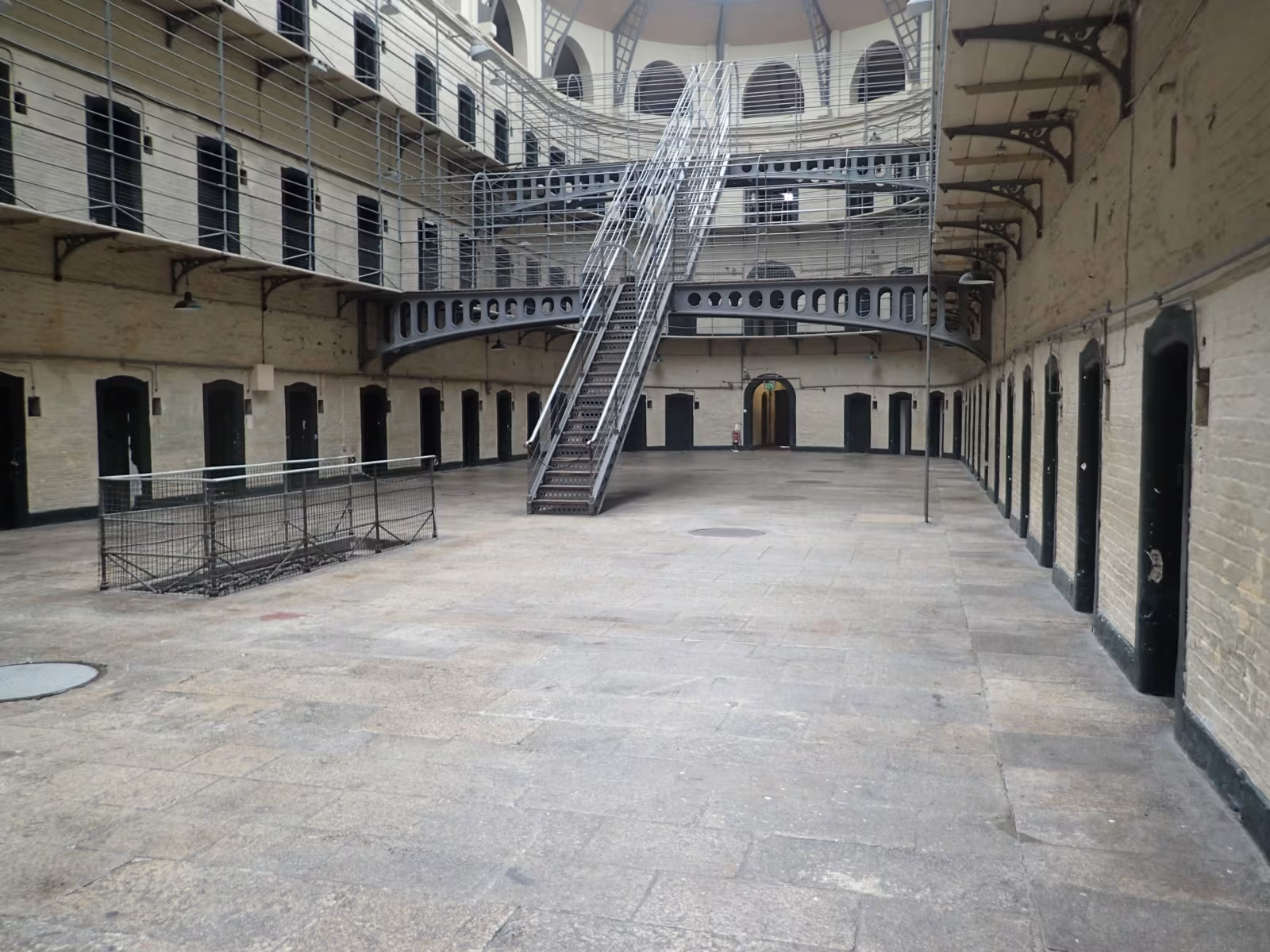
The Guinness Storehouse is the third of the big three, and your feelings about it will mostly track how you feel about the company. The building, the old fermentation house, is great. The pint at the Gravity Bar with the wraparound view of the city is good. The seven floors of marketing in between are a lot. Go if you like the brand, skip if you don't, and if you do go, book the early slot to avoid the crowds. EPIC The Irish Emigration Museum on the docks is interactive, well-designed and a different kind of story, and it punches above its weight when you've a couple of hours and want something that engages teenagers without being a school trip in disguise.
Jameson Bow Street is a distillery tour with a tasting at the end, which is exactly what it sounds like. Fun. Useful in a downpour. Not life-changing. Same for Dublinia next to Christ Church, which is Viking and medieval Dublin done for families, and which children genuinely enjoy because the staff are great and it is not pretending to be a serious museum.
Smaller, weirder, often better
The Chester Beatty is the secret weapon of a Dublin indoor day. It is inside Dublin Castle, it is free, and it holds one of the great collections of manuscripts, miniatures and rare books in the world. You will see Qur'ans and Buddhist sutras, Egyptian papyri and Persian miniatures, all of it given the space and the labels and the lighting it deserves. Two hours easily. There's a roof garden if it stops raining, and a café that does proper coffee. It has won the European Museum of the Year before, fair play to them, and most visitors to Dublin never set foot in it because they don't know it is there.
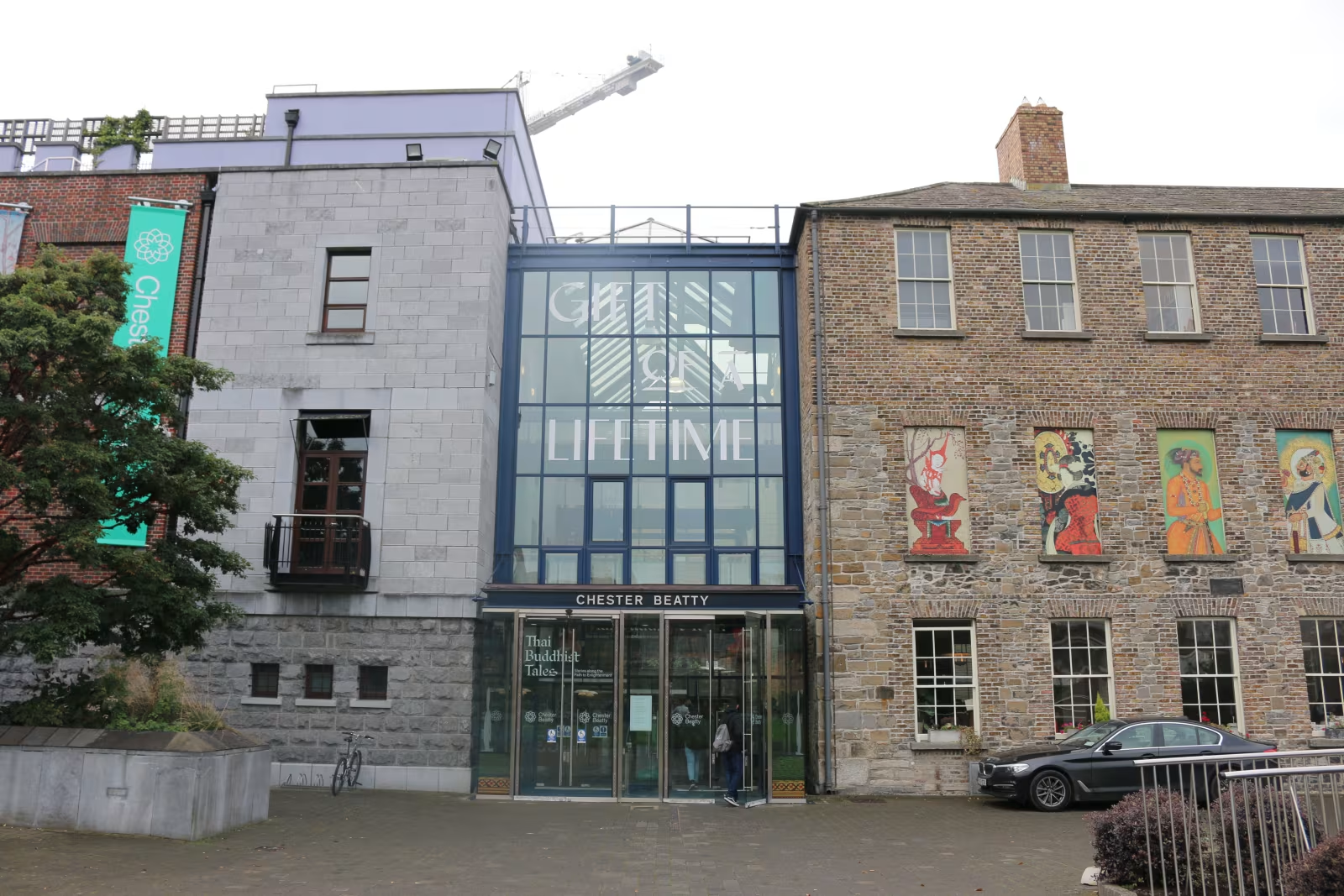
Marsh's Library is across the river, beside St Patrick's Cathedral, and is the oldest public library in Ireland. Wooden shelves, wired reading cages where they used to chain the books to stop students stealing them, and a smell of old paper that is the entire point of the visit. Small fee, takes half an hour, and it is the kind of place you'll be glad you bothered with. 14 Henrietta Street is on the north side, a tour of a single Georgian townhouse turned tenement, and it is one of the best storytelling experiences in the city, told by guides who often live or grew up on the street. Book it. The Little Museum of Dublin on Stephen's Green has reopened in a new home and does a thirty-minute guided romp through the city's twentieth century that is genuinely funny and a great primer in your first day in town.
If you've an art-curious head and have done the National Gallery, the Hugh Lane Gallery on Parnell Square is free and has Francis Bacon's reconstructed studio in the basement, which is a sight all its own. IMMA, the Irish Museum of Modern Art, is out at Kilmainham next to the Gaol, also free, and the building is a converted seventeenth-century soldiers' hospital that is worth the walk on its own merits.
Cinemas, snug pubs, indoor markets
Sometimes a museum is not the answer. The Irish Film Institute on Eustace Street in Temple Bar shows arthouse, classic and Irish films, has a café and a bar, and is a deadly place to lose a wet afternoon. The Lighthouse in Smithfield is the other arthouse spot and the building itself is gorgeous. Both do matinees. Both have late-afternoon cake.
Old Dublin pubs were designed for this weather. The snug at Toner's on Lower Baggot Street, the curved bar at the Long Hall on South Great George's Street, the back room of Kehoe's on South Anne Street. Walk in, order a coffee or a pint of stout, sit down, and do not move for an hour. There is more on this in our guide to Dublin pubs worth the walk beyond Temple Bar, and most of them are properly indoor in the way old wooden interiors are when the rain is pelting the windows.
For a covered wander that does not feel like a museum, George's Street Arcade is a Victorian indoor market full of vintage shops, jewellery makers and a couple of decent lunch counters. Powerscourt Townhouse Centre nearby is the same idea in a Georgian shell, with cafés, designers, and an upstairs balcony where you can sit and watch the rain do its work. The Stephen's Green Shopping Centre at the top of Grafton Street is mostly chain shops but has a glass-roofed atrium and a food court that will feed everyone in your group without an argument.
Eating and warming up between stops
Indoor days run on coffee, soup and the willingness to commit to a long lunch. Bewley's on Grafton Street is still going, the upstairs room with the Harry Clarke stained-glass windows is the spot, and the coffee has improved. For something quicker, the Fumbally Café off Clanbrassil Street is a community-feeling spot with proper food. For lunch with no surprises, any of the Dublin food scene picks in the 2026 guide to where locals eat will sort you. None of them mind if you sit for an hour drying out.
Building a rainy day, two routes
South-side, walkable: National Museum Archaeology on Kildare Street, then the National Gallery on Merrion Square, then a long lunch on the way down to the Chester Beatty in Dublin Castle. Five minutes between each, all indoors or under cover, no transport needed.
North-side, slightly less walkable but excellent: Hugh Lane Gallery on Parnell Square, then 14 Henrietta Street tour, then a Luas ride west to Kilmainham Gaol if you have a ticket. You will have walked under three umbrellas and not felt it.
If the weather clears halfway through, your one good outdoor backup is a quick run out to Howth for the cliff walk and a plate of seafood, and the DART out there takes thirty minutes. If it clears properly, scrap the indoor plan altogether, you've earned it. But the indoor list is here when you need it, and you will need it, because that is how Dublin works.
What are the best indoor things to do in Dublin on a rainy day?
The strongest free options are the three branches of the National Museum of Ireland (Archaeology on Kildare Street, Natural History on Merrion Street, Decorative Arts and History at Collins Barracks), the National Gallery on Merrion Square, the Chester Beatty in Dublin Castle, and the Hugh Lane Gallery on Parnell Square. Among paid attractions, the Book of Kells and Long Room at Trinity College, Kilmainham Gaol, EPIC The Irish Emigration Museum, and 14 Henrietta Street are the most rewarding. A typical wet-day route covers two or three of these with a long lunch in between.
Which Dublin museums are free?
All three branches of the National Museum of Ireland are free of charge with no advance booking required: Archaeology on Kildare Street, Natural History on Merrion Street, and Decorative Arts and History at Collins Barracks. The National Gallery of Ireland on Merrion Square is also free for its permanent collection, with a charge only for special exhibitions. The Chester Beatty in Dublin Castle, the Hugh Lane Gallery on Parnell Square, and IMMA (Irish Museum of Modern Art) in Kilmainham are likewise free.
Do I need to book Dublin museums and attractions in advance?
The free museums do not require booking and you can walk straight in. Trinity College's Book of Kells and Long Room sells timed tickets online and you should book a day or two ahead in summer to avoid the queue. Kilmainham Gaol regularly sells out in advance and should be booked as soon as you know your dates. Guinness Storehouse, EPIC, 14 Henrietta Street, Jameson Bow Street and the Little Museum of Dublin all benefit from booking ahead, particularly between June and September.
How much does a rainy day in Dublin cost?
If you stick to free museums, lunch and a coffee, a full day for two adults can run under fifty euros total. Adding a paid attraction such as the Book of Kells or Kilmainham Gaol brings that to around ninety to one hundred euros for two adults. Two paid attractions and lunch in a sit-down restaurant lands in the one hundred and fifty euro range. The Dublin Pass and similar combination tickets can save money if you are planning four or more paid attractions, but most visitors will not get value from them.
Are Dublin's indoor attractions good for children?
The Natural History Museum (the Dead Zoo) is the standout for younger children. Dublinia next to Christ Church Cathedral is designed for families and works well across a wide age range. EPIC The Irish Emigration Museum is interactive and engaging for older children and teenagers. The National Museum Archaeology branch has enough variety to hold most school-age children for around an hour. The Book of Kells exhibition is less suited to very young children, although the Long Room above it tends to silence even the most restless. The Chester Beatty is best for older children with an interest in art or history.
What is there to do in Dublin in the evening when it is still raining?
Old Dublin pubs are made for wet nights. Toner's on Lower Baggot Street has the original snug, the Long Hall on South Great George's Street has the Victorian interior, and Kehoe's on South Anne Street has the wood-panelled back rooms. Trad music sessions are on most nights in pubs across the city centre. The Irish Film Institute in Temple Bar and the Lighthouse Cinema in Smithfield both run evening programmes of arthouse and Irish films. The Abbey Theatre and the Gate Theatre have the strongest evening programmes in town for plays.
Photo credits: Long Room interior by David Iliff (CC BY-SA 4.0); National Museum of Ireland Archaeology interior by Osama Shukir Muhammed Amin FRCP(Glasg) (CC BY-SA 4.0); Kilmainham Gaol East Wing by Marathon (CC BY-SA 2.0); Chester Beatty Museum library by PersianDutchNetwork (CC BY-SA 4.0). All via Wikimedia Commons.