
Somewhere between the main road and the treeline, once the city noise has dropped behind you, Phoenix Park stops feeling like a park and starts feeling like a countryside that wandered into Dublin and decided to stay. Around 710 hectares inside the city limits, four kilometres from O'Connell Street, open every hour of every day, free. Roughly 450 fallow deer have been walking these fields since 1662 and have long since figured out that humans are considerably more interested in them than they are in humans. If you've been to Dublin and haven't made it here yet, you've a gap in the itinerary worth fixing.
Getting there
From the city centre, the 25 and 26 buses run from Aston Quay to the Parkgate Street entrance in fifteen to twenty minutes depending on traffic. Walking from O'Connell Street along the quays takes around thirty-five to forty minutes and is a decent walk in its own right once you clear the traffic lights. Cycling is probably the best way to arrive: the route west along the Liffey quays is simple, and once you're inside the park the internal roads are quiet enough to cycle in comfort. The Luas red line stops at Heuston Station, a five-minute walk from Parkgate Street, if you're coming from the south side or off the red line somewhere.
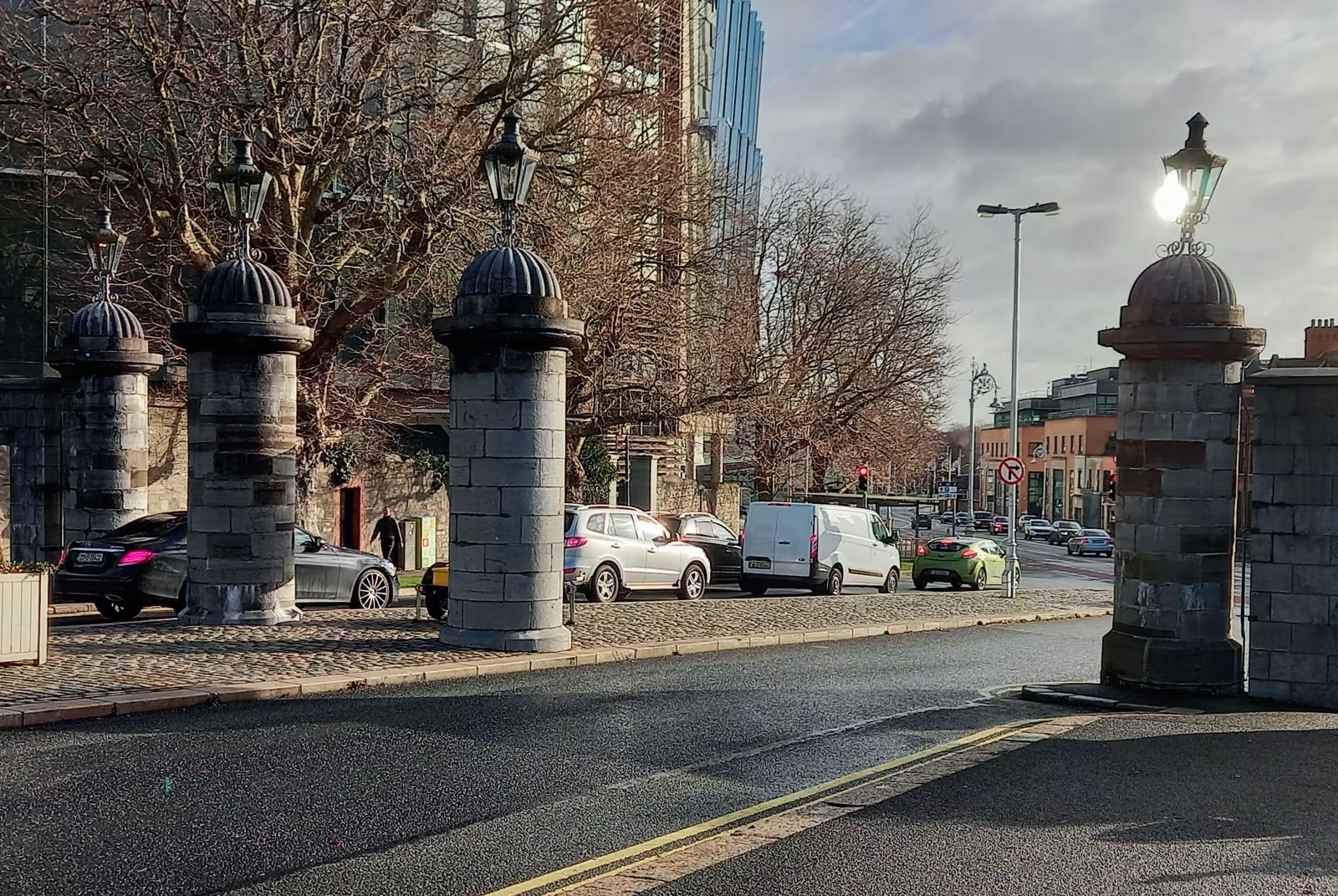
There are multiple entrances. For a first visit, Parkgate Street is the one to use: you arrive beside the People's Garden, the Wellington Monument is visible ahead of you from the path, and the main road stretches away into the park so you get a sense of the scale immediately. The Knockmaroon Gate on the west side and the North Circular Road gate on the north are fine once you know where you're going, but Parkgate puts you in the right place from the start.
The deer
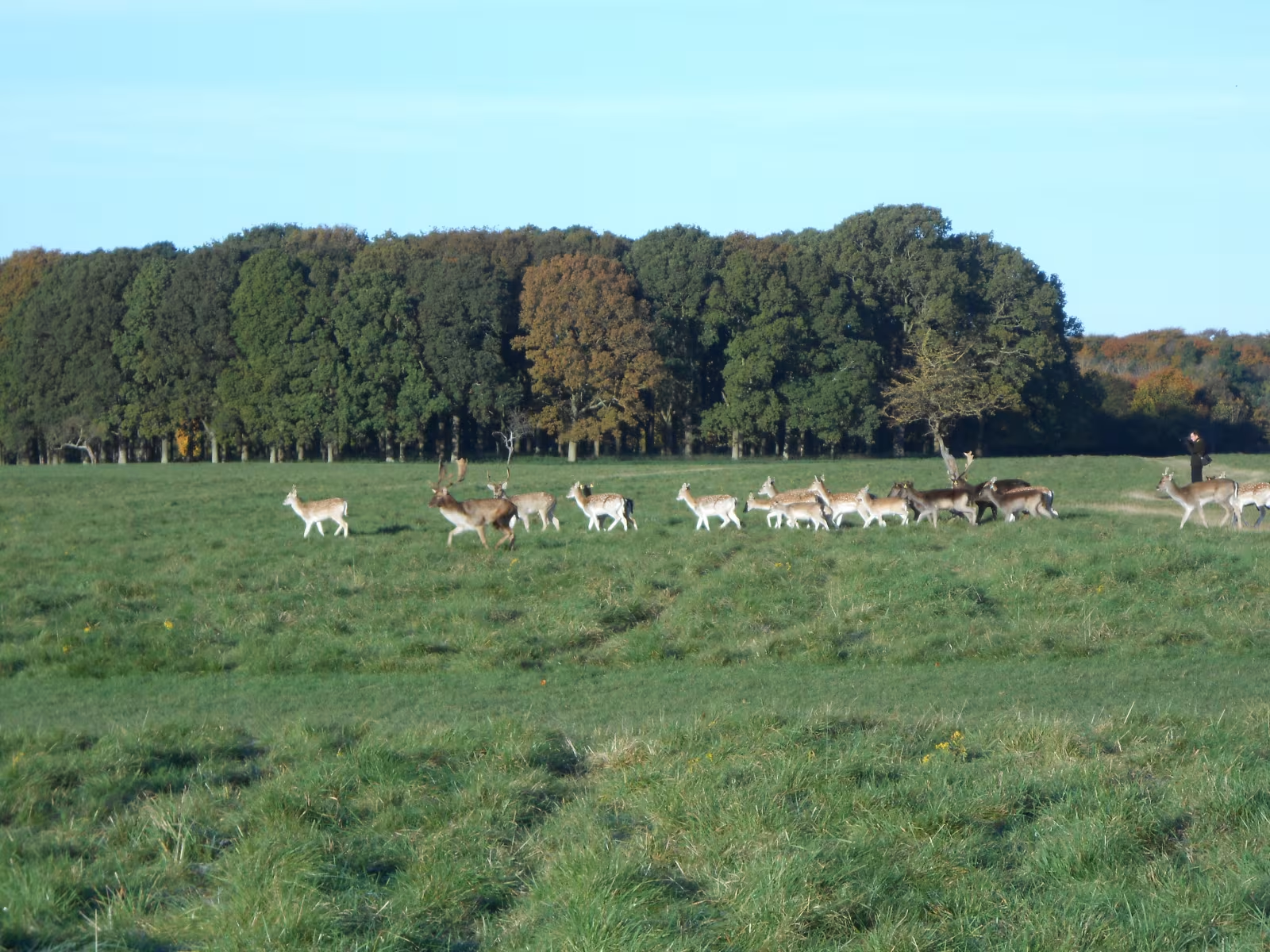
The fallow deer have been here since 1662, introduced by the Duke of Ormonde when the park was established as a royal hunting ground. They've been here continuously for over 360 years, which makes them among the longer-established residents of Dublin. Unlike most long-established residents of Dublin, they've never complained about the noise.
There are around 450 of them and they roam freely, mostly through the western half of the park. You don't need to go looking. Walk west from the Papal Cross toward the Furry Glen or the area around Ordnance Survey Ireland and you'll find groups of them grazing in open grassland, completely relaxed, occasionally lifting a head to look at you in a way that communicates something close to polite disinterest. The stags carry full antlers through summer and shed them in spring. October is when the rut happens and it's something else: the bellowing, the clashing antlers, the general theatre of it. It draws a crowd every year and fairly earns one.
Don't try to feed or touch them. They look calm because they are calm, but they're genuinely wild animals and a stag in rut is not something you want at close range. Keep a reasonable distance, stay quiet, and they'll get on with their day in a way that feels oddly companionable. Dogs on leads in the deer areas, obviously.
The Wellington Monument and the main road
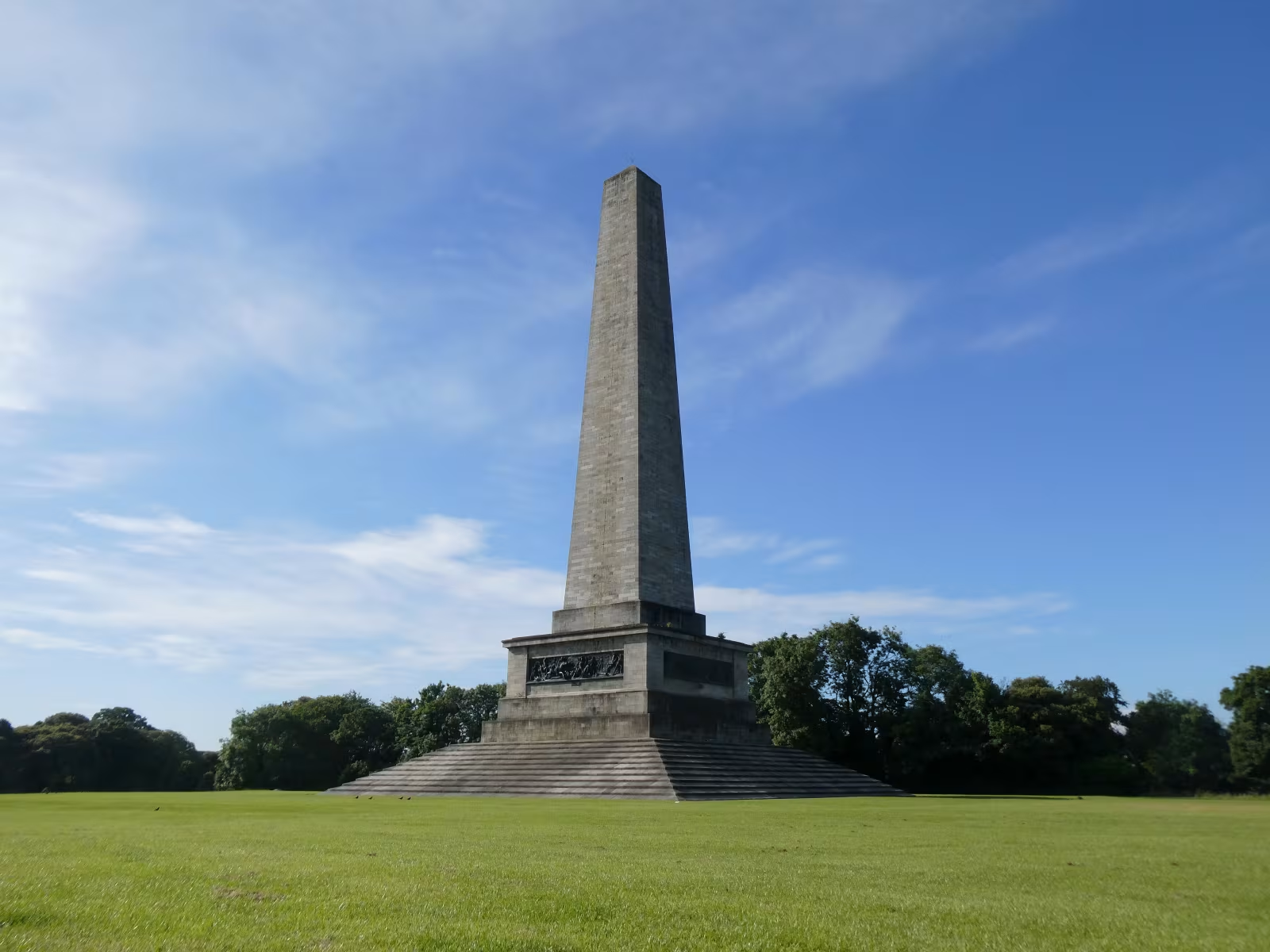
The Wellington Monument stands near the Parkgate Street end of the park: 62 metres of granite obelisk, the tallest in Ireland. Arthur Wellesley, the Duke of Wellington, was born in Dublin in 1769 and is most famous for defeating Napoleon at Waterloo. He was less famous for claiming Dublin as his hometown. The quote most associated with him on that subject, about being born in a stable not making one a horse, tells you roughly where he stood on it. The monument took 44 years to complete, started in 1817 and finished in 1861. Four bronze panels at the base show scenes from his campaigns and are worth a look up close once you're standing there.
The main road from Parkgate Street through the park to Castleknock Gate is about three kilometres and passes most of the significant points: the Wellington Monument, the Papal Cross (a 35-metre structure built for Pope John Paul II's 1979 visit, at which roughly 1.25 million people turned up, around a third of the entire Irish population at the time, a logistical situation the Gardaí apparently still bring up), Áras an Uachtaráin, and the western deer grounds. Cycling this road at a comfortable pace takes around twenty minutes. Walking it takes the better part of an hour but the trees on both sides and the open ground around the Papal Cross give you the full sense of the place.
Áras an Uachtaráin
The official residence of the President of Ireland sits within the park and is open to visitors on Saturdays, with free guided tours running from around 10:30am to 4:30pm. Book in advance through the OPW website because places are limited and they fill up, particularly in summer. The tour takes about an hour and covers the state rooms, the formal gardens, and the history of the house, which served as the Viceregal Lodge for the British Lord Lieutenant before becoming the presidential residence in 1938.
Even without a tour, the main ceremonial gates on the North Circular Road side are worth the walk. The formal iron entrance and the avenue beyond it give you a sense of the scale of the estate within an already-large park, and you can stand at the gates on any day of the week without booking anything.
Cycling and running
The internal road network is what makes the park genuinely usable for sport. Bike hire is available inside the park near the main entrance, typically from spring through autumn, so you can arrive without a bike and still cover the full park in comfort. Road bikes and hybrid bikes both work fine on the main roads. The rougher paths through the Furry Glen are better suited to something with wider tyres but they're optional.
Parkrun Dublin meets in the park every Saturday morning at 9:30am at the Papal Cross area. It's a free 5km run open to anyone. You register once on the Parkrun website and then it's yours whenever you want it. The park also sees serious club cycling sessions, solo training runs that have been happening on the same loop since about 1994, and the occasional person sitting on a bench with impressive commitment to doing absolutely nothing. All of these are valid uses of the space.
The Phoenix Park Visitor Centre
The Visitor Centre is near the Ashtown Gate entrance on the north side of the park and is free. It covers the full history of the park from its origins as a royal hunting enclosure through to the present day, with good sections on the deer herd, the bird life, and Ashtown Castle, a medieval tower house that was discovered inside the walls of a nineteenth-century ranger's lodge that had been built around it without anyone apparently noticing. The castle is well preserved and worth seeing. An hour here gives you the context to make the rest of the park make sense.
The Magazine Fort
On a hill near the Islandbridge Gate, the Magazine Fort is an eighteenth-century military store built in the 1730s to hold the gunpowder supply for British forces in Ireland. Jonathan Swift wrote a satirical poem about it when it was built, suggesting it was a monument to government uselessness. In 1739 it was found to be completely empty of ammunition, which did not help the poem's argument.
The fort's most notable moment came on the night of 23 December 1939, when an IRA unit raided it and removed 1.1 million rounds, the entire Irish army ammunition reserve at the time, in under an hour. Most of it was quietly recovered over the following weeks. The fort is not generally open to the public but the exterior and the views from the hill are worth the short walk from Islandbridge Gate.
Where to eat and how long to stay
The café near the Visitor Centre at Ashtown Gate does tea, coffee and sandwiches. It's grand for a sit-down mid-walk, nothing more ambitious than that. For something better, the People's Garden near Parkgate Street has benches and open ground if you've come prepared, and picking up food from anywhere along the quays before heading in is the right call on a decent day.
Give the park at least half a day if you're walking. A full day is easy to fill if you add the Visitor Centre, the deer grounds, a circuit of the main road, and a tour of Áras an Uachtaráin on a Saturday. It combines naturally with the Guinness Storehouse or Kilmainham Gaol, both within a kilometre of the Islandbridge Gate. If the sky closes in while you're in the area, the guide to Dublin's indoor options on a wet day has the full list from a short bus ride away.
Phoenix Park is one of the things Dublin does that should be famous internationally and somehow stays largely local. For more spots in the city that visitors often miss, the guide to Dublin's lesser-known places covers the good ones across the city. And if you want another solid day out from Dublin with real scale to it, the Dalkey and Killiney Hill guide covers the south DART coast in the same depth.
How do I get to Phoenix Park from Dublin city centre?
The 25 and 26 buses from Aston Quay run to the Parkgate Street entrance in fifteen to twenty minutes. Walking from O'Connell Street along the quays takes about thirty-five to forty minutes. Cycling takes fifteen to twenty minutes. The Luas red line stops at Heuston Station, five minutes' walk from Parkgate Street. There is no DART access to the park. Driving is possible but parking inside the park is limited and largely reserved for permit holders and zoo visitors.
Is Phoenix Park free?
Yes. Entry to the park itself is free and it is open every day, all day. The Phoenix Park Visitor Centre at Ashtown Gate is free. Guided tours of Áras an Uachtaráin are free on Saturdays but must be booked in advance through the OPW website as numbers are limited. Dublin Zoo, which sits inside the park, charges a separate entry fee and requires advance booking. Bike hire inside the park has a rental fee. Everything else, including the walking, cycling, deer watching and the monuments, is free.
Are the deer in Phoenix Park dangerous?
The fallow deer are wild animals and should be treated as such, but incidents are rare. The main risk is during the October rut, when stags become territorial and unpredictable, and you should keep a significant distance from them during this period. At other times of year the deer are calm and well used to people. Do not try to feed, touch or approach them. Keep dogs on a lead in areas where deer are present. Observed quietly from a sensible distance, the herd is easy and enjoyable to watch.
Can you cycle in Phoenix Park?
Yes, and it is one of the better cycling options in the city. The main internal road from Parkgate Street to Castleknock Gate is around three kilometres and is shared between cyclists, cars and pedestrians. The road is generally quiet, particularly on weekday mornings. Bike hire is available inside the park near the main entrance from roughly spring through autumn. Road and hybrid bikes work well on the main roads. The paths through the Furry Glen and the western sections are more suited to wider tyres.
Can you visit Áras an Uachtaráin?
Free guided tours of the presidential residence run on Saturdays from around 10:30am to 4:30pm, departing from the Phoenix Park Visitor Centre near Ashtown Gate. Tours last about an hour and include the state rooms, formal gardens, and history of the house. Numbers are limited, so book in advance through the OPW website. Tours don't run on every Saturday, particularly around public holidays or during state functions, so check the OPW calendar before making the trip specifically for the tour.