
Belfast built the Titanic. That's the bit that usually gets dropped from the story in favour of the iceberg and the lifeboats. The ship was designed in this city, laid down in this shipyard, fitted out in these docks, and sailed from here on her sea trials in April 1912. So Titanic Belfast, the museum that now stands on the exact ground where the hull was assembled, is not a memorial built at a remove. It's the closest you can get to the thing itself, and that matters more than you'd expect until you're standing there.
The building
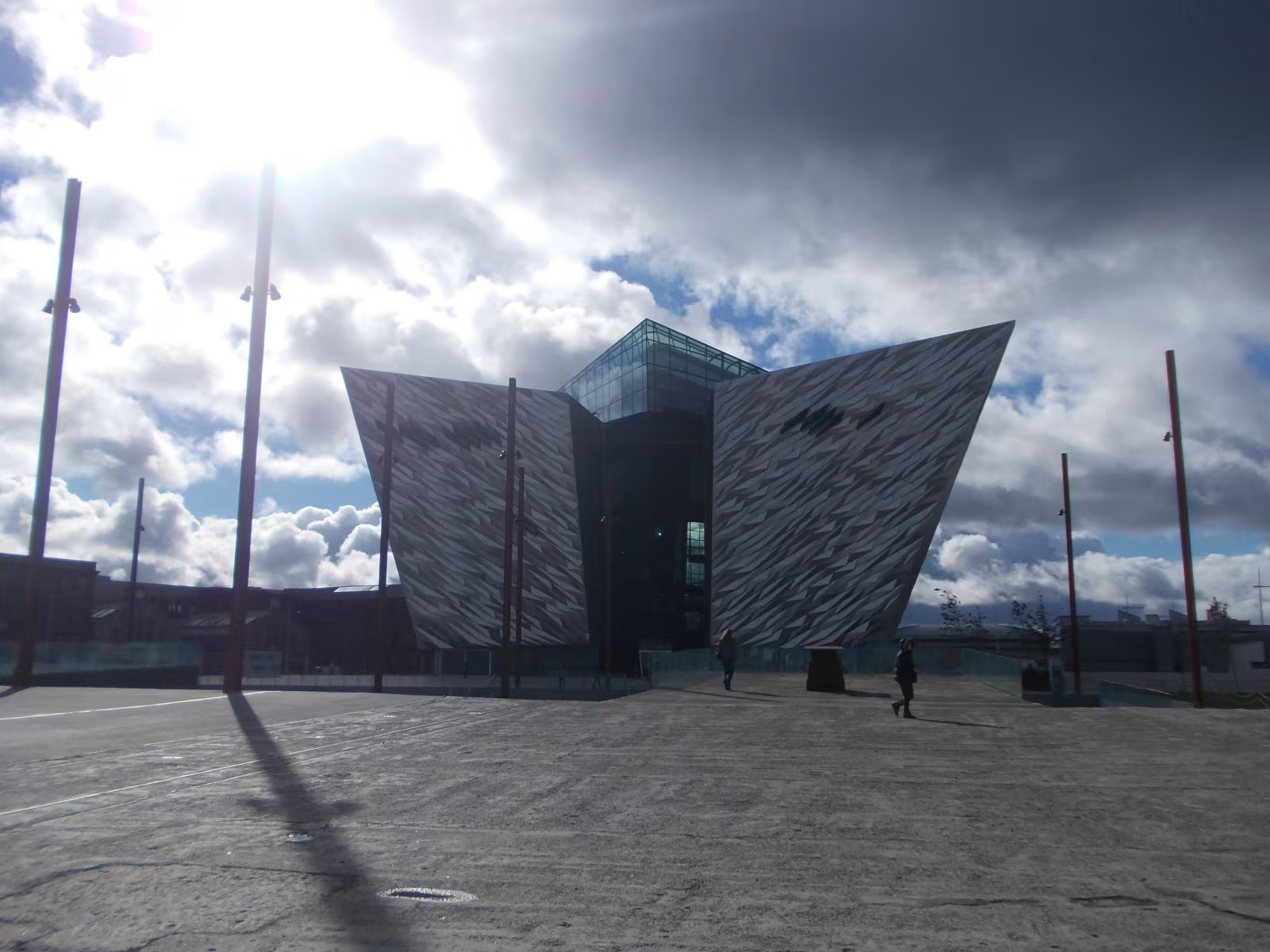
The museum sits on the Queen's Island slipways in the Titanic Quarter, a twenty-minute walk from the city centre along the River Lagan. The building is hard to miss. Four sharp angular prows rise from the ground, clad in almost six thousand individually shaped aluminium panels that mirror the hull plating on the ship's technical drawings. On a clear day the whole thing reflects the water and the sky simultaneously. On a grey Belfast day it reflects a sky the colour of old pewter and rain. Both versions are class, honestly.
The four prows represent the four ships built by Harland and Wolff at this location: the Olympic, the Titanic, the Britannic and the Nomadic. It's a building that rewards stopping to look at before you go in, which is your one useful thing to remember on a wet morning when everyone else is already queuing at the door.
What's inside
Nine galleries across six floors take you from the early industrial history of Belfast through the design and construction of the ship, the fitting-out, the maiden voyage, the sinking, and the long story of the wreck's discovery on the Atlantic floor in 1985. The layout is logical and the pacing is better than you'd get in most museums of this size. The fourth gallery, which puts you into an automated dark ride above a recreated view of the construction dock below, is the one everyone mentions. It moves you over a full-scale reproduction of the hull section and the keel blocks, and it's genuinely impressive in a way that photographs don't prepare you for.
There's a glass floor section in the Ocean Exploration centre where you look down into a reconstruction of the wreck site. Your man in our group refused to put a foot on it, which was the right call for him personally and gas to watch from the side. There's no shame in it.
The recreations of the first and third class cabins and dining rooms are worth slowing down for. The difference in scale and finish between first and third class is more confronting than any text panel, and the curators know it. The replica of the Grand Staircase is not full size, but it's larger than you'll expect, and you'll be taking a photo of it, planned or not. Fierce predictable of you. Fierce predictable of all of us.
The SS Nomadic
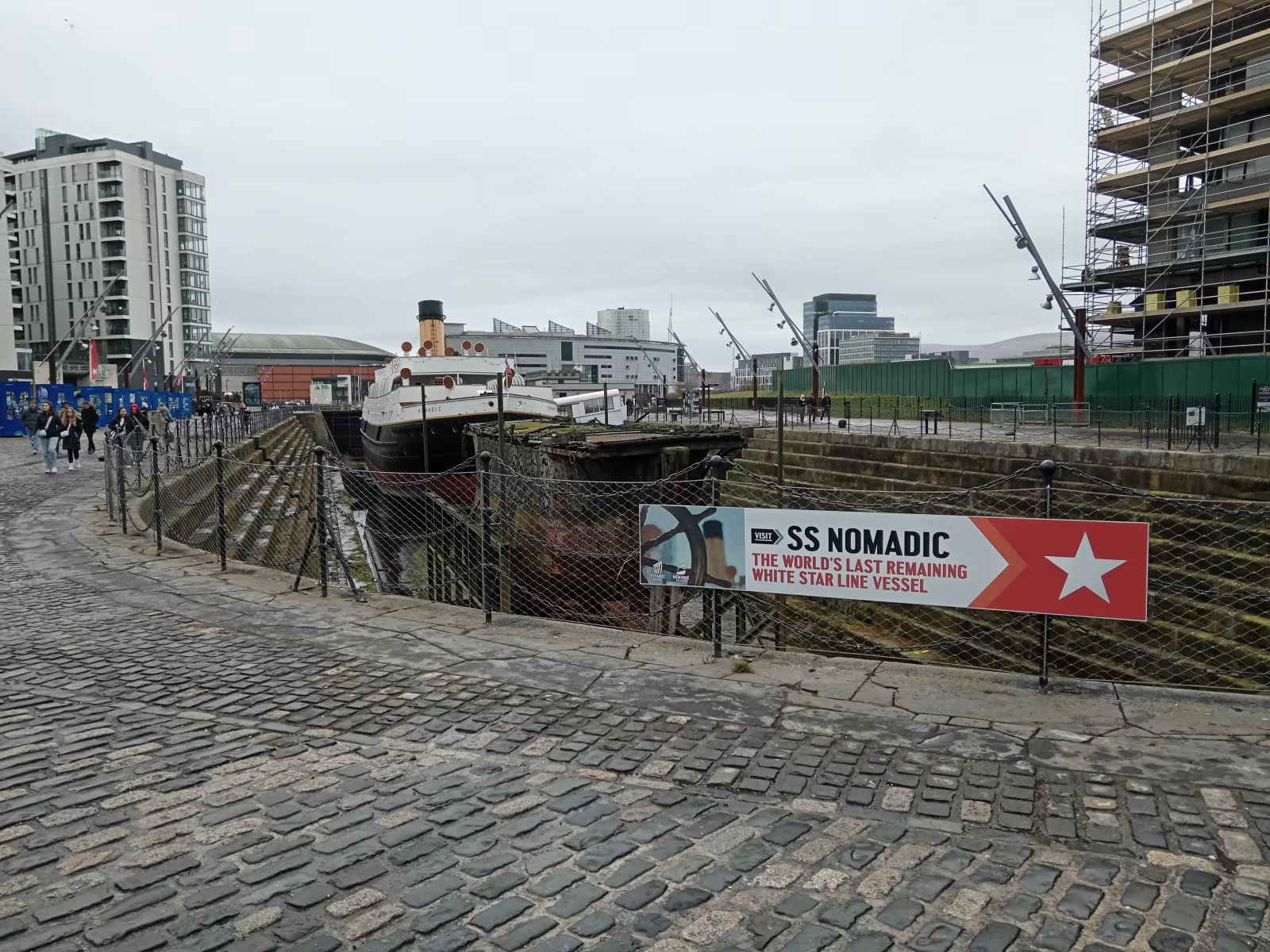
Included in your standard ticket is the SS Nomadic, moored in the Hamilton Dock right beside the museum. She was built at Harland and Wolff in 1911 as a tender, ferrying first and second class passengers from Cherbourg out to the Olympic and the Titanic when the ships were too large to dock. On April 10, 1912, she carried passengers to the Titanic in Cherbourg. She's the last surviving White Star Line vessel anywhere in the world.
She's been restored to her 1911 appearance and you can walk her decks and look inside the restored interiors, which are modest and unshowy and all the more affecting for it. The passenger manifests listing the names of people she transferred to the Titanic that morning are worth reading slowly. Most visitors underestimate how long they'll want to spend here. Budget at least an hour, and don't feel rushed off the gangway.
The Thompson Dry Dock
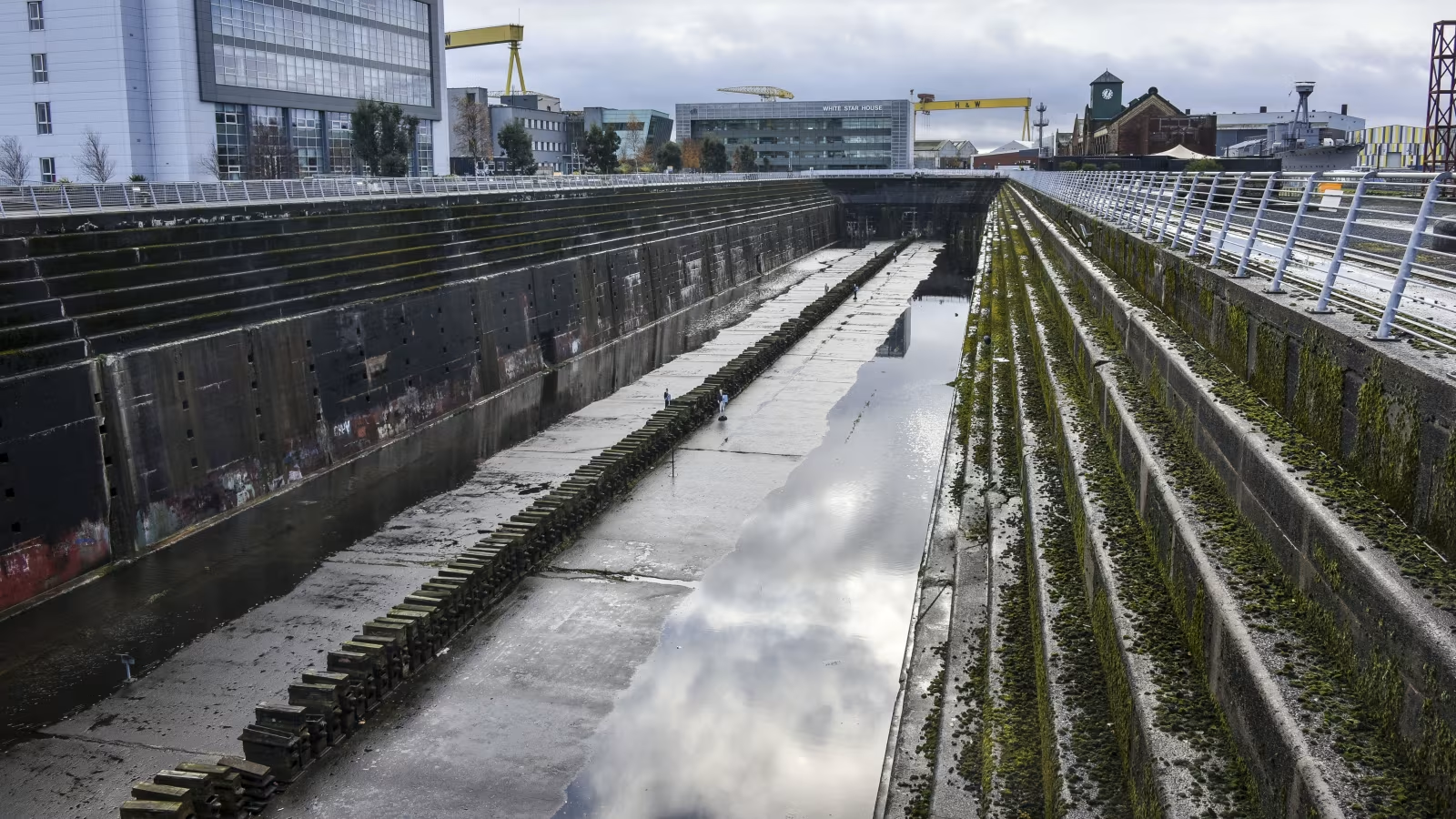
About a ten-minute walk from the museum, still within the Titanic Quarter, is the Thompson Graving Dock, where the Olympic and the Titanic were both fitted out after their launches. The dock is 270 metres long, and the original keel blocks that supported the ships during fitting-out are still in the floor. If you want to understand the actual physical scale of these ships, no photograph or model inside the museum comes close to standing at one end of this dock and looking to the other.
The Pump House beside the dock is also open and contains the original pumping equipment that drained the dock. It's quieter than the main museum, there's rarely a crowd, and it's the one part of the quarter that still feels genuinely industrial rather than visitor-attraction-polished. Fair play to the people who maintain it. The Titanic Quarter as a whole is the better for having this part of it left plain.
Getting there and planning your visit
The Titanic Quarter is a twenty-minute riverside walk from the city centre, heading along the Lagan from the Cathedral Quarter. It's a grand walk on a decent day and the views back to the city improve as you get further out. Taxis from the centre are cheap. There's paid parking in the quarter for drivers, though the riverside route from town sets the scene better than any car park approach.
Buy tickets in advance on the museum website. The online price is cheaper than walk-up on the door, and in summer and over school holidays timed entry slots genuinely sell out. Early Riser tickets for first-thing morning entry are cheaper again and the museum at opening time is a different and better experience than it is at half eleven on a Saturday in July. Plan for at least two and a half hours in the main building, another hour for the Nomadic, and another thirty to forty minutes if you're doing the Thompson Dock. The whole Titanic Quarter experience done properly is three to four hours.
For food and drink afterwards, there's a good selection in the Titanic Quarter itself, and the full range of what Belfast does well is covered in the Belfast food scene guide. If you're building a full day in the city, the Titanic Quarter pairs naturally with the route laid out in the essential first-day walk. And if you have an extra day, the Causeway Coast is ninety minutes from the city centre and worth every minute of the drive.
How much does Titanic Belfast cost?
Online adult tickets are £24.95, which includes access to the SS Nomadic. Walk-up tickets on the day are £26.95. Early Riser tickets for the first morning slot are £19.95 online. Children under 16 are cheaper; children under five are free. Book on the museum website rather than at the door to save money and to guarantee a timed entry in busy periods.
How long should you spend at Titanic Belfast?
Allow a minimum of two and a half hours for the main museum. Add another hour for the SS Nomadic and around thirty to forty-five minutes for the Thompson Dry Dock. If you are doing the full Titanic Quarter experience without rushing, three to four hours is a realistic guide.
Is the SS Nomadic included in the ticket?
Yes. The SS Nomadic is included in the standard Titanic Belfast admission ticket. She is moored in the Hamilton Dock immediately beside the museum and is included in the general entry price without any additional charge.
Do you need to book Titanic Belfast in advance?
You do not have to book in advance, but the online price is lower than walk-up and timed entry can sell out in summer and over school holidays. Booking directly on the museum website is the straightforward option.
Photos: Titanic Belfast museum exterior by Adam Jones (CC BY-SA 2.0); Titanic Quarter by Ryan Kirk (CC BY-SA 3.0); Thompson Graving Dock by Paul Hermans (CC BY-SA 4.0).