The ferry from Kennedy Pier gives you about twelve minutes to look at the thing before you have to get off it, and that's about right. Spike Island comes into view pretty much as soon as you clear the pier, and from then on it just fills the window. The fort walls are low and thick and angled outward in the particular geometry that artillery engineers worked out in the seventeenth century, each bastion covering its neighbour so that there's no angle of approach that isn't covered by fire from somewhere else. It's a star fort, and from a boat, it reads unmistakably as one. You'll have your phone out well before you arrive. Fierce predictable of you, and entirely justified.
The fort and why it's shaped that way
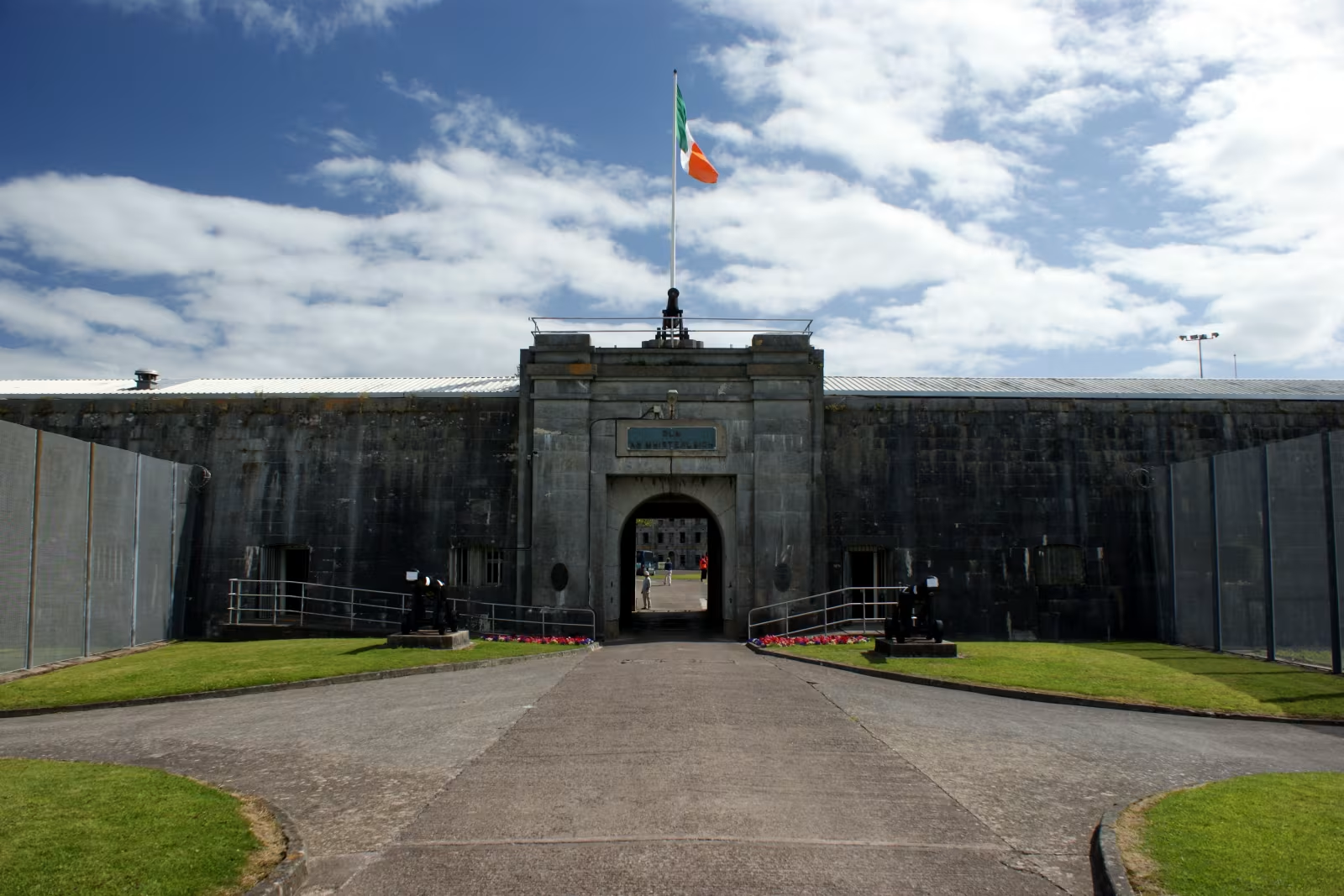
Fort Mitchel is the name of the fortification that covers most of Spike Island, though the island has been used for defence since the 1600s. The serious construction happened across the late eighteenth and early nineteenth centuries, when Cork Harbour was the Royal Navy's main Atlantic anchorage and the British were genuinely worried about a French invasion. The star shape was the state of the art for artillery forts: low enough that cannon fire passes over the walls rather than through them, and angled so that every section of wall is protected by fire from a neighbouring bastion. An attacking force had to find a way in under covering fire from multiple angles simultaneously, which in practice meant most attacking forces did the arithmetic and kept going.
The fort never fired a gun in anger. This is either a sign of its complete success as a deterrent or a comment on the calibre of the threats that actually materialised, depending on how you want to read it. Either way, the British spent decades and enormous sums building something impregnable and it worked, in the sense that nobody tried. You can consider that an excellent return on investment or a fairly expensive bit of theatre. Probably both, honestly.
What the island became in 1847
The fort's military purpose was supplemented in 1847 by something else entirely. The Famine had overwhelmed every prison and holding facility the British administration had in Ireland, and Spike Island was converted into a convict depot. At its peak it held more than 2,300 prisoners in conditions the facility was not designed for and the authorities did not particularly redesign it to accommodate. A number of the men held here were transported to Australia as part of the penal transportation system. For a period in the late 1840s, Spike Island was the largest prison in the world by population.
That fact lands strangely, given that it's an island in County Cork that you now reach on a fifteen-minute family ferry. But the scale of what happened here between the 1840s and Irish independence was enormous. There's a small graveyard near the south wall that holds those who didn't make it to the transport ships. The island stayed in continuous use as a military and prison facility through the Free State period, was a military base until the 1990s, and had its final run as a prison for young offenders between 1985 and 2004, closing under considerable controversy about conditions before sitting empty for over a decade.
The 1921 prisoners and what happened
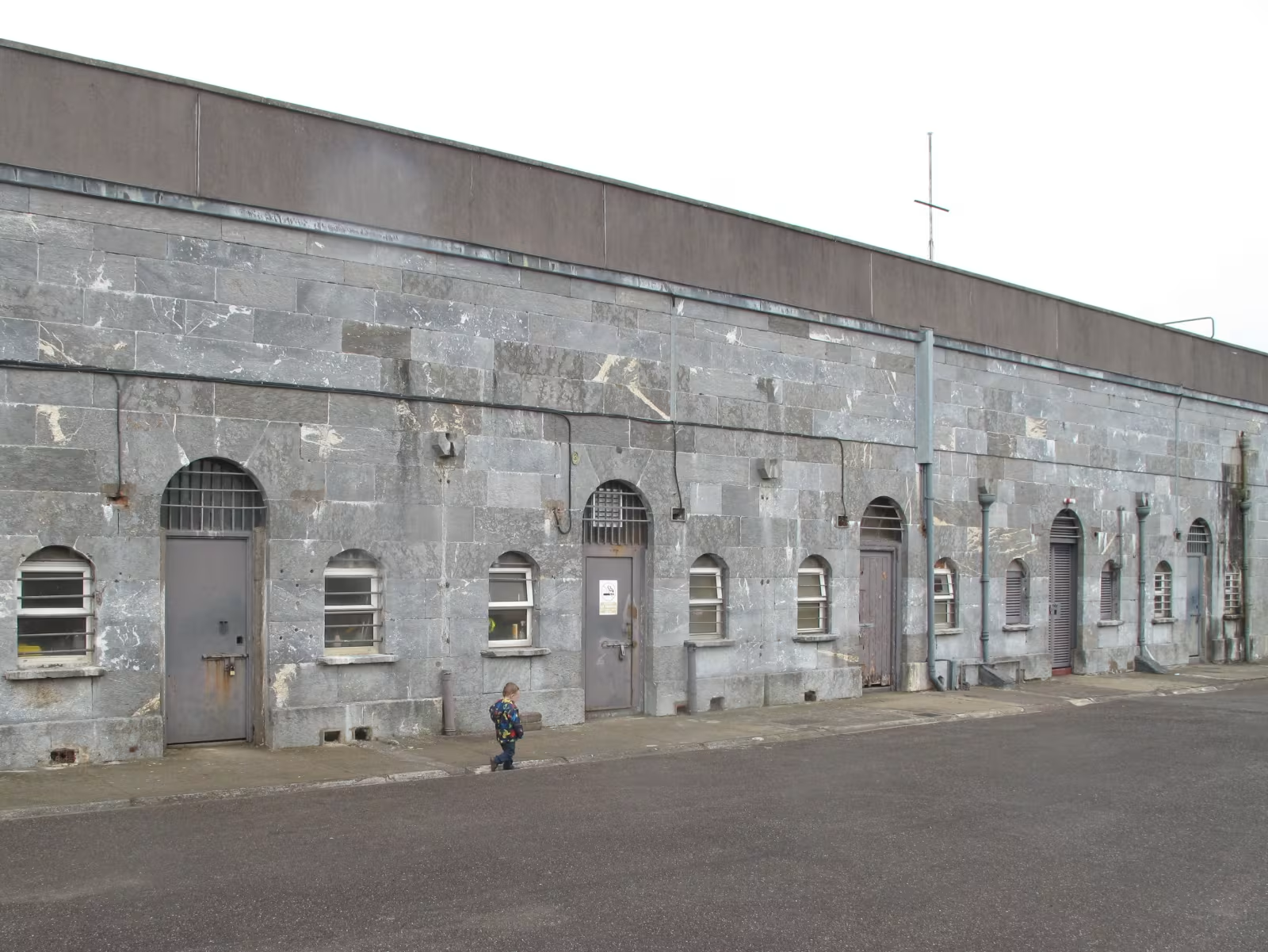
During the War of Independence, the British interned more than 1,200 republican prisoners on Spike Island, making it the largest military internment camp in the field at the time. The conditions were grim and the prisoners knew it, which led to hunger strikes, riots, and several attempts to get off the island without taking the scheduled ferry. Two groups managed it in 1921, though the island's position in the middle of Cork Harbour makes escaping a considerably more complicated proposition than walking out a gate. The exhibition covering this period is one of the more affecting parts of the visit, partly because the numbers involved are large enough to feel abstract and the individual stories make them concrete again.
What the tour is actually like
Cork County Council spent years restoring the island and opened it to visitors in 2016, and the work shows. The visit runs about three and a half hours in total including the ferry crossings, which is the right amount of time. There are guided sections led by storytellers who know the place well, and self-guided time to explore the fort's dozen-plus exhibition spaces at your own pace. The combination works. The fort is larger than it reads from the water and the exhibitions cover the full arc from the star fort's military origins through the Famine years, the War of Independence period, and the 1985 to 2004 prison era.
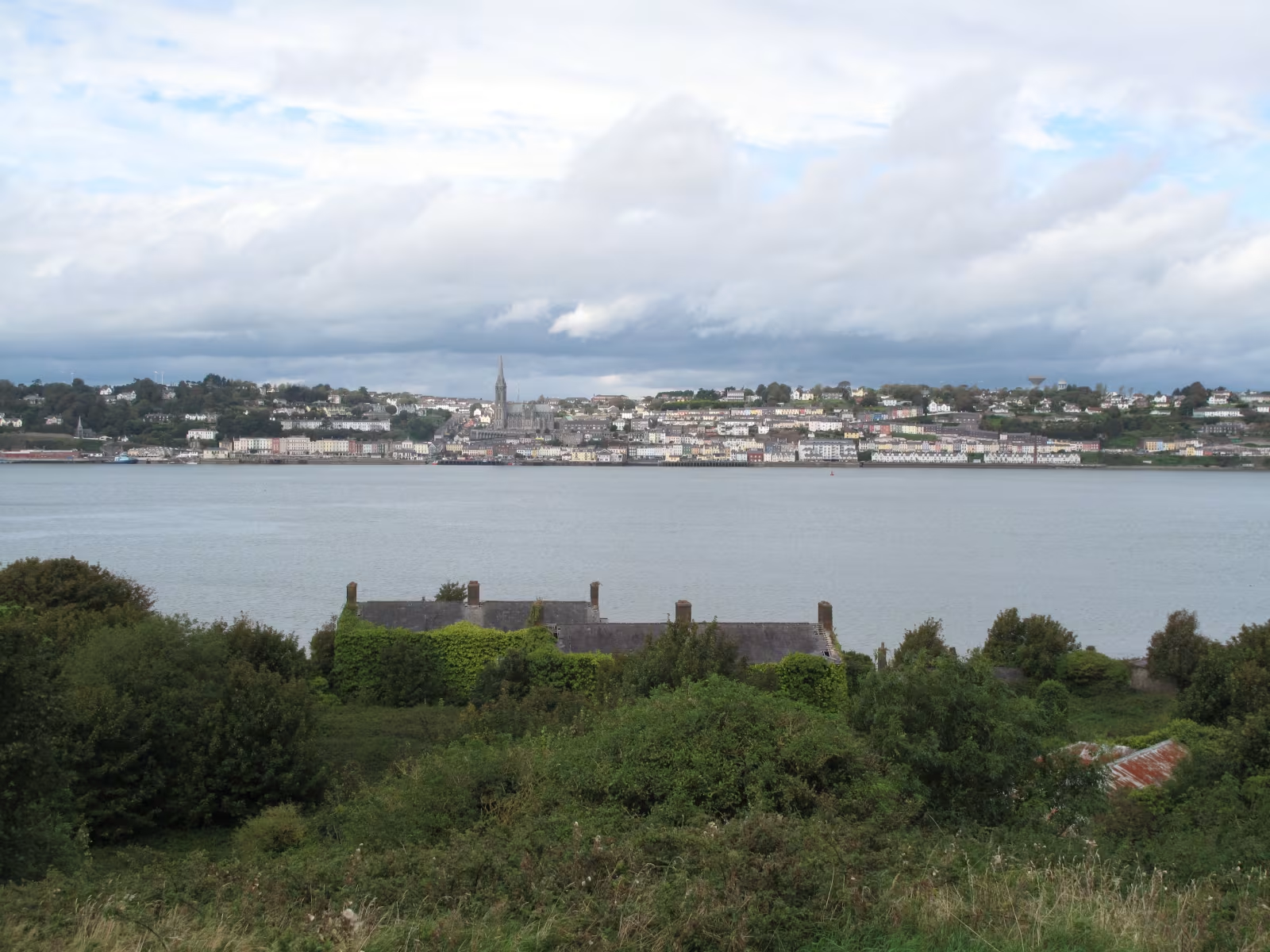
The terrain is manageable for most visitors, though the older sections have uneven ground and some areas involve short climbs. Children do well here because a star fort is inherently dramatic and the guides pitch the history to a mixed audience without dumbing it down. The views from the fort walls are worth stopping for. You can see Cobh clearly across the water, and on a clear day the harbour stretches toward the open sea in a way that makes it immediately obvious why the Royal Navy considered it such a strategic prize.
Getting there and planning your day
The ferry to Spike Island runs from Kennedy Pier in Cobh, so the first step is getting to Cobh. The train from Cork Kent Station takes twenty-five minutes and runs roughly once an hour, and it follows the harbour shoreline for most of the journey, which is one of the better short rail trips in the country. From the Cobh station, Kennedy Pier is a five-minute walk. Book your Spike Island tickets online before you leave Cork city. The ferries fill up, especially on summer weekends, and turning up on spec in July is optimistic in a way that is going to disappoint you.
A Spike Island day and a Cobh day fit together naturally into a full day out from Cork. The Cobh guide covers the Titanic Experience, the Queenstown Story, and where to eat in town, which all slot around the Spike Island ferry timings without any problem. Spend the morning in Cobh, cross to Spike Island after lunch, and you're back in Cork by early evening with the full shape of Cork Harbour making a lot more sense to you than it did in the morning.
If you're building a longer stay in Cork city, the Cork food guide is worth a look for where to eat that evening. And if you want to fill a second day on the coast, Kinsale is the obvious next move, a different headspace from the harbour history but just as worth the time.
How do I get to Spike Island from Cork city?
Take the train from Cork Kent Station to Cobh, which takes twenty-five minutes and runs roughly once an hour. From Cobh train station, Kennedy Pier is a five-minute walk. The Spike Island ferry departs from Kennedy Pier and takes approximately fifteen minutes each way. Your ticket includes the return ferry crossing and must be booked online in advance, particularly during summer months when sailings sell out.
How much does it cost to visit Spike Island?
Adult tickets are €27.95. Children under 12 pay €14.95, and children under two pay €4.95. There is a family ticket at €74.95. Seniors and students pay €23.95. The ticket covers the return ferry, a guided tour with one of the island's storytellers, and full access to all exhibitions across the 104-acre island. Groups of 15 or more get 15 percent off when booked in advance.
When is Spike Island open?
Spike Island is open seven days a week from April through October. In February, March and November it operates on weekends only. December and January are for pre-booked groups only. Advance booking is recommended year-round and is essential for summer weekends, when sailings can sell out weeks ahead.
How long does a visit to Spike Island take?
The full experience including both ferry crossings runs approximately three and a half hours. This covers the guided tour sections with one of the island's storytellers, plus self-guided time to explore the fort and its exhibitions independently. Give it the full time. The fort is considerably larger than it appears from the ferry and there is a lot to see across the dozen-plus exhibition spaces.
Can I do Spike Island and Cobh in the same day?
Yes, and it makes for a very good full day from Cork city. The Spike Island ferry departs from Kennedy Pier in Cobh, so the two sit naturally together. Spend the morning in Cobh at the Titanic Experience or the Cobh Heritage Centre, cross to Spike Island after lunch, and you will be back in Cork by early evening. The train connects Cork city to Cobh in twenty-five minutes and runs roughly hourly throughout the day.