
The Military Road is the old army road that runs straight over the top of the Wicklow Mountains, and it is still the best drive within an hour of Dublin. No towns, no traffic lights, no coffee stops for long stretches. Just bog, sheep, the Guinness Lake, a proper waterfall, and a road the British built to chase rebels out of the hills. Here is how to do it without rushing it or driving past the good bits.
What the Military Road actually is
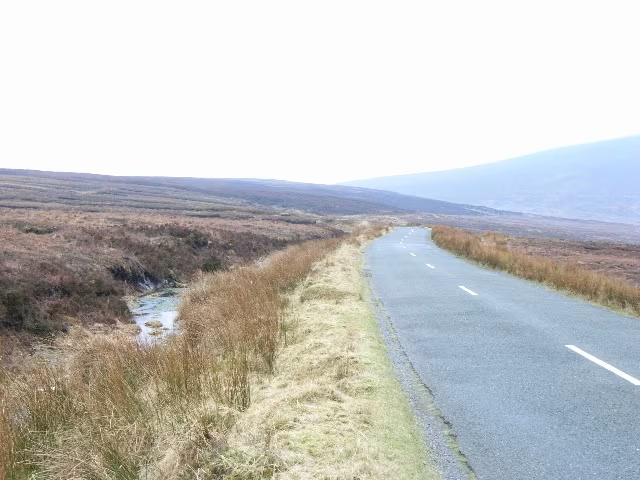
After the 1798 rebellion, the rebels who were left kept to the high ground where the army could not follow. So between 1800 and 1809 the British built a road straight across the spine of the mountains to get troops in. It ran from Rathfarnham on the edge of Dublin south to Aghavannagh, the better part of fifty kilometres of empty upland. The R115 carries the best of it today. It is mostly single track once you are up high, with passing places and blind crests, and almost nothing in the way of services. That emptiness is the whole reason to go.
Where to start and the route
Coming from Dublin, the easiest way on is through Enniskerry and up to Glencree. If you are passing that way it is worth pairing the drive with Powerscourt, which sits right beside Enniskerry. From Glencree the road climbs out of the trees and onto open blanket bog, and from there the run is Glencree to Sally Gap to Glenmacnass to Laragh. The mountain stretch is only about thirty kilometres but it is slow going, so budget two to three hours with stops and photographs. Bring the route up on your phone before you leave the valley, because signal disappears completely on the tops.
Lough Tay, the Guinness Lake
This is the view everyone stops for. A small dark lake with a bright crescent of white sand at the far end, and the Luggala estate below it, owned for decades by the Guinness family, which is where the nickname comes from. You see it from a layby on the R759 close to the Sally Gap junction. It is private land, so this is a look from above and admire it spot, not a walk down to the beach. You will recognise it instantly if you watched Vikings, which filmed here for years. Early morning or late evening light is best, and the layby is full by mid morning on any decent summer day.
Sally Gap
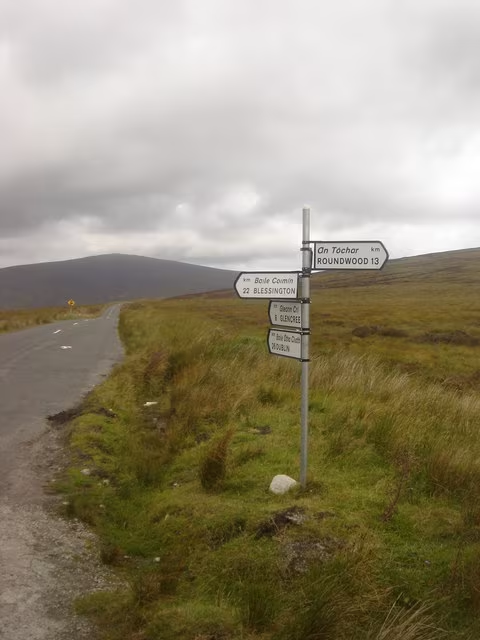
Sally Gap is a crossroads in the middle of the bog where the R115 Military Road meets the R759. There is nothing there, and that is exactly the point. Bog, sky, a few sheep, the road, and usually a lot of wind. The weather turns fast up here. It can be a clear morning in the city and full cloud on the Gap with visibility down to the next marker post. In winter this is the first road in the county to close for snow and ice, and it can stay shut for days.
Glenmacnass Waterfall
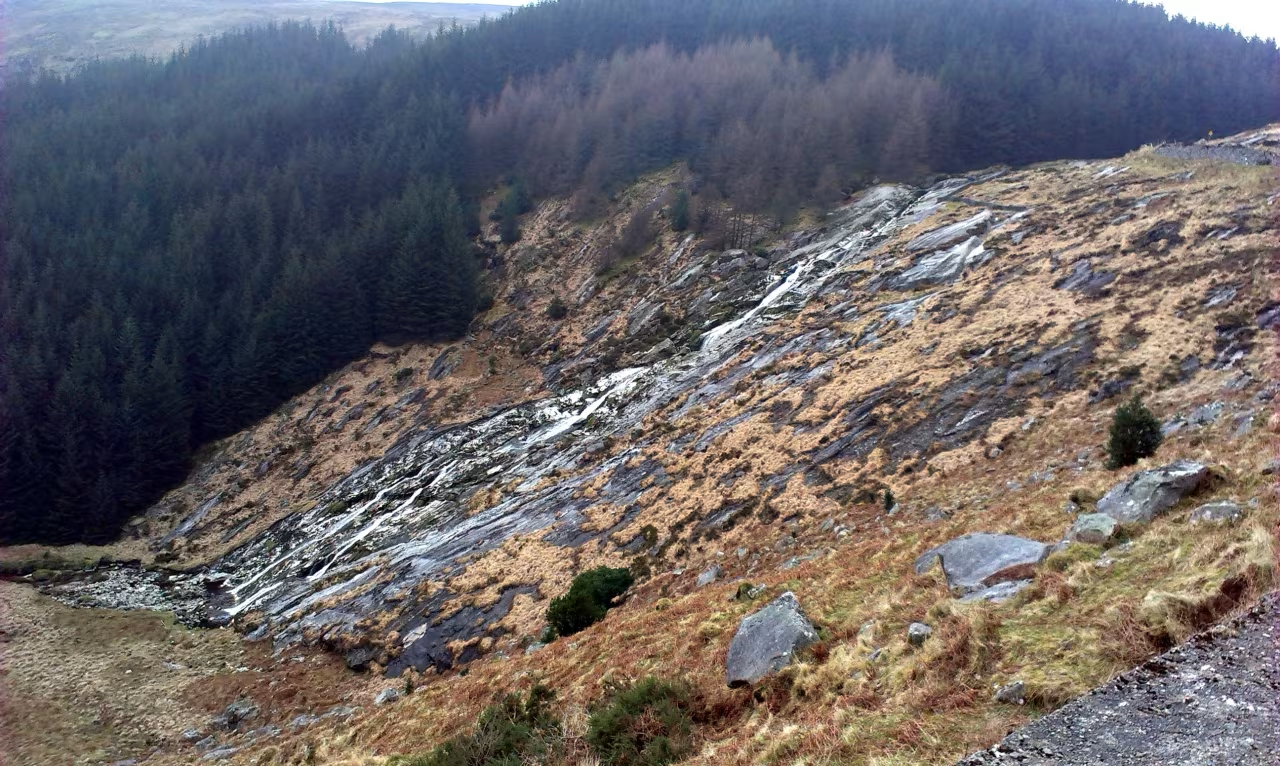
South of Sally Gap the road drops down into the Glenmacnass valley, and there is a big layby right beside the waterfall. The river slides down a long granite slab before it goes over the main fall. People walk out onto that slab for photos, and people slip on it every year, because wet granite with a film of moss is every bit as treacherous as it looks. Keep back from the edge, keep dogs and small kids close, and take the photo from the dry rock. From here the road runs the rest of the way down to Laragh.
Where it ends, and what to add on
The drive spills out at Laragh, a couple of minutes from Glendalough. If you have a half day, do the road in the morning and the monastic site at Glendalough in the afternoon. The two together are the classic Wicklow day out. If you would rather be out of the car altogether, the same mountains carry some of the best walking in the country, which we go into in the piece on walking sections of the Wicklow Way. And for the wider picture of what the range has to offer beyond this one road, start with the Wicklow Mountains as a Dublin escape.
Practical notes
- This is a drive. There is no public transport over Sally Gap.
- No fuel, no shops, no reliable signal between Glencree and Laragh. Fill the tank and download the map before you go up.
- Single track in places with blind bends. Use the passing places and the laybys, and never stop on the road itself for a photo.
- Sheep wander onto the road and will not move for you. Slow right down on blind crests.
- Winter means checking conditions first. Snow, ice and fog close the high road regularly between November and March.
- Best light is early or late. Midday in summer means full laybys and flat, hazy photos.
- Allow roughly half a day from Dublin once you count the drive out and back.
How long does the Military Road drive take?
The mountain section from Glencree to Laragh is only about thirty kilometres, but it is slow, single track in places, and you will keep stopping for the views. Budget two to three hours for the drive itself, and roughly half a day door to door from Dublin once you add getting out there and back.
Can you do this without a car?
Not really. There is no bus over Sally Gap, and the laybys are the whole experience anyway. A few private day tours from Dublin run a Wicklow loop that takes in Lough Tay and Glendalough if you do not want to drive yourself. If you would rather be on foot in the same mountains, the Wicklow Way is the better plan.
Is the Military Road safe to drive?
Yes in normal conditions, with a bit of care. It is a narrow mountain road with blind bends, loose sheep, and no barrier in most places. Drive to what you can actually see, use the passing places, and do not stop on the carriageway. In snow, ice or thick fog the high section is genuinely dangerous, and it is closed when it gets bad for that reason.
When is the best time of year to do it?
Late spring to early autumn for the long daylight and open roads. August brings purple heather right across the bog, which is the postcard version of the place. Winter can be spectacular with snow on the tops, but the road closes without much warning, so always check before you commit to it.
Is Lough Tay open to the public?
The lake and the Luggala estate around it are private. You view it from the layby on the R759, which is free and open to anyone, but you cannot walk down to the famous white beach. The viewpoint from the road is the experience, and it is a very good one.
Of everything you can do within an hour of Dublin, this is the one that actually feels like you left the city behind. Pick a clear morning, take your time, and let the slow bits be slow.
Photographs via Wikimedia Commons, used under CC BY-SA: Lough Tay by Cqui; Military Road near Sally Gap by JP; Sally Gap signpost by Margaret Clough; Glenmacnass Waterfall by DubhEire.