
The Vale of Avoca runs south from the Wicklow Mountains in a long corridor of oak and ash, the kind of valley you'd drive past without stopping and then feel guilty about for weeks. Two rivers come down off the hills and meet at a flat bend called the Meeting of the Waters, pool briefly, then carry on south as the River Avoca. Thomas Moore sat at that confluence in the early 1800s and wrote a poem about it that became one of the most recognised songs in Ireland. There's also a mill on the same site that's been weaving since 1723, which, to put it plainly, is a hundred years older than the United States.
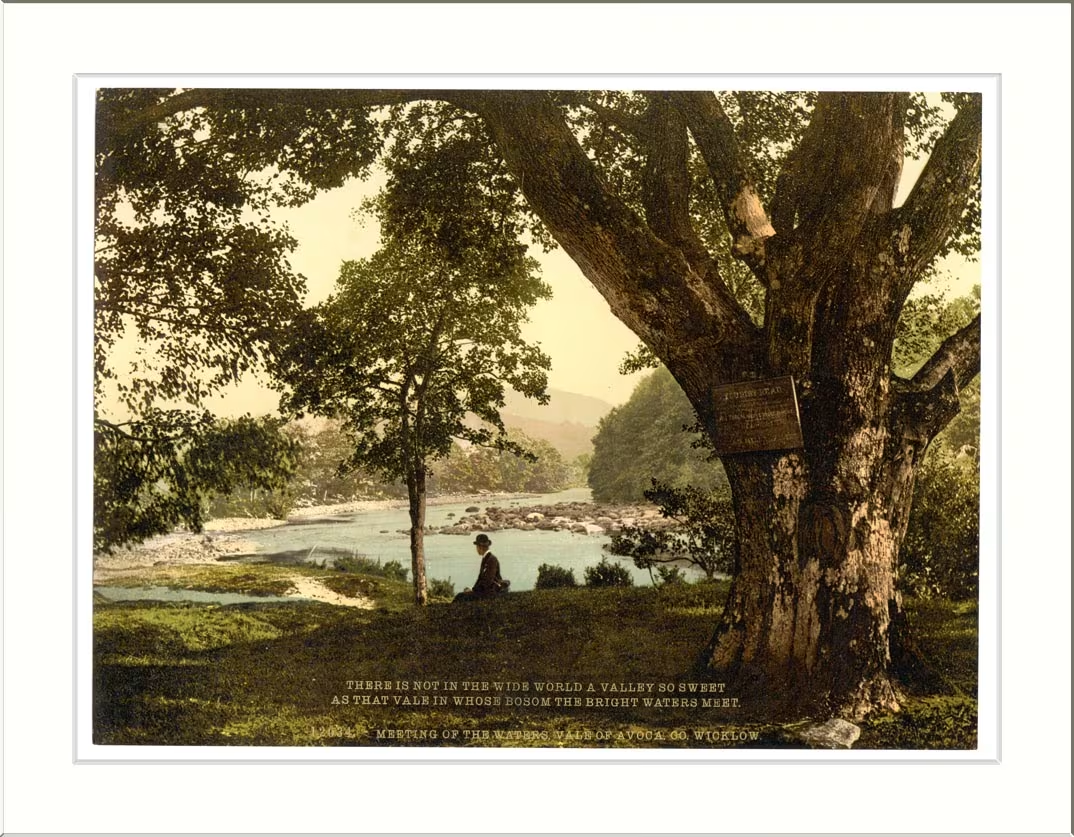
The Meeting of the Waters
The confluence is off the R752, about 2km north of Avoca village. There's a free car park and a short walk through riverside trees before you get to the bank. In front of you the Avonmore comes in from the left, the Avonbeg from the right, two different shades of water for a few metres before they blend and become the Avoca. It is the kind of place where the sound of water fills in any gap you leave in the conversation, which is probably why Moore liked it for thinking. He visited as a young man and published "The Meeting of the Waters" in 1807. The first verse opens: There is not in the wide world a valley so sweet / As that vale in whose bosom the bright waters meet. The valley is still sweet. There's a small stone monument to Moore near the bank that is easy to walk past if you're not paying attention. Worth a few minutes of yours regardless.
Avoca Handweavers: Ireland's oldest mill
The Avoca Handweavers has been weaving on the same site in the village since 1723. That is the oldest surviving business in Ireland and one of the oldest in Europe. The original wooden looms are still running, driven by electricity now instead of water but otherwise unchanged in setup and method. You can walk in and watch the weavers at work for free, wander the dye yard, and see the whole operation without buying a thing. The shop sells blankets, throws, scarves and coats in the same patterns they've been weaving for three hundred years. Fair play to them for keeping it going.
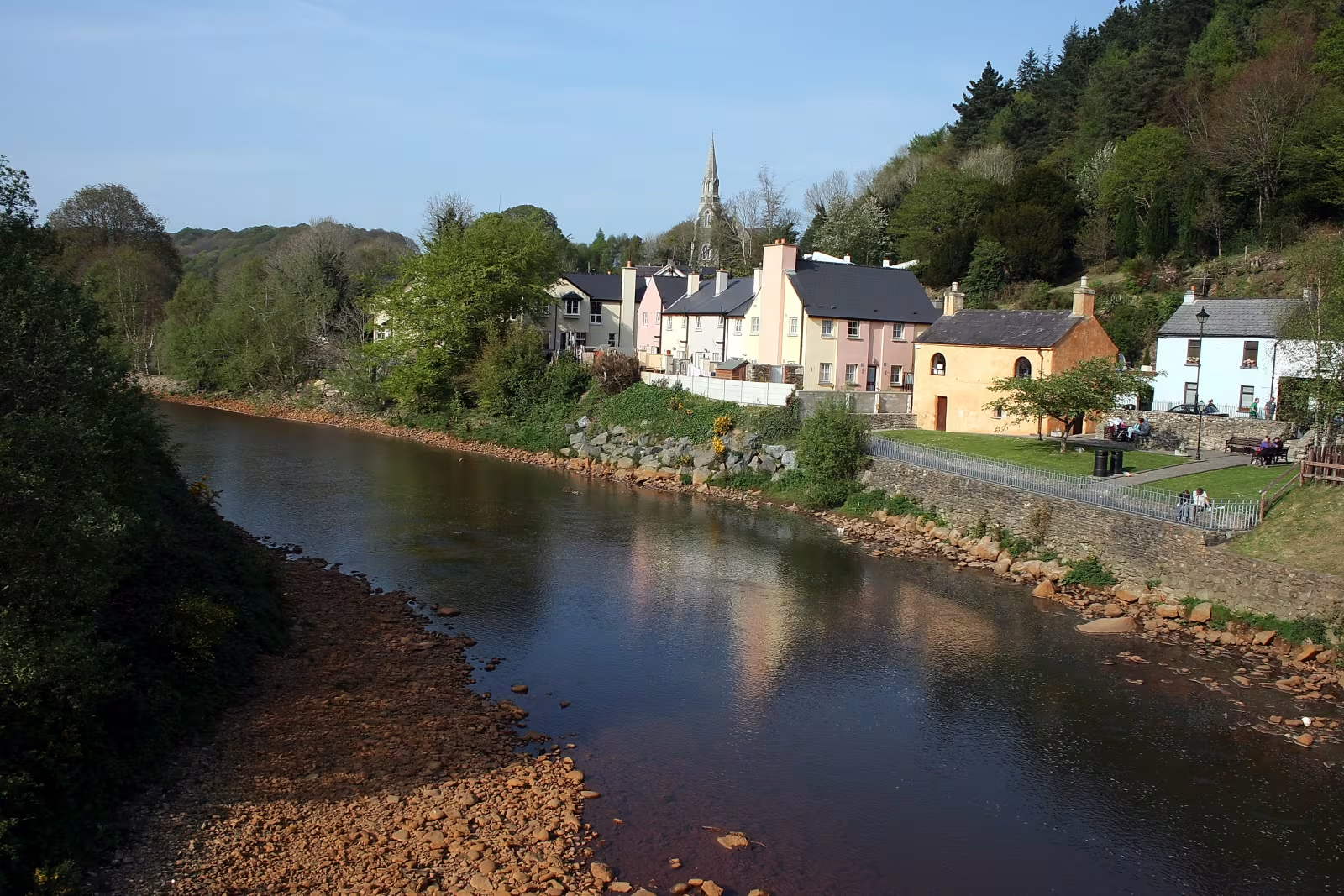
The village wrapped around the mill is small, steep, and has the slightly self-possessed quality of a place that has been there a long time and knows it. There's a pub at the bottom of the hill, another near the top, a café and a general store. The BBC drama Ballykissangel filmed here through the 1990s, and the pub where it was set still gets visitors in specifically for that reason. If you don't know what Ballykissangel is, don't worry about it. The village is grand without the context.
Walking the valley
The most walked route in the valley is the riverside path from the Meeting of the Waters car park south to the village: about 2km along the east bank, flat the whole way, 25 minutes or so at an easy pace, good for families and anyone who wants to earn their lunch without too much effort. From the village you can continue south on the Avoca River Way through older forest sections if you have the legs for it.
The Wicklow Way doesn't pass through Avoca village itself, running on higher ground to the west, but the valley sits at the southern edge of the Wicklow Mountains and pairs well with a few days in the county. If you're heading back north after the valley, the Military Road over Sally Gap makes an excellent return route. It's better in the afternoon light than the morning, and one of those rare cases where the way back is genuinely better than the way out.
Getting there and doing the day right
Avoca is about 80km south of Dublin, an hour and twenty minutes by car on a reasonable day. From Glendalough, it's 30km south via Rathdrum, under half an hour. The two make a solid full day in east Wicklow: Glendalough in the morning before the car parks fill (before ten if you're serious about it), then south to the valley for the afternoon. You'll have the mill, the walk, a lunch, and still make it back to Dublin in daylight with something to talk about.
The valley floor gets less rain than the mountain plateau above it, which is not nothing in Wicklow. If you're up at the Sally Gap in full cloud and thinking about calling it, the valley below is usually clearer. There's paid parking at the mill and free parking at the Meeting of the Waters. No train stops here any more. Bus Éireann runs to Arklow, 10km south, and from there you'd need a taxi or a very organised friend.
Where exactly is the Meeting of the Waters?
The Meeting of the Waters is where the Avonmore and Avonbeg rivers join to form the River Avoca, about 2km north of Avoca village off the R752. Take the R752 south from Rathdrum and the car park is signposted on the left before you reach the village. Parking and entry are both free.
What is Avoca Handweavers and can I visit without buying anything?
Avoca Handweavers is Ireland's oldest surviving business, established on its current site in 1723. The working looms are still in operation and entry to the mill is free. You can watch the weaving process, walk through the dye yard, and explore the grounds without any obligation to buy. The shop is open alongside the mill.
Is the Vale of Avoca worth visiting if I'm already going to Glendalough?
Yes. Avoca is about 30km south of Glendalough via Rathdrum, a 25-minute drive. The two make a solid full day in east Wicklow. Go to Glendalough in the morning before the coaches arrive, then drive down to the valley for the afternoon. The confluence, the mill and the village walk fit comfortably into three or four hours.
Can I walk from Avoca village to the Meeting of the Waters?
Yes. The riverside footpath runs along the east bank of the River Avoca from the village to the confluence, about 2km and almost entirely flat. Allow 25 to 30 minutes each way. The path is well-marked and suitable for all fitness levels.
Images: "Avoca Handweavers, County Wicklow" by Sarah777 (CC BY-SA 2.0) and "Meeting of the Waters, Vale of Avoca, Co. Wicklow" by Snapshots of The Past (CC BY-SA 2.0), both via Wikimedia Commons.