
Westport gets the tourist, and fair enough, it's earned it. But twenty-five kilometres south-west, past Louisburgh and out to the western arm of Clew Bay, there's a beach most people in Westport will happily recommend if you ask them and almost nobody goes to otherwise. Old Head. A long curve of sand, Clare Island sitting offshore looking pleased with itself, Croagh Patrick keeping watch from somewhere behind your right shoulder. Worth the drive. Worth more than the drive, actually.
The road out from Westport
You take the R335 south from Westport, the same road that passes the Westport House gates and follows the Carrowbeg River down through Belclare and Buckagh before it starts opening up and making promises. The drive takes about thirty-five minutes without stops. Somewhere around the halfway point the road comes up along the edge of Clew Bay and the light does extraordinary things to the water on a clear morning, particularly if there's been overnight rain and the sky is doing that specific Mayo thing where every cloud is enormous and luminous at the same time. County Mayo's idea of a warm-up.
The village of Louisburgh is where you arrive before the beach. It's a small place, a crossroads with shops and a pub and a square that feels slightly oversized for what's around it, which turns out to be because Louisburgh was laid out in the eighteenth century with ambitions it never quite fulfilled. That's grand. It just means it has good bones and a lot of sky. The name comes from the Battle of Louisburg in Nova Scotia in 1758, which a local landlord apparently felt strongly enough about to name an entire village after. His tenants have been explaining this to confused visitors ever since.

Old Head Beach
From Louisburgh you follow the road west, four or five kilometres of farmland and hedges and the occasional farm gate that is definitely not going to move for you, and then it opens out to the coast. The beach is long and sheltered and sits at the mouth of a small harbour. There's a slipway to one side, a few boats pulled up, and ahead of you a stretch of sand that empties out in a way that would be considered an oversight by any tourist board paying attention.
The water is cold, because it's County Mayo. But it's swimmable from June onwards if you're generous about what counts as swimmable, and plenty of people are. The swimming here is good, the bay is sheltered, and the beach has none of the Atlantic chop you'd get on the west-facing beaches further down the coast. It's the kind of swim you have to earn by getting into the water in the first place, and then feel smug about for the rest of the afternoon.
What makes the place is the view. Clare Island sits out to the west across the bay, unmistakable and improbably green. That's where Grace O'Malley is buried, or said to be buried, or possibly honoured in spirit while actually buried somewhere else, depending on which local historian you ask on which day of the week. Turn the other way and Croagh Patrick is right there, the conical top of it usually half in cloud, which is either atmospheric or just Tuesday in Mayo. You can stand on the sand and have both views at once, which is the kind of thing that happens by accident and stays with you longer than you'd expect.
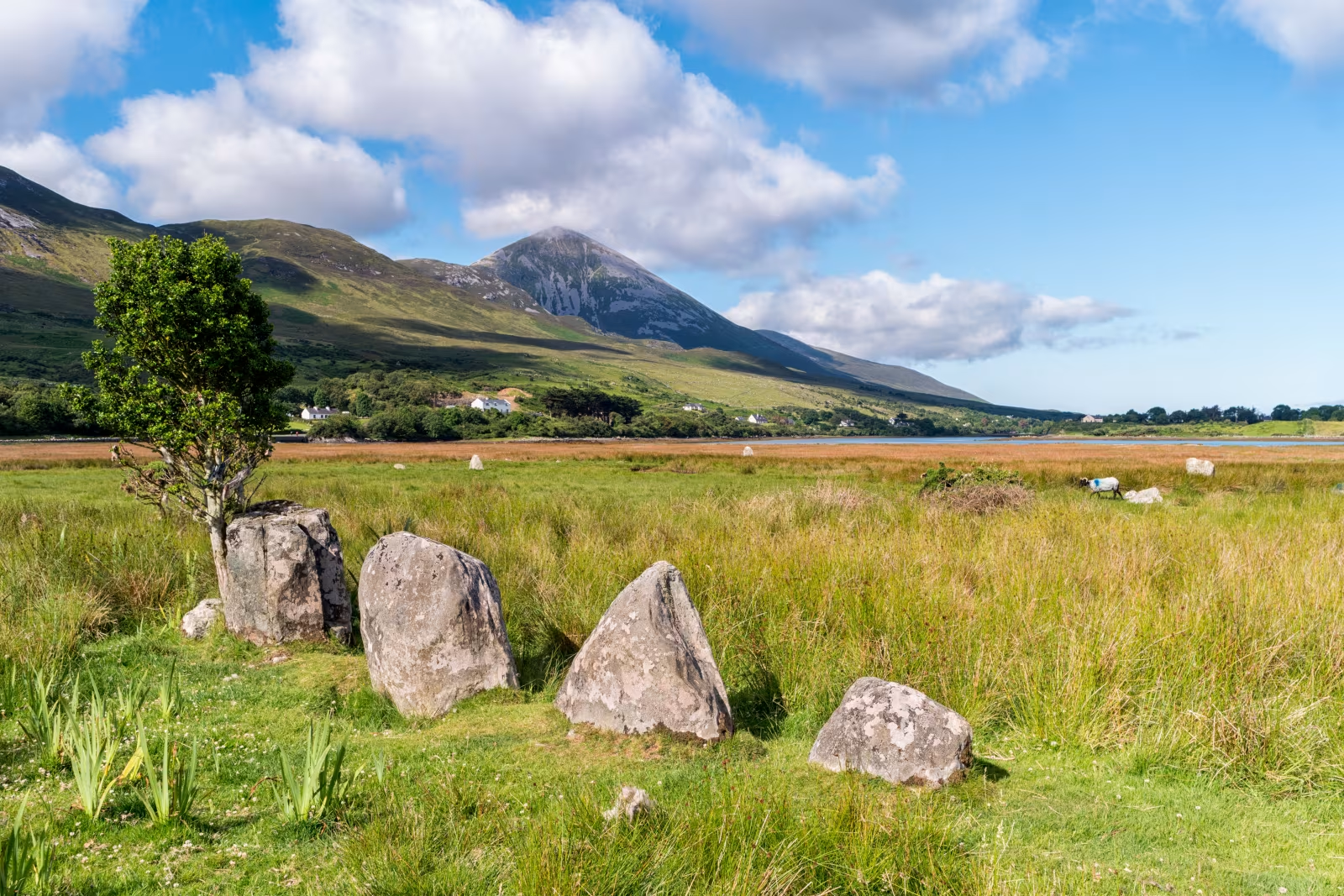
On a weekday in July the beach is quiet. On a bank holiday weekend in August you'll share it with a few hundred people from Galway and Westport who know where they're going, which is still a fraction of what the same beach would hold in another county with a better PR operation. There's no coffee kiosk at the car park. Bring a flask. This is not a complaint. The walk back to the car is fifteen minutes and the kettle's in the boot.
Roonagh Quay and Clare Island, if the timing works
A couple of kilometres further west from Old Head, the road reaches Roonagh Quay. This is the ferry point for Clare Island, and if you've ever wanted to cross to Clare Island but assumed it was a whole separate day from Westport, it turns out it isn't, not if you're already standing at Old Head Beach. The ferry crossing takes about fifteen minutes, the island has a loop road, a beach, and an abbey to poke around, and the whole thing is done by early afternoon if you catch a morning sailing. The full guide to Clare Island has the ferry times and what to do once you're across, which is worth reading the night before rather than standing at the pier squinting at a timetable board.
You don't have to go. Old Head Beach is a full stop in itself. But if you're already out at the far end of that road with a bit of time, there's something very satisfying about standing on Clare Island in the afternoon knowing you drove past Westport House three hours ago and you've already done two things most people in the county haven't managed in a week. That's the craic, really.
Doolough Valley, if you have the afternoon
South of Louisburgh, the R335 continues for another twenty kilometres into Doolough Valley, and this is where the day gets properly strange in the best possible way. The valley is a narrow pass between Mweelrea, which is Connacht's highest mountain, and Ben Gorm on the other side, with Doo Lough running dark and deep along the floor of it. The road through is quiet and the sky is enormous and in the right conditions the valley goes from spectacular to genuinely unnerving in about five minutes flat.
Many people walk this road in May, in silence. The Doolough Famine Walk commemorates what happened here in March 1849, when hundreds of starving people made this same journey through the valley in hope of receiving relief from local landlords, were turned away, and many died on the road back. The small memorial stone beside the lake carries more weight than any monument ten times its size. Even if you're not there for the annual walk, knowing what happened here changes how you look at the valley. It should.
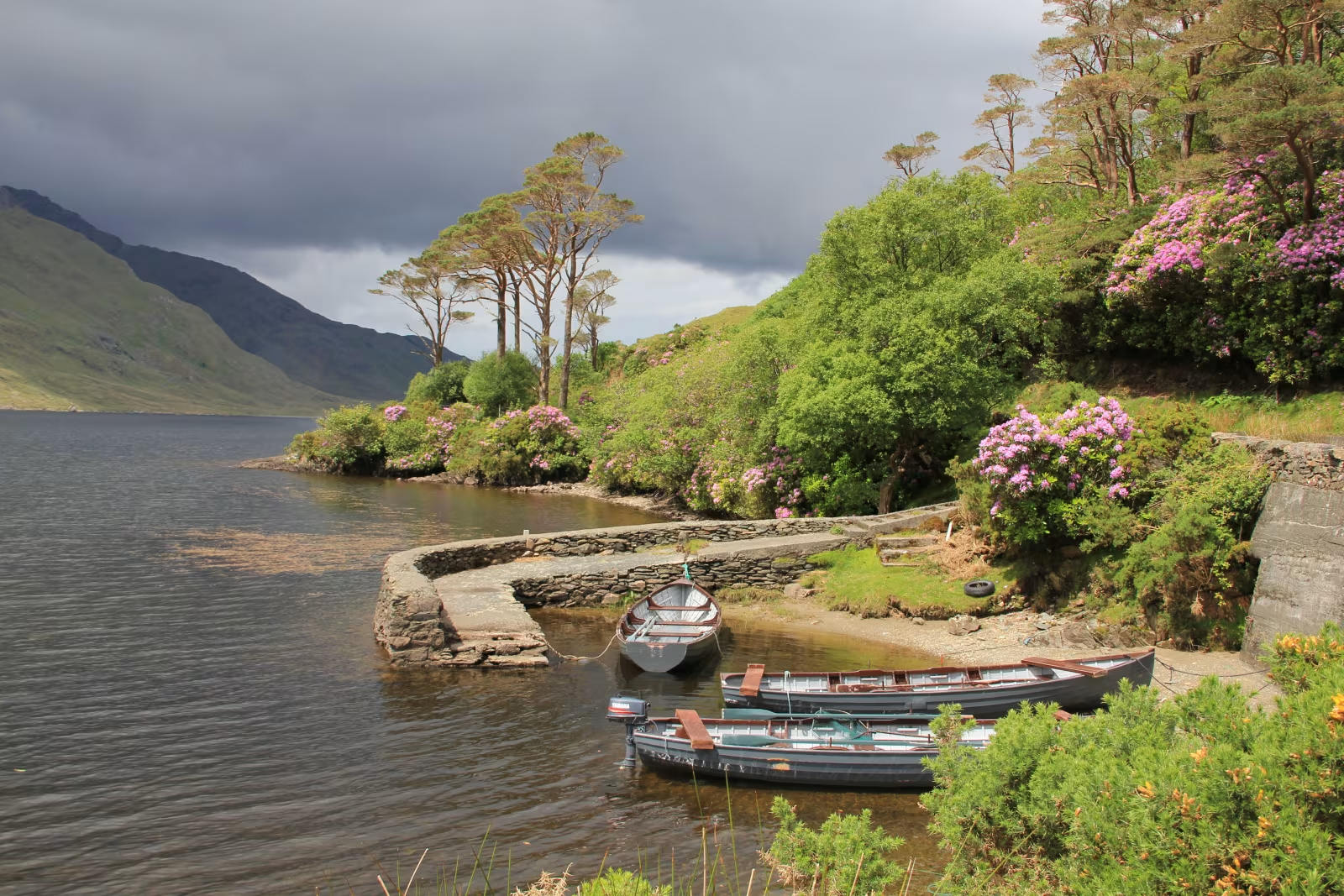
You don't have to drive the whole way to Delphi (though the road does eventually come out at Leenane, in Galway, if that suits your plans for the day). Even driving ten kilometres south from Louisburgh, pulling in, and walking for twenty minutes along the lakeshore earns you the kind of landscape that sticks. And then you turn around and drive back to Louisburgh for a pint, which is the correct response to a valley that's just made you feel slightly small.
When to go and what to sort out in advance
Late June through August is the window for swimming. The beach and the drive are worth doing at any time of year, and in November and March Doolough Valley is at its most dramatic with nothing but silence and mountain for company. If you're building a full day, allow four to five hours: the drive out, time at the beach (and Roonagh Quay if you're taking the ferry), lunch in Louisburgh or a packed one on the sand, and the valley if you're going south.
There's no lifeguard at Old Head Beach. Parking at the slipway end is free and informal. The road from Louisburgh is tarmacked all the way and fine for standard cars, though there are narrow stretches through farmland where you'll need to pull in if you meet something coming the other way. It's no bother, everyone on that road is in the same position and everyone's been grand about it historically.
For eating, Louisburgh has a pub and some basics, but if you want a proper lunch before or after, you're better sorted in Westport. The guide to eating and drinking in Westport has the options laid out. If this is your first time in the area and you want the wider picture, the Westport town guide covers everything worth seeing before you head out for the day.
How far is Old Head Beach from Westport?
Old Head Beach is approximately 27 kilometres from Westport town centre by road, following the R335 south through Louisburgh. The drive takes around 35 to 40 minutes without stops. Louisburgh village is about 24 kilometres from Westport, and the beach is a further 4 to 5 kilometres west of the village along the same road.
Is Old Head Beach safe for swimming?
Old Head Beach is a sheltered beach on the western side of Clew Bay and is suitable for swimming in calm conditions. There is no lifeguard service at the beach, so swimming is at your own discretion. Water temperatures in County Mayo are cold by international standards and are most comfortable between June and September. The bay position gives the beach some shelter from Atlantic swell, making it calmer than many other Mayo beaches.
Is there parking at Old Head Beach near Louisburgh?
Yes, there is free informal parking at the slipway end of the beach. The road from Louisburgh to the beach is tarmacked and passable in standard cars, though there are some narrow sections through farmland on the approach. Arriving early in the morning is advisable on busy summer weekends if you want a spot close to the beach.
What is the Doolough Famine Walk?
The Doolough Famine Walk is an annual commemoration held each May, retracing the route taken by hundreds of starving people through Doolough Valley in March 1849. They walked south from Louisburgh to Delphi Lodge seeking food relief from local landlords, were refused, and many died on the return journey through the valley. The walk covers approximately 9 kilometres of the Doolough Valley road and takes place in silence as a mark of respect. A memorial stone stands at the side of the lake along the route.
Can you take the ferry to Clare Island from near Old Head Beach?
Yes. Roonagh Quay, the ferry point for Clare Island, is approximately 2 kilometres west of Old Head Beach along the same road. Ferry crossings to Clare Island take about 15 minutes and run several times daily during summer. Clare Island is a working island with a beach, an abbey, and walking routes, and the return trip is manageable within half a day. Timetables and booking details are available from the ferry operators at Roonagh Quay.