
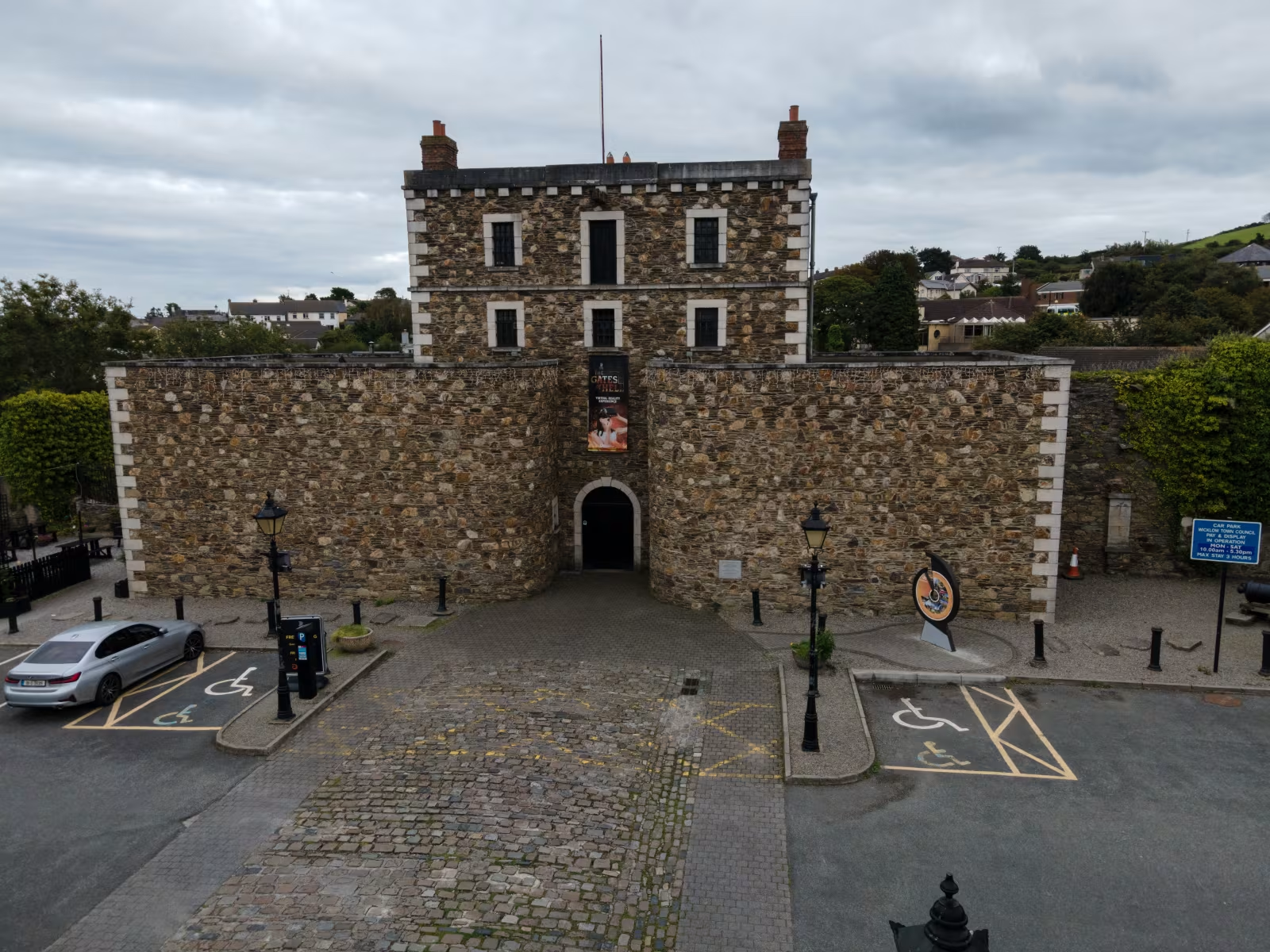
Most people drive through Wicklow town on the way to somewhere else and barely slow down. It's understandable. The mountains are up ahead, the gardens are signposted, and the town looks like a quick coffee stop at best. But right in the middle of Market Square, there's a stone building that has been doing the county's grimmer work since 1702, and stepping inside it for an hour will tell you more about the last three hundred years of Irish history than most things you could do in a week.
What the tour actually is
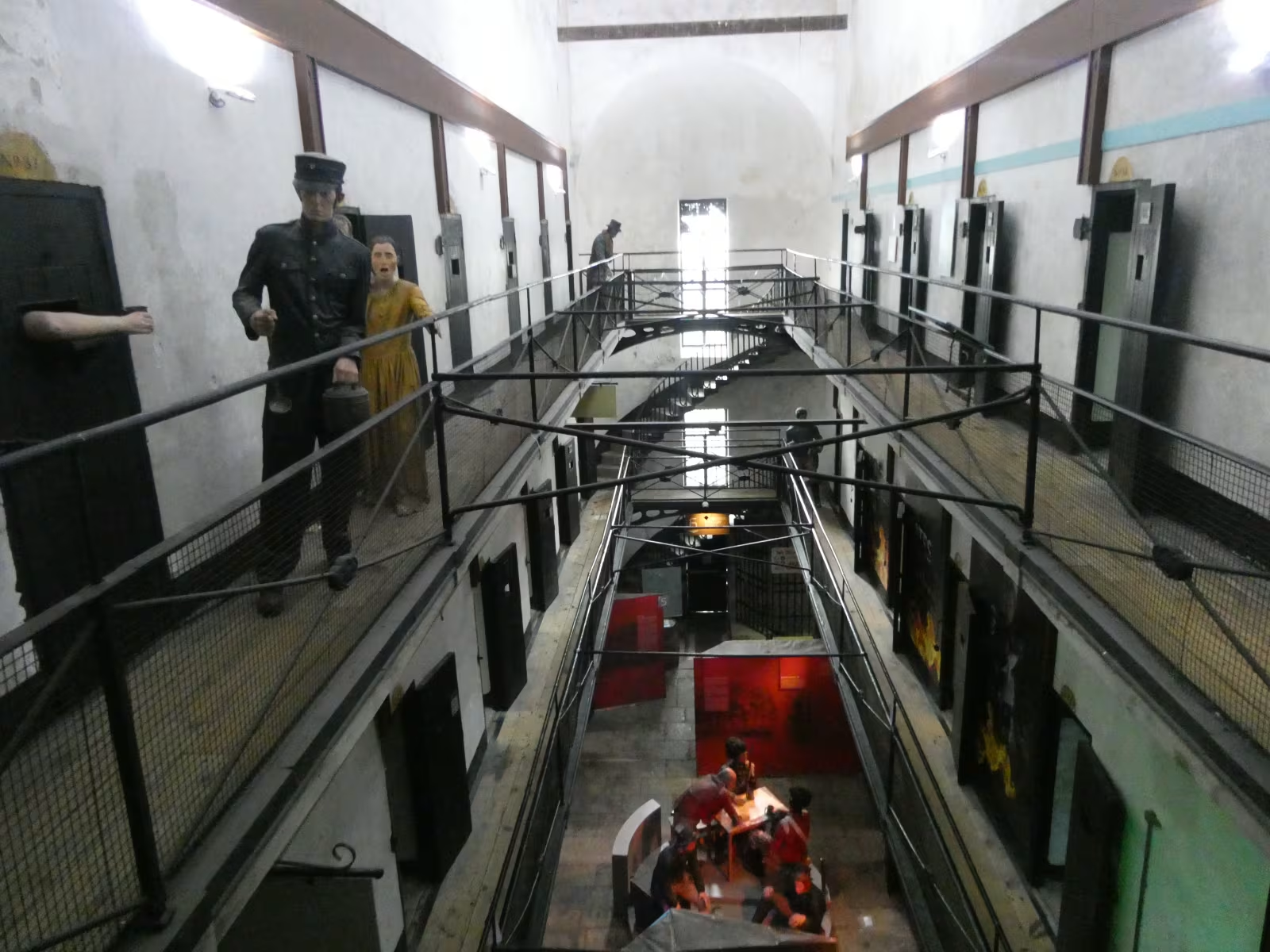
Wicklow Gaol runs guided tours with actors in period costume who'll greet you as a newly arrived prisoner and not particularly apologise about it. It sounds like the kind of thing that could be naff. It isn't. The guides know the material properly and the set-dressing is careful, right down to the cramped cells and the original stonework. You'll walk through the main floor, see the dark cell (the punishment solitary confinement room, which is exactly as pleasant as that sounds), and visit the transportation section, where life-size tableaux show the conditions on the convict ships to Australia. There's also a section on the 1798 rebellion that is worth the admission on its own.
The 1798 prisoners
In 1798, the United Irishmen rose against British rule across Ireland. In Wicklow and Wexford, the rebellion was particularly fierce. After it was suppressed, hundreds of prisoners came through this building. Michael Dwyer, one of the last rebel holdouts, kept fighting from the Wicklow Mountains for years after most of his contemporaries had been caught or killed. He was eventually arrested in 1803, brought to Wicklow Gaol, and transported to New South Wales. He ended up a police chief in Sydney, which is the kind of ending that nobody involved in 1798 would have predicted.
Anne Devlin
The person most worth knowing about in this building is Anne Devlin. She was Robert Emmet's housekeeper and was arrested after Emmet's failed rising in 1803. She was brought to Wicklow Gaol and held for years, without charge, without trial, because the authorities were convinced she knew the names of other conspirators and hoped prolonged imprisonment would eventually get her to talk. It didn't. She never gave a single name. When she was finally released she'd lost nearly everything and spent the rest of her life in poverty. The exhibit on her story is the quietest part of the tour and probably the one that sticks with you longest.
Transportation to Van Diemen's Land
Between the 1790s and the mid-nineteenth century, Wicklow Gaol was a significant departure point for convicts transported to Van Diemen's Land, which is now Tasmania. The crimes that earned people a one-way trip were sometimes serious, often not. Many were political prisoners. Others had stolen food or committed whatever minor offence desperation pushed them to. The transport conditions section of the gaol is where the tour gets genuinely uncomfortable in a way that feels appropriate, not sensationalised. The ships took months. A lot of people didn't make it. The ones who did built a significant part of what is now Australia, which is a fact the Australians know considerably better than most Irish people do.
The Famine years and what came after
The 1840s brought the gaol its busiest, saddest period. Hundreds of people were convicted of petty offences during the Famine years, often because prison food, grim as it was, was still food. Some actively sought arrest. Transportation to Australia continued alongside the ordinary business of incarceration. The building kept operating until 1924, by which point it had processed thousands of prisoners through a history that maps directly onto the worst periods of Irish experience. It spent decades derelict after closure before being restored and opened to the public in the 1990s.
Wicklow town while you're there
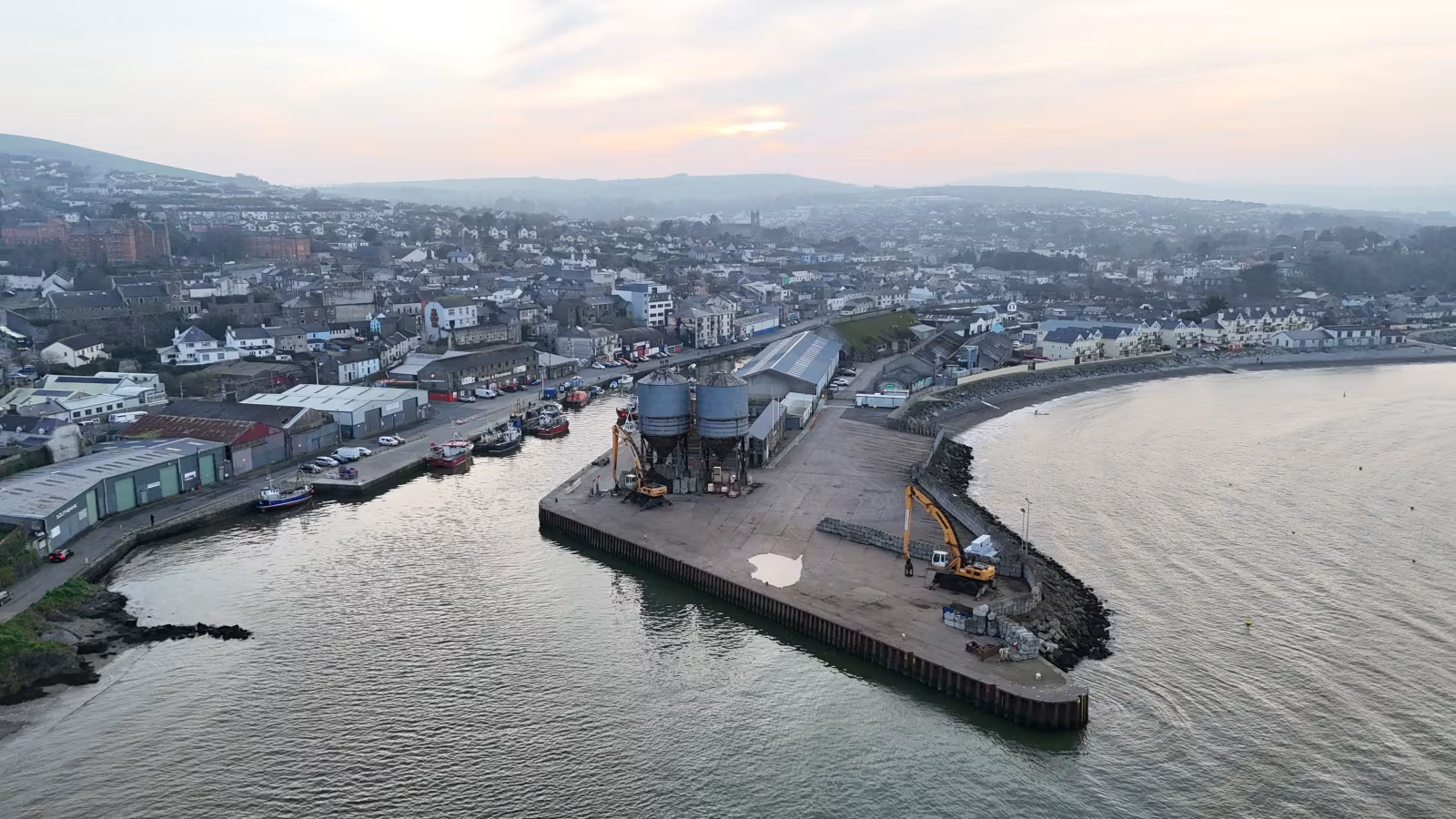
Wicklow town itself takes about twenty minutes to walk end to end, which is not a criticism. The harbour is a proper working harbour that hasn't been prettified for tourism and is better for it. Main Street has pubs and somewhere decent to eat. The beach, Wicklow Main Beach, is a ten-minute walk from the gaol. The town sits at the mouth of the Vartry River and, depending on the tide, you'll see herons on the mudflats on your way in.
If you're coming from Dublin, Wicklow is about fifty kilometres and roughly fifty minutes by road. The train runs too, Dublin Connolly to Wicklow in under an hour on the Wexford line, which makes it a comfortable half-day without a car. After the gaol, Glendalough is forty-five minutes inland and the sixth-century monastic site at the two lakes is a very different kind of history but a natural pairing for the day. The Wicklow Way also passes through the county if you want to stretch the legs after a morning staring at cells.
For a broader sense of what the county offers, the Wicklow Mountains guide covers the high ground that sheltered the last of the 1798 rebels and still shelters hikers. And if you're doing a run of the east coast, Powerscourt is half an hour north and a very different afternoon out.
Practical details
Wicklow Gaol is at Market Square, Wicklow town. It opens in April and runs through October, with tours daily from around 10am and the last typically starting at 5pm. Adult admission is around nine to ten euros. Children and family rates available. The tour takes about ninety minutes and the building is accessible throughout. Street parking is close by and pay-and-display bays are available in the town. Booking isn't normally needed outside July and August.
How long does the Wicklow Gaol tour take?
The guided tour runs about ninety minutes. It covers the main cell block, the dark punishment cell, the 1798 rebellion section, the transportation exhibit, the Famine-era content, and the Anne Devlin story. It's a proper guided experience with actors in period costume, not a self-guided wander, and the pace is unhurried. Most visitors are back outside within two hours including time at the small exhibition at the end.
Is Wicklow Gaol suitable for children?
From about eight years old upwards, yes. The tour deals with imprisonment, transportation, and the Famine in honest terms and doesn't soften the content, which means it can be intense for younger children. The actors in period costume and the staging are immersive. For teenagers and adults, the level of seriousness is exactly right. The building is accessible throughout and the tour pace is manageable for everyone.
How do I get to Wicklow town from Dublin?
The train is the straightforward option. Dublin Connolly to Wicklow on the Wexford commuter line takes roughly 55 minutes, with services running several times daily. By car, Wicklow is about 50 kilometres from Dublin city centre on the N11 and M11, around 50 minutes in normal traffic. The gaol is at Market Square, a five-minute walk from the train station. Street parking and pay-and-display bays are available nearby.
What else is near Wicklow Gaol worth visiting?
Glendalough, the sixth-century monastic site, is about 45 minutes by car into the mountains. The village of Rathdrum is on the way and a reasonable lunch stop. On the coast, Brittas Bay is 20 minutes south and has one of the better beaches on the east coast. The harbour in Wicklow town itself is a pleasant thirty-minute walk from the gaol if you have time to decompress after an hour and a half of Irish history.