
There is a half-day available in Dublin that most visitors never take, and it sits quietly on the northside wondering what it did wrong. Glasnevin Cemetery and the National Botanic Gardens are side by side above the city, ten minutes by bus from O'Connell Street, and between them they cover most of the important ground in Irish history, Irish politics, and Irish horticulture. You can do both in a morning, finish at the Curvilinear Range glasshouse with tropical plants pressing against the glass, and be back in the city centre for a sandwich before the afternoon coaches have even found their way to Trinity College. Grand, honestly. Give it the time.
Why Glasnevin exists at all
The cemetery was Daniel O'Connell's idea, and the reason he needed one tells you something about the Ireland he was working in. In the early nineteenth century, Catholics could not hold religious services at gravesides in Protestant cemeteries. It sounds minor until you understand that most burial grounds were Protestant-controlled and alternatives were few. What this meant in practice was that families buried their dead in silence, or paid penalties, or made do with conditions the law specifically designed to be undignified. O'Connell found this insufferable and did something about it, as was his way. Prospect Cemetery, as it is still officially known, opened in 1832: a walled, non-denominational burial ground where Catholics, Protestants, Dissenters and anyone else could receive whatever religious rites their family chose. The high walls and the watchtowers were built not for atmosphere but against bodysnatchers, who were an ongoing problem in a city where anatomy schools paid well for fresh material and asked no difficult questions about where it came from. The place was busy from the first day.
Roughly 1.5 million people are buried here now, which makes it one of the largest cemeteries in Europe and by far the largest in Ireland. The acre-per-acre density in the older sections is something you notice and then try not to calculate. Don't calculate it.
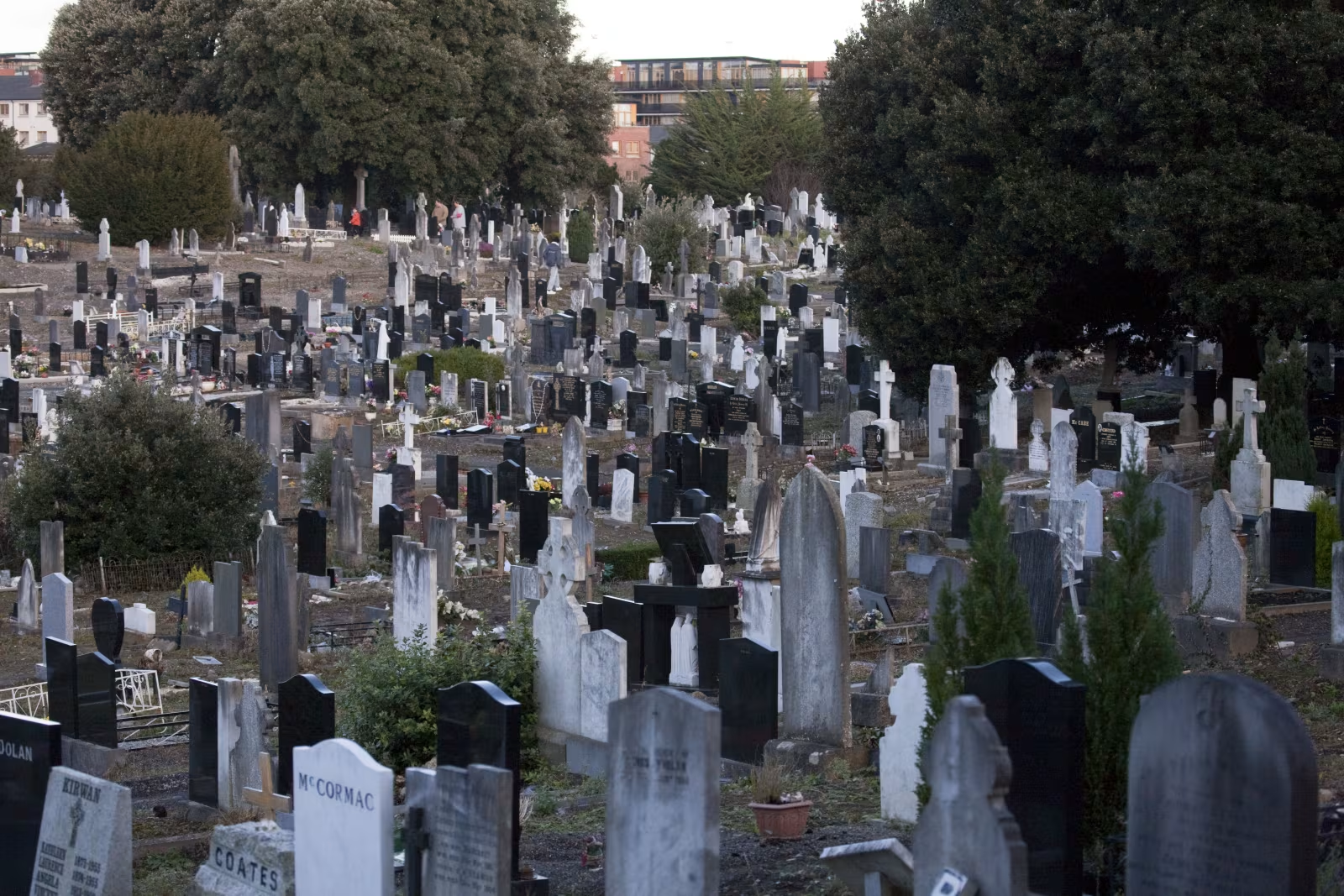
The graves worth finding
Daniel O'Connell himself is in the crypt under the round tower at the centre of the cemetery. The tower was completed in 1855 and stands 55 metres high, and since 2018 you can climb it for views across Dublin that justify the 198 steps. The crypt below holds O'Connell's remains and is properly atmospheric in the way that stone vaults under 55-metre structures tend to be.
Michael Collins is here. A simple headstone, a small, unshowy plot, nothing that quite prepares you for the weight of standing at it. Collins was killed in an ambush at Béal na Bláth in County Cork on August 22nd, 1922, during the Civil War he had spent months trying to prevent. He was thirty-one years old. The grave gets visitors every day, which is as it should be. Charles Stewart Parnell has a large, singular granite boulder for a headstone, which is either impressive or very Parnell depending on how well you know him. Éamon de Valera is here. Arthur Griffith, who founded what became Sinn Féin and died ten days before Collins in the same terrible August. Constance Markievicz, the first woman elected to Westminster in 1918, who didn't take her seat as a matter of policy and later became the first female Cabinet minister in Western Europe when the First Dáil formed in 1919. She remains, a century on, a sharply interesting person to spend twenty minutes reading about. Roger Casement, whose remains weren't returned from England until 1965. Brendan Behan. Luke Kelly. Jeremiah O'Donovan Rossa, whose funeral in 1915 was the occasion for Patrick Pearse's famous oration about blood sacrifice, a speech that hangs over everything that followed it.
The cemetery reads like a concentrated history of the country and if you go in with any sense of the last two centuries, you will keep stopping.
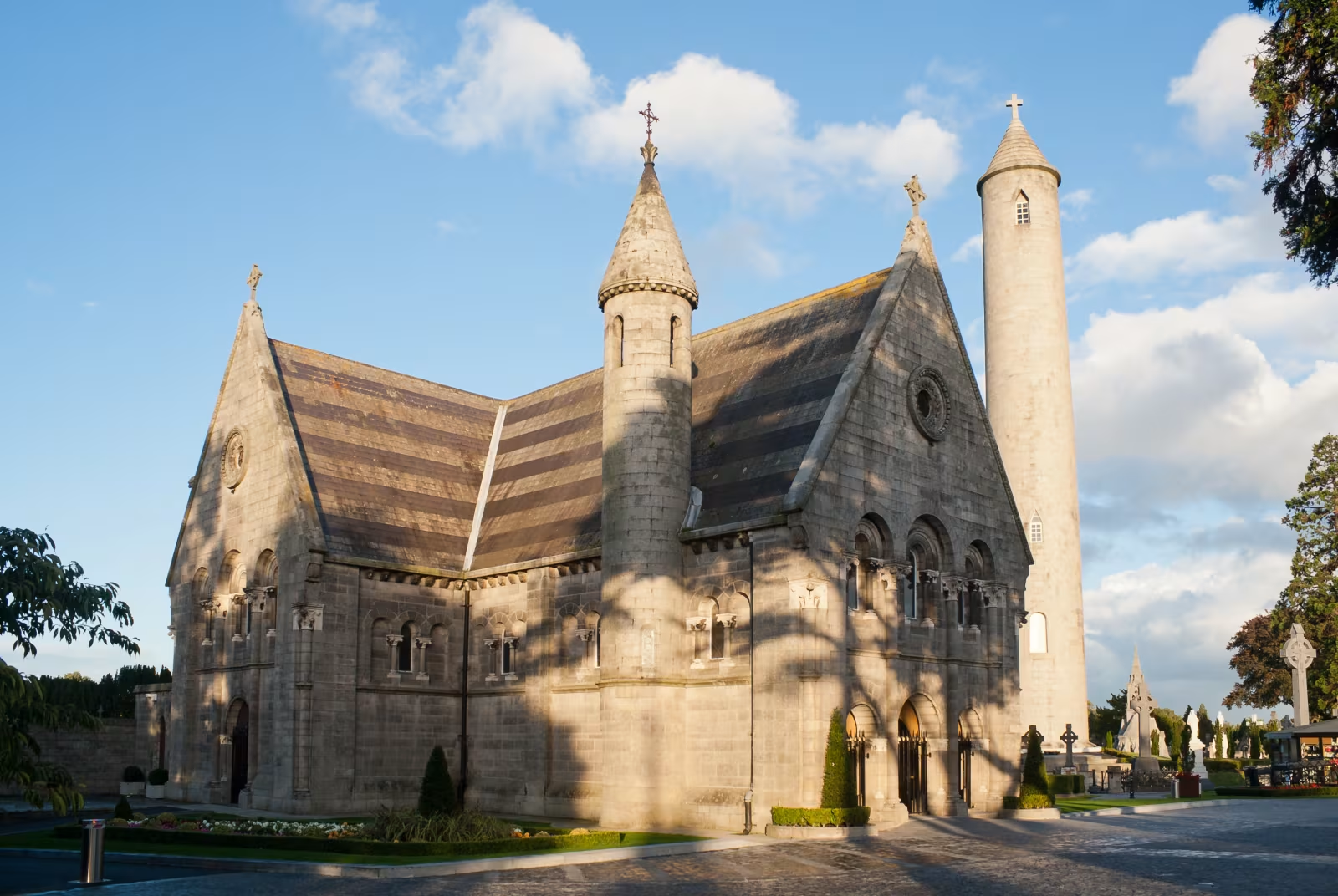
The museum on the grounds
The Museum of Irish History at Glasnevin opened in 2010 and is a serious piece of work. It uses the cemetery and the lives of the people buried in it as the thread running through Irish history from 1832 to the present: the land agitations, the Famine, the independence movement, the Civil War, the decades after. The interactive grave locator that lets you find any of the 1.5 million recorded burials by name is one of those things that sounds minor but in practice becomes the thing most people use most intensely. You put in a name, it gives you a map reference, and you go find the stone.
The museum charges admission for adults. The cemetery grounds themselves are free to walk at any time. Guided tours run throughout the day and are well worth taking if you want the stories attached to the famous graves rather than just standing at them slightly uncertain what you're looking at. The guides here know their material cold. Allow ninety minutes for a tour. Check the Glasnevin Museum website for current prices and tour times before visiting, as both change by season and booking in advance is the sensible approach from April through September.
The National Botanic Gardens
Five minutes on foot from the cemetery entrance and you're at the gates of the National Botanic Gardens, which have been growing things since 1795 and are free to enter. The contrast with the cemetery is a bit of a gear-change the first time. One minute you're at a Civil War grave, the next you're looking at 19,500 plant species in an immaculate Victorian garden with people walking dogs and someone attempting something optimistic with a sketchbook in a corner. Ireland: not doing things by halves.
The Curvilinear Range is the piece of the gardens that people who know their Irish architecture come specifically to see. Richard Turner built it between 1843 and 1869, wrought iron formed into a long, low curved structure housing tropical and subtropical plants that appear genuinely unbothered by their latitude. Turner also built the Palm House at Kew Gardens and the Palm House at Belfast Botanic Gardens. He knew what he was doing, and the work shows. The range was restored in 1995 and won a Europa Nostra Award for conservation architecture. The light inside on a clear morning is something worth timing your visit around.
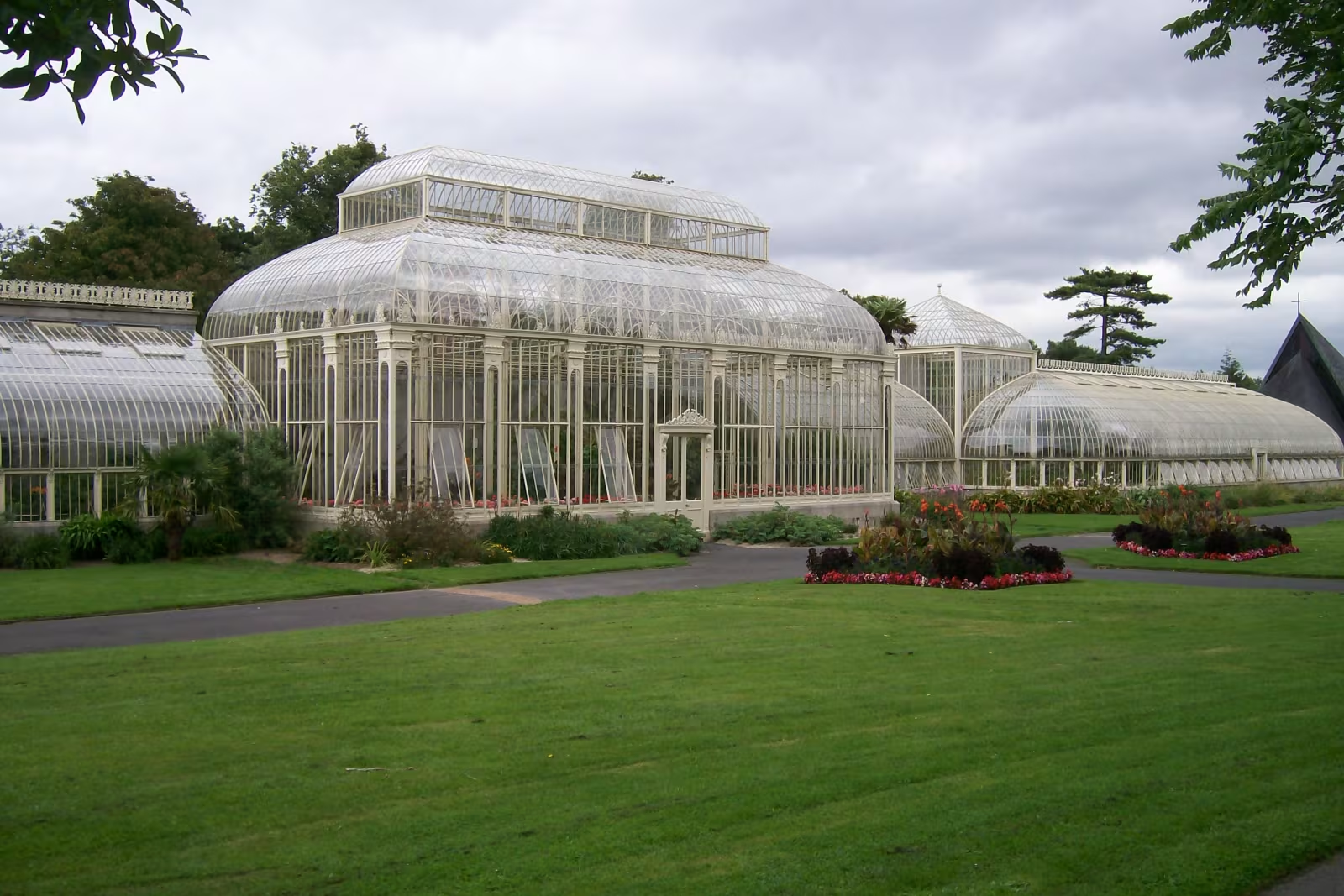
The herbaceous border outside the glasshouses runs for over 200 metres and in high summer is the kind of thing that makes gardeners stop and make involuntary noises. The rose garden is well-kept. The arboretum has specimen trees going back over a century. The OPW manages the grounds carefully and the standards are high. Opening times vary by season: from 9am Monday to Friday and 10am on weekends and bank holidays, with closing times ranging from 5pm in winter to 6pm in summer. Check the National Botanic Gardens website for the current schedule before planning an evening visit.
Getting there and making a day of it
The 83 and 83A buses from O'Connell Street run to the Finglas Road stop at the cemetery entrance, fifteen to twenty minutes from the city centre. A taxi takes about ten minutes and costs around €10 to €15. Cycling from the city along the Royal Canal towpath keeps you off the main roads for most of the journey and is a decent way to arrive. There is no Luas or DART close to Glasnevin, which is the one genuine inconvenience.
The sensible order is cemetery and museum first, then walk to the Botanic Gardens. Allow two to three hours for the full combination. There is a café in the gardens for coffee and the kind of baked goods that seem particularly welcome after the historical weight of the previous hour. If the sky falls in while you're there (and it might, this is Dublin in any month), the Curvilinear Range is an excellent place to wait it out. The glass muffles the rain and makes the whole thing oddly restful.
This corner of the northside is quieter than the city's tourist core and no worse for it. For days when the weather has genuinely given up and you want covered options across the city, the Dublin indoor guide covers what's worth your time. If you're building a history-focused day and want to go deep on the independence era, pair the cemetery with Kilmainham Gaol on a separate afternoon. Between them they cover the better part of a century of Irish political history and you'll come out with a lot to think about. The Phoenix Park is twenty minutes west by bus or bike if you want the contrast of a few hundred open acres after the tighter world of the cemetery. And for working out buses and routes to any of these, the guide to getting around Dublin without a car has the routes covered.
Is Glasnevin Cemetery free to enter?
Walking the cemetery grounds is free and open to the public. The Glasnevin Museum on the grounds charges admission: adult tickets are currently around €12, with reductions available for seniors and students. Guided tours of notable graves run throughout the day and cost extra. Check the Glasnevin Museum website for current prices and tour schedules before visiting, as these change seasonally.
Where is Michael Collins buried?
Michael Collins is buried at Glasnevin Cemetery in Dublin. His grave is in the Republican Plot section of the cemetery and is marked by a simple headstone. Collins was killed in an ambush at Béal na Bláth in County Cork on August 22nd, 1922. He was thirty-one years old. The grave is one of the most visited in the cemetery and is included on the standard guided tour.
How do I get to Glasnevin Cemetery from Dublin city centre?
The 83 and 83A bus routes from O'Connell Street stop on Finglas Road directly at the cemetery entrance, fifteen to twenty minutes from the city. A taxi from the city centre costs approximately €10 to €15 and takes about ten minutes. Cycling along the Royal Canal towpath from the city is practical and avoids most main roads. There is no Luas or DART station close to Glasnevin Cemetery.
Are the National Botanic Gardens free?
Yes. Entry to the National Botanic Gardens in Glasnevin is free. The gardens are open Monday to Friday from 9am and from 10am on weekends and bank holidays. Closing times range from 5pm in winter to 6pm in summer. The Curvilinear Range and Palm House glasshouses are included in free admission. Check the National Botanic Gardens website for current seasonal hours before planning a visit.
Can I visit Glasnevin Cemetery and the Botanic Gardens in one trip?
Yes. The two sites are a five-minute walk apart, separated by the River Tolka. A combined visit of two to three hours comfortably covers the cemetery grounds, the museum, and the main sections of the Botanic Gardens including the Curvilinear Range glasshouses. Visit the cemetery first, then walk south to the gardens. Both are on the same bus routes from the city centre.