
On any sunny Saturday in July, the N11 south of Bray moves the way a river moves when something has blocked the outlet: slowly, with a quiet collective resignation that everyone involved understands is the price of admission. That's Brittas Bay for you. It's a five-kilometre run of sand on the Wicklow coast, about an hour south of Dublin, and it draws a substantial portion of the city every summer weekend because it genuinely earns it. The dunes are a Special Area of Conservation. The water is clean. The beach doesn't try too hard. All it does is be excellent, and that turns out to be enough.
Getting there
The road is the N11 south from Dublin. Come off at Jack White's Cross or the Brittas Bay signpost depending on which end of the beach you want. In normal traffic you're looking at around an hour from the city. On a sunny Saturday in August, allow more and carry snacks. The ancient tactical wisdom here is: arrive before ten or after four. Before ten you get the beach almost to yourself in low morning light, which is the best version of it. After four the midday crowd is funnelling back toward the M50, the parking opens up, and the light on the dunes goes properly golden. Tuesday afternoon in August is another correct answer, if you've got that kind of flexibility.
There's a train to Wicklow Town, twelve kilometres north of the beach, and a bus connection from there. Check the timetable before depending on it, particularly on a weekend when frequency can be sparse. But it does work, and arriving without a car means the walk from the bus stop along the coast road serves as a decent warm-up.
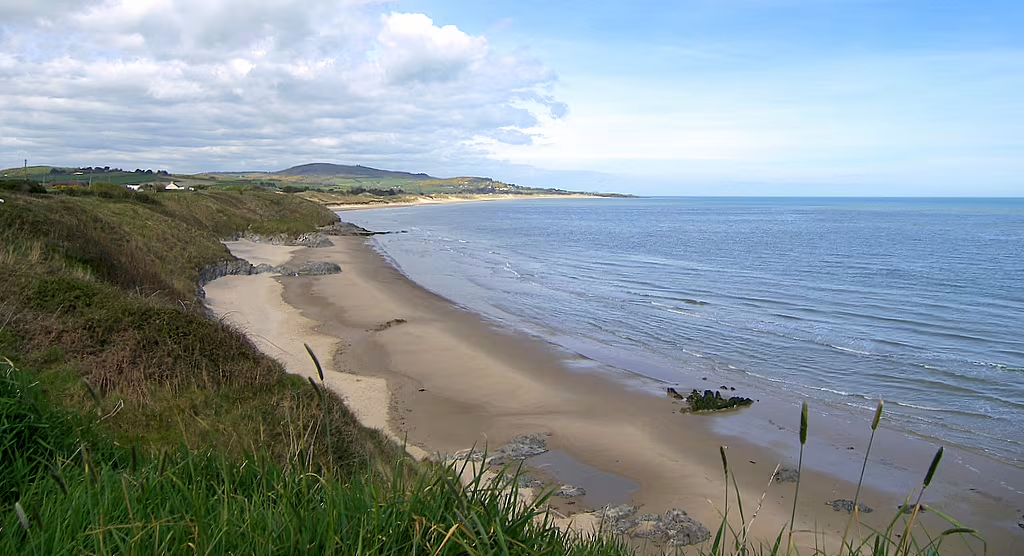
North Beach, South Beach, and the stream between them
The beach splits into two distinct halves separated by a stream that runs down through the dunes and across the sand to the sea. The North Beach is the busier one: closest to the main car park, backed by the highest dunes, and where the seasonal food vans and the majority of families with young children set up. If you're travelling with small people who need to be within sprinting distance of facilities, North Beach is your end. If you've come for quiet, South Beach gives you more strand with proportionally less company, and it's a very nice amount of strand.
The stream itself is one of those features that looks incidental on a map and turns out to be the thing the children remember most about the day. At low levels you can wade across ankle-deep; after a wet week it gets ideas and you'll be looking for a narrower crossing point. It runs cold even in August, which apparently doesn't deter anyone under twelve in the slightest. Fair play to them.
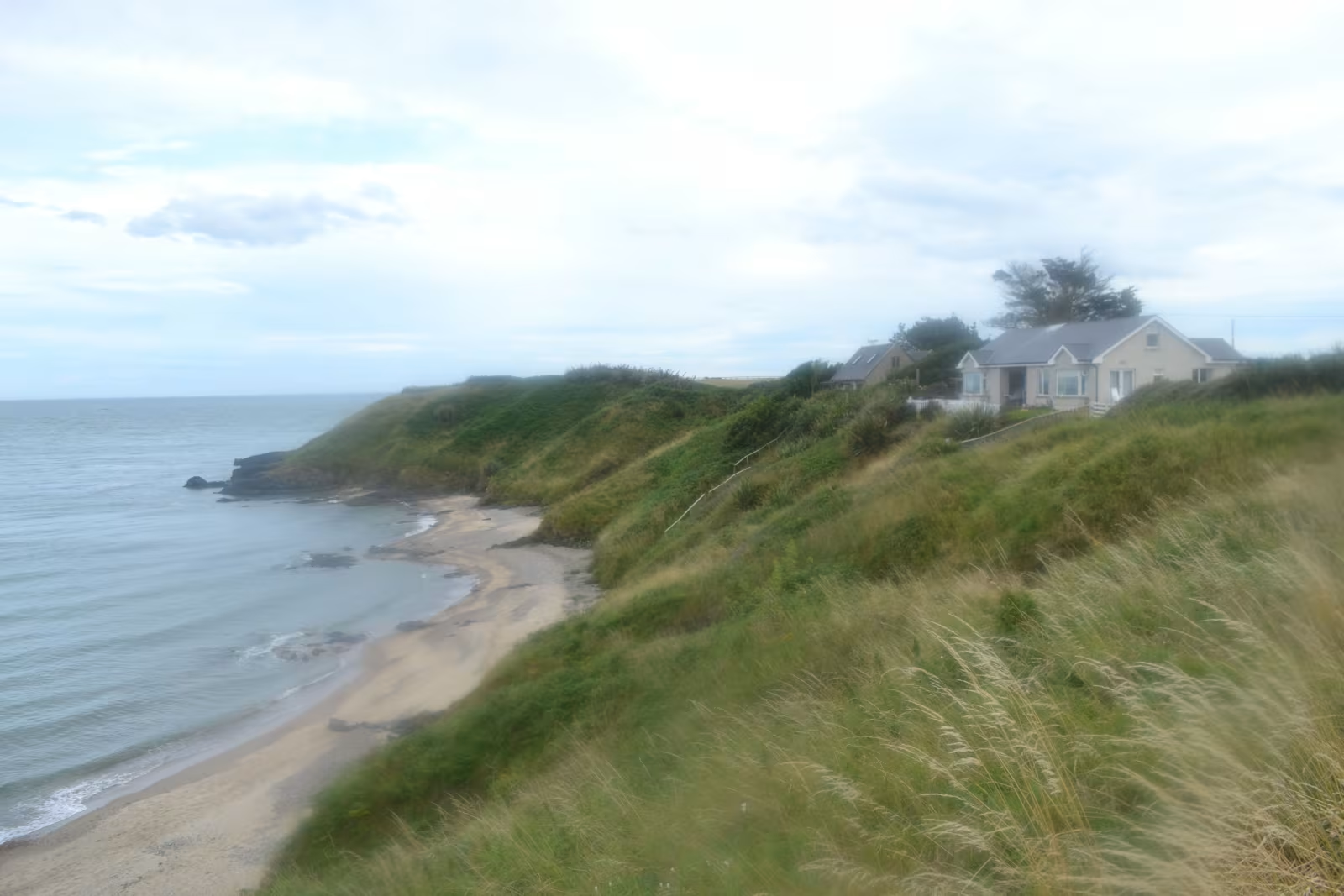
The dunes and why they matter
The dune system behind both beaches is a designated Special Area of Conservation. Marram grass and a range of rare coastal plants have been stabilising these dunes for considerably longer than anyone has been visiting them, and they don't need any help. Stick to the access paths and the beach itself. The roped barriers are not suggestions.
What the dunes do for you from the beach is a different matter. They frame the sky, they give the beach its unmanicured quality that you don't always get at heavily developed Irish coastal resorts, and on a clear afternoon with the sun coming in at an angle the way the grasses move in the wind is worth watching. Brittas Bay has no promenade, no amusements, no permanent commercial layer built on top of it. The food vans in summer are grand, but the beach itself is just beach. That's most of the reason people keep coming back.
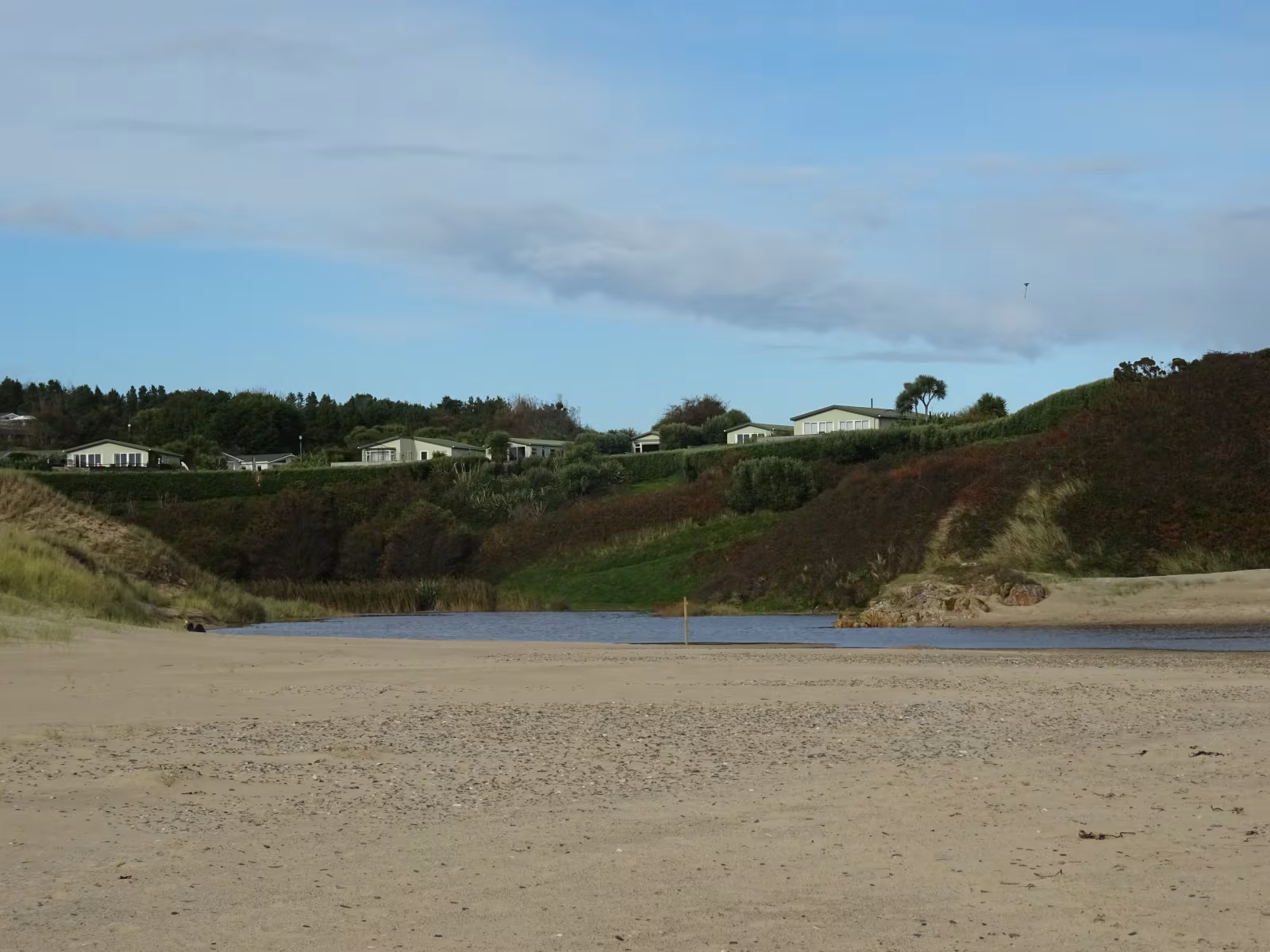
The swimming
The beach faces east into the Irish Sea, which gives you manageable waves and water temperatures that fall into three honest categories: swimmable in July and August, bracing in June and September, and character-building at every other time of year. Lifeguards patrol the main swimming area during the summer season, flag system in operation. Swim between the flags when the guards are on duty, particularly with children. The beach shelves gently, which makes it well suited for families and less dramatic for anyone hoping to bodysurf anything impressive.
It's not primarily a surf beach in the way the Atlantic coast beaches are, though on a decent swell there are boards. Current water quality information is available from the EPA before you travel, which is worth a quick check if you're specifically planning to swim rather than walk and paddle. Both North and South Beach have historically held good water quality status; the EPA results confirm current standing each year.
Building a day around it
Brittas Bay works well as a standalone beach day and equally well paired with the rest of what Wicklow offers. The Wicklow Mountains are about twenty minutes west, and the natural shape of a good county day is mountains in the morning and coast in the afternoon. You get the high ground while the air is still fresh and you get the sea when it's warm. It requires a reasonable degree of organisational competence to not arrive at the beach already thoroughly knackered from the hills, but the attempt is worth making.
The Greystones to Bray cliff walk is a couple of hours north and one of the finest coastal walks on this side of the country. It pairs well with an afternoon at Brittas if you've got the legs for it. If you're spending a few days in the area, Powerscourt Estate is in the north of the county and makes a natural complement: formal gardens in the morning, miles of open sand in the afternoon, and you sleep well either way.
The practical side
Food vans operate in the car parks through summer and the chips are exactly the right level of salty after a few hours in the sea, which is either a coincidence or some very well-targeted positioning on someone's part. Bring your own lunch if you want more than that, and bring enough water for the afternoon, since the nearest proper supermarket is back up the road in Wicklow Town. Toilets are at the main car parks during summer.
Parking charges apply in season; rates are set by Wicklow County Council and change year to year, so check their website or read the signs on arrival. The North Beach car park fills first on busy days. Arriving early on summer weekends is the simple answer. Weekdays in summer are a genuinely different experience from weekends: the same beach, a fraction of the people, and the kind of parking situation that doesn't involve anyone directing you into a field.
How far is Brittas Bay from Dublin?
Brittas Bay is approximately sixty-five kilometres south of Dublin city centre, about twelve kilometres south of Wicklow Town. The drive takes around an hour in normal traffic on the N11 or M11. On busy summer weekends the approach roads slow down and the journey takes longer. There is a train service to Wicklow Town with a bus connection from there to the beach area; check current timetables on the Irish Rail and Bus Éireann websites before travelling.
Does Brittas Bay have lifeguards?
Yes. Lifeguards operate at the main swimming area during the summer season, typically from late June through August. The guarded zone is marked with flags and you should swim inside it, particularly with children. Outside the summer season the beach is unguarded. Check Wicklow County Council's website for the current season's lifeguard dates before you travel.
How busy does Brittas Bay get in summer?
Very busy on sunny weekends in July and August. Car parks fill by midday on good weather days and queuing on the approach roads is common. To avoid the worst of it, arrive before ten in the morning or after four in the afternoon on summer weekends. Weekdays are noticeably quieter. May, June and September offer good weather with significantly smaller crowds, which is when people with any control over their schedule tend to visit.
Is Brittas Bay good for children?
Yes, it is one of the most family-friendly beaches on the east coast of Ireland. The sea shelves gradually into the water making it safe for wading, the main swimming area is lifeguarded in summer, and the North Beach is close to the car park and seasonal food vans. The stream between the North and South beaches is an additional draw for younger children. The sand dunes are a protected area and should not be climbed, but the beach itself gives children plenty of room.
Is there parking at Brittas Bay?
Yes, with car parks at both the North Beach and South Beach. Parking charges apply during the summer season, set by Wicklow County Council. The North Beach car park is the larger of the two and fills first on busy days. Arriving early on summer weekends gives the best chance of a space without queuing. Weekdays in summer are considerably less pressured than weekends for parking.
What else is there to do near Brittas Bay?
Wicklow Town is twelve kilometres north and worth a stop for its county gaol and harbour area. The Wicklow Mountains National Park is about twenty minutes west. For those with more time in the county, the Military Road through Sally Gap is one of the finest drives in the country and fits naturally with an afternoon at the beach, provided you manage the timing and don't arrive at either one already exhausted from the other.