
You'll walk past the jaunting car drivers at the main gate and think "maybe later," and then you'll come back from the house and the gardens and the farms two and a half hours after you went in, and you'll hire one. That's more or less how Muckross works. It rewards you slowly, and it's significantly better than it looks on the map, which shows it as a dot on the shore of a very large national park.
The house itself
Muckross House was built in 1843 for Henry Arthur Herbert and his wife Mary Balfour Herbert, who was a serious watercolour painter, not a hobby one. The building is Tudor Revival, 65 rooms, and it sits at the end of a long drive lined with rhododendrons that look extraordinary in late May and spend the rest of the year aggressively trying to take over the park. Both things can be true at once.
Queen Victoria visited in 1861 with Prince Albert and enough attendants to fill a small hotel. The Herberts prepared the house, the grounds, and essentially half of Killarney at a cost that was reportedly ruinous. The queen had a fine time. The Herberts were, depending on which account you read, in serious difficulty shortly after. There's a lesson in there about hosting royalty that apparently needed to be relearned several times across Irish history.
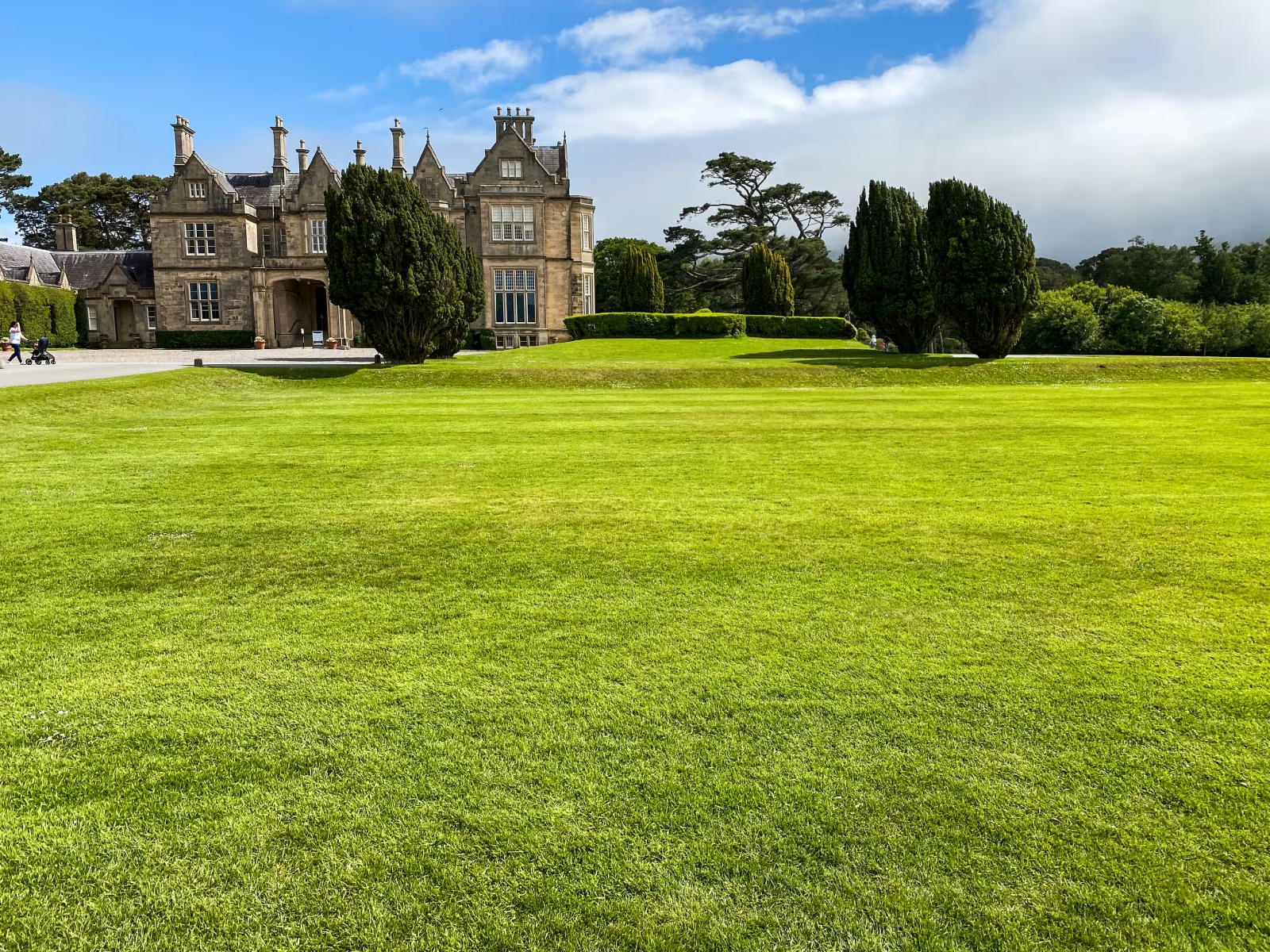
The house changed hands a couple of times before being bought in 1911 by William Bowers Bourn, a Californian who had done very well in mining, for his daughter Maud and her husband Arthur Rose Vincent. When Maud and Arthur decided in 1932, following the deaths of the Bourns, to gift the entire Muckross Estate to the Irish Free State as a memorial to her parents, they gave up around 11,000 acres of the best ground in Kerry. That gift created what became Killarney National Park, the oldest national park in Ireland. It was an act of serious generosity that gets about a quarter of the acknowledgement it deserves.
The indoor tour takes around an hour. You start in the basement, which is where you get your head around the scale of what running a place like this actually meant for the people who worked there. The kitchen, the laundry, the servants' quarters, the still room, the dairy. Around 200 people were employed on the estate at its height. Most of them had their whole working lives in those basement corridors and never needed to see the formal dining room. The tour is good at showing you both worlds, which is what makes it worth the admission over a self-guided wander of the rooms.
The gardens
The gardens are free to enter and will take longer than you expect, which is grand. There's a formal terraced section to the south of the house with the kind of planting that requires a full-time team of gardeners and clearly always has had one. Behind the house there's a rock garden built on a natural limestone outcrop that's considerably better than most rock gardens, and a walled garden that's been brought back into productive use. The yew tunnel is the detail people remember: a long, low walkway through ancient yew trees that were here before the house was, and that will almost certainly be here after.
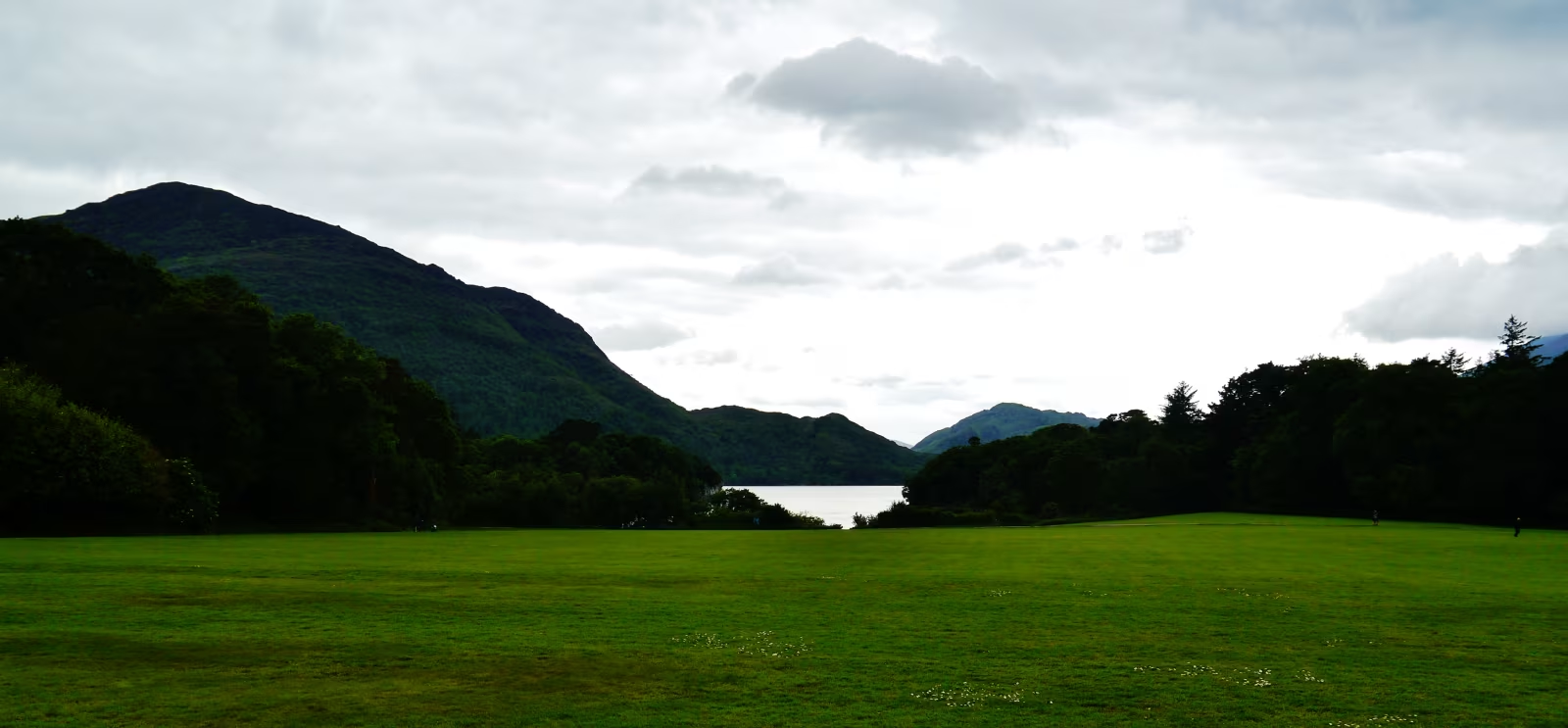
The grounds connect directly to the national park path network, so you can walk from the formal gardens into old native oak woodland in about ten minutes. The shore of Muckross Lake is a twenty-minute walk from the house. On a quiet morning, with the mountains behind the far shore and the water flat, you'll stand there longer than you planned to. The broader Killarney National Park covers 26,000 acres and most of it is accessible on foot from here, which is worth keeping in mind if the weather turns and you need somewhere to keep moving.
The Traditional Farms
This is the part that most visitors either don't know about or park in the "next time" column and then never get to. The Muckross Traditional Farms are three working farmsteads set up to show farm life in Kerry in the 1930s and 1940s, the last period before rural electrification changed what daily life looked like. The decision to set them in that specific decade was deliberate: it's the last era in which pre-industrial farming techniques were genuinely in daily use rather than being staged for educational purposes.
Each farm represents a different type. One is a labourer's cottage with a small plot and minimal resources. One is a mid-sized working farm with livestock. One is a larger farm with the full range of equipment that implies. The buildings are all authentic period structures, moved and restored rather than built new, and the people working them are demonstrating techniques that were standard practice within living memory: butter churning, thatching, turf working, animal husbandry. Your man running the demonstrations usually has strong opinions on how things are done and will share them, which is entirely the right approach.
The farms are a separate admission from the house, around seven or eight euro, and worth it on their own terms. The practical reality of rural life in Kerry before electrification, with no running water, no refrigeration, total dependence on what the land could produce, comes through in a way that a panel in a museum wouldn't quite manage. It's fifteen minutes' walk from the house, which is about right for clearing your head between the formal tour and this.
The jaunting cars
The jaunting cars are horse-drawn carriages and the drivers are stationed at the main entrance, which is where the slightly sales-forward encounter happens and which puts some people off entirely. Don't let it. The drivers know every route in the park, every viewpoint, every small story attached to every bridge and boathouse, and they've been doing this long enough that the commentary has been refined to something genuinely worth hearing. You hire the whole car rather than an individual seat, so it works out better value than it looks for a couple or a small group.
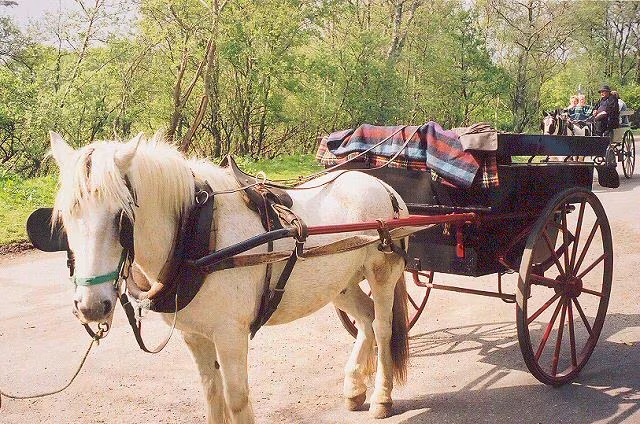
The standard circuit goes toward Torc Waterfall or Dinis Cottage and back, roughly ninety minutes. You can also walk the same routes, and there's a good argument for doing both on different parts of the same day. The path from Muckross to Torc Waterfall is about two and a half kilometres on flat ground along the lakeshore, a pleasant thirty-minute walk. Most visitors stop at the base of the falls. Keep going up the stone staircase above and the woods open out into something much quieter, with the better views. If you're planning a day entirely without a car, the guide to Killarney without driving covers bike hire, walking routes, and everything you can reasonably reach on foot from the town centre or from Muckross itself.
How to pair it with the rest of the park
Ross Castle, on the shore of Lough Leane, is three kilometres along the lakeshore from Muckross and a natural pairing. You can hire a rowing boat from the castle to reach Innisfallen Island, which has the remains of a seventh-century monastic settlement in the middle of the lake, and the whole thing makes for a full day on the water and the woods. Some people do the Gap of Dunloe in the morning and Muckross in the afternoon, which requires an early start but is not unreasonable. The Gap is on the far side of the MacGillycuddy's Reeks and takes roughly four hours for the full valley walk. The two experiences are different enough that the combination doesn't feel like repetition.
Practical details
Muckross House is five kilometres from Killarney town on the N71 Kenmare road. The entrance is well signposted and there's a free car park. The house tour is around nine to ten euro for adults, with family and concession rates available. The Traditional Farms are a separate ticket at around seven to eight euro, or there's a combined ticket that saves you a couple of euro on both. The formal gardens and grounds are free year-round. The house and farms run from April through October, with full working demonstrations at the farms on specific days, which is worth checking on the heritage Ireland website before you go.
From Killarney town, the lakeside path through the national park brings you to Muckross in about forty-five minutes on foot or twenty minutes on a bike. Bike hire in the town runs around fifteen euro for a full day and is the right choice if the weather is holding. Kerry being Kerry, it's worth having a rain jacket regardless, but the house and farms keep you covered if things deteriorate, and the gardens are pleasant in the rain in their own way. There are worse places to be stuck.
How much does Muckross House cost to visit?
The guided indoor tour of Muckross House costs around nine to ten euro for adults, with reduced rates for children and concessions. A family ticket is available. The Muckross Traditional Farms are a separate admission of around seven to eight euro, or you can buy a combined house and farms ticket for a saving. The formal gardens and estate grounds are free and have no closing time. Jaunting car hire is a separate cost at the main entrance, typically around 40 to 50 euro per carriage for the standard route around the park.
Is Muckross Traditional Farms worth visiting?
Yes. The three working farmsteads show farm life in Kerry in the 1930s and 1940s, before rural electrification, using authentic period buildings and live demonstrations of traditional techniques. It is a distinctly different experience from the house tour and works well as a standalone visit. Allow at least an hour, more if the working demonstrations are running. Check beforehand that you are visiting on a day with active demonstrations, as these are not available on every day throughout the season.
How do I get to Muckross House from Killarney town?
Muckross House is five kilometres from Killarney town on the N71 Kenmare road. By car, follow the signposting from the town centre and park in the free car park at the main gate. On foot or by bike, the lakeside path through the national park runs from the Knockreer Estate on the edge of town to Muckross in about 45 minutes walking or 20 minutes cycling. Bike hire is available in Killarney town for around 15 euro per day. Jaunting cars can be hired in the town for a return trip, though many visitors pick one up at the Muckross gate for the in-park routes.
What is the best time of year to visit Muckross?
May and June offer the best combination of conditions. The rhododendrons on the main drive are in full bloom in late May, the formal gardens are at their peak, the days are long, and the visitor numbers are lower than in July and August. October is also good, with the estate woodland turning in autumn colour and quiet midweek days. July and August are the busiest months and can feel crowded at the house entrance and jaunting car stands. The gardens and park paths are worth visiting year-round. The house and farms are open April through October.
Can you walk from Muckross House to Torc Waterfall?
Yes. The path from the Muckross main entrance to Torc Waterfall is about 2.5 kilometres along the lake shore, roughly 30 minutes on flat ground. Most visitors stop at the base of the falls, which are impressive particularly after rain. If you continue up the stone staircase above the falls, the path opens into native woodland and the views down toward Muckross Lake are considerably better than from the base. The round trip from Muckross House to Torc and back takes about 90 minutes at an easy pace.