
Arthur Guinness signed a 9,000-year lease on the land underneath St James's Gate in 1759. He was twenty-three, he had just moved to Dublin, he had £100 from his godfather's estate in his pocket, and he was either very confident or absolutely delusional about the future of his little brewery. Three centuries in, the view from his end of that lease looks pretty sound.
The Guinness Storehouse is the old 1904 fermentation plant on the brewery site, and it is currently the most visited paid tourist attraction in Ireland. That's not a recommendation and it's not a warning; it's just context. About a million and a half people come through here every year, which means the queues at peak time are a fixture of life, the experience has been engineered to within an inch of its life, and the final pint in the Gravity Bar is, all the same, actually very good.
The building and getting there
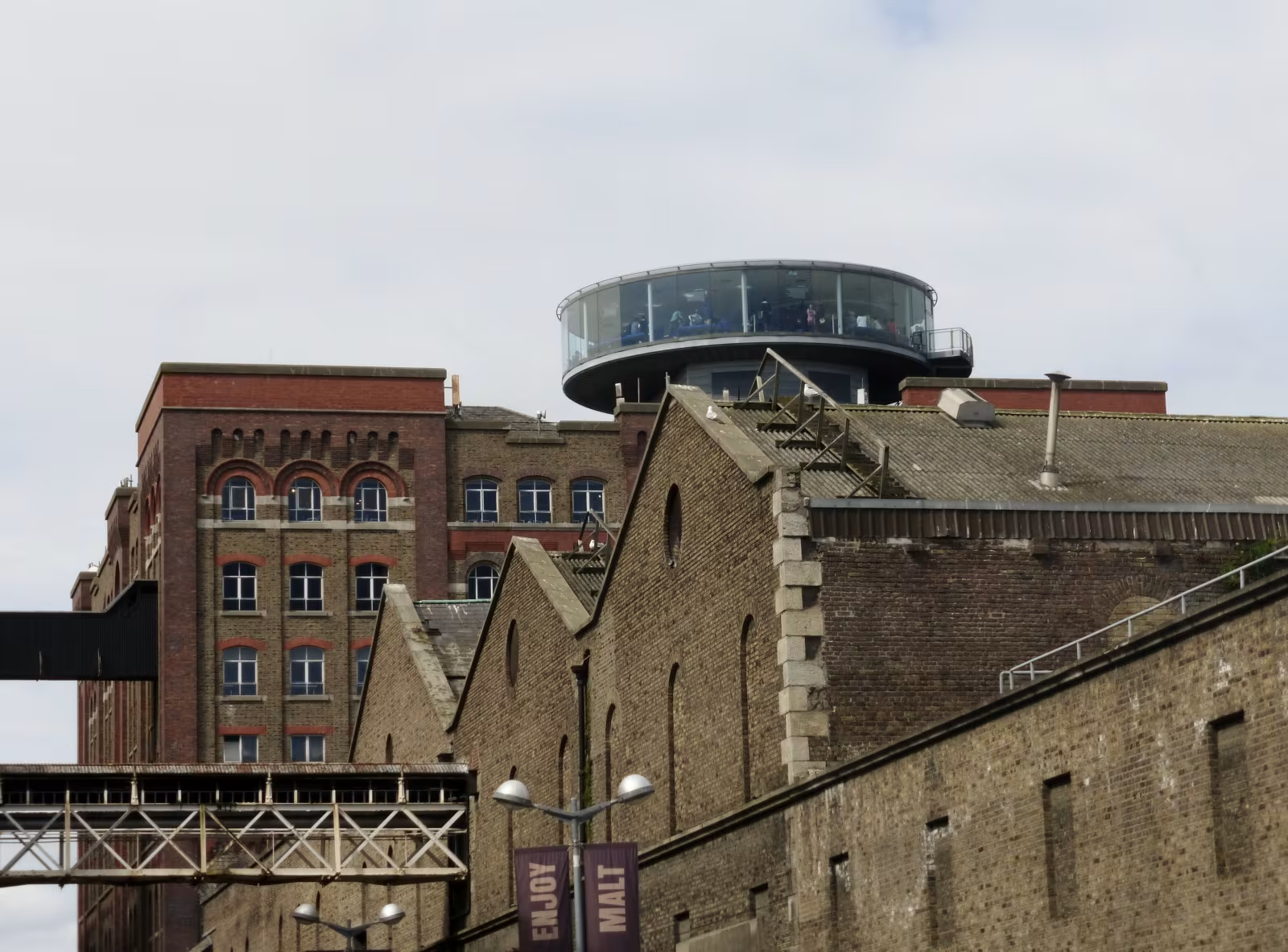
The Storehouse is in the Liberties, about a ten-minute walk southwest of Christ Church Cathedral. The address is St James's Gate, which is also the name of the brewery that's been operating continuously on this land since the same year Captain Cook set sail for the Pacific. If you're in the city centre, you can walk it in about 25 minutes, or take the 13, 40, or 123 Dublin Bus route. The Luas Red Line stops at Fatima, which is a short walk away. Cabs are no bother.
The building itself is the part that surprises most people. You're expecting something, and then you walk into the atrium and it opens up above you into the shape of a pint glass, seven floors high, with daylight coming down through the top. Fair play to the architects, because it absolutely works. It stops people in their tracks, which is presumably the point, and it does it reliably on every visit regardless of how many times you've read about it in advance.
The seven floors
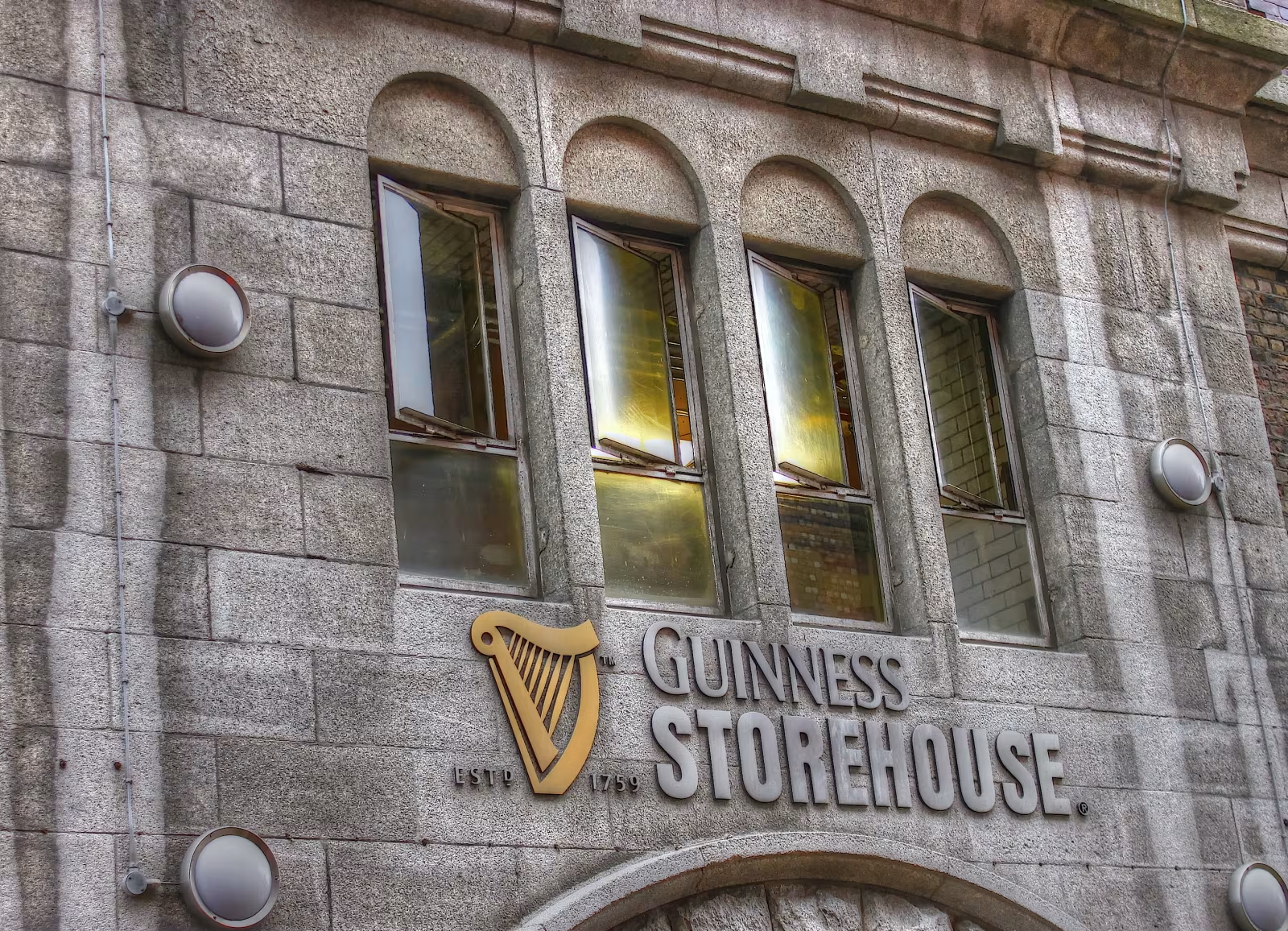
The ground floor is the atrium. The first floor is Arthur Guinness himself, the original lease, and the story of the early brewery. This is worth five minutes of your time even if you're only here for the pint: the man signed away 9,000 years of rent at £45 per year, which works out at roughly the cost of a decent parking space in Dublin city per century, and it's one of the great commercial confidence moves in Irish history. He also knocked a hole in the city wall at Thomas Street when the city council tried to cut off his water supply. He wasn't a man who tolerated small obstacles.
Second floor covers ingredients. Barley, hops, water, yeast, and the roasted barley that gives Guinness its colour and that coffee-bitter finish. It's not a secret at this point, but the presentation is good. Third floor is cooperage and transport, covering the old wooden barrel era, the horse-drawn drays, the barges that moved the stout across the Liffey toward the Guinness Wharf. This is the floor where your man at the interactive station will demonstrate barrel-tapping with the slightly theatrical level of difficulty that makes you feel better about your own attempt.
But the advertising floor. That's the one. Guinness has been running advertising campaigns since the 1920s, and a significant portion of the most iconic print and poster work in the history of British and Irish advertising came out of those campaigns. The toucan. The pelican. The "Guinness is good for you" era. John Gilroy's anthropomorphic animals. If you have any interest in design or visual history, give yourself a proper half-hour here, because it's better than most gallery exhibitions covering the same period. It is absolutely the floor everyone rushes through to get to the pint, and they are absolutely wrong to do it.
The Gravity Bar
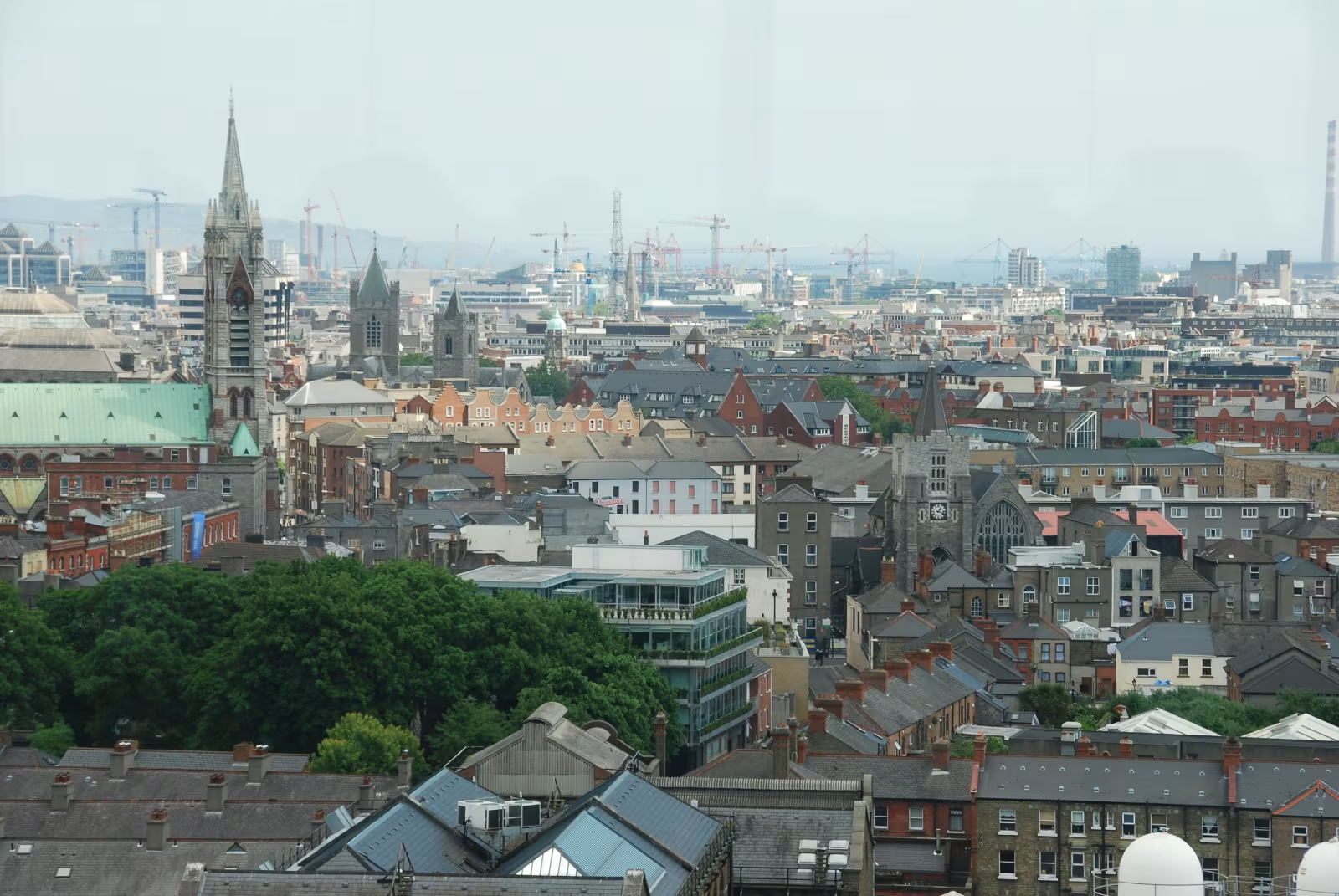
The Gravity Bar is on the seventh floor, wrapped in 360-degree glass, and your admission includes one pint at the bar. On a clear day, and Dublin provides one occasionally if you wait long enough, you can see the Dublin Mountains to the south, the Wicklow Mountains beyond them, the Poolbeg chimneys standing over Dublin Bay, the Howth peninsula curving away to the north, and the whole city laid out below you as if someone had arranged it specifically for this purpose. It is very, very good.
The pint itself, served here, is reliably excellent. There's a theory about altitude, though the altitude involved is technically about 55 metres, which is not quite Everest. What it actually is: you've been on your feet for ninety minutes, you've been told the complete story of this drink, and now you're standing in a glass room above Dublin holding the original article. That works regardless of physics.
On a rainy day, which Dublin provides more reliably than the clear ones, the Gravity Bar is still good. The cloud moves, the city takes on a softer character, and the pint tastes exactly the same. It also gives you something to look at through the glass while you feel quietly superior to everyone outside getting drenched on O'Connell Street.
The perfect pour and whether to bother
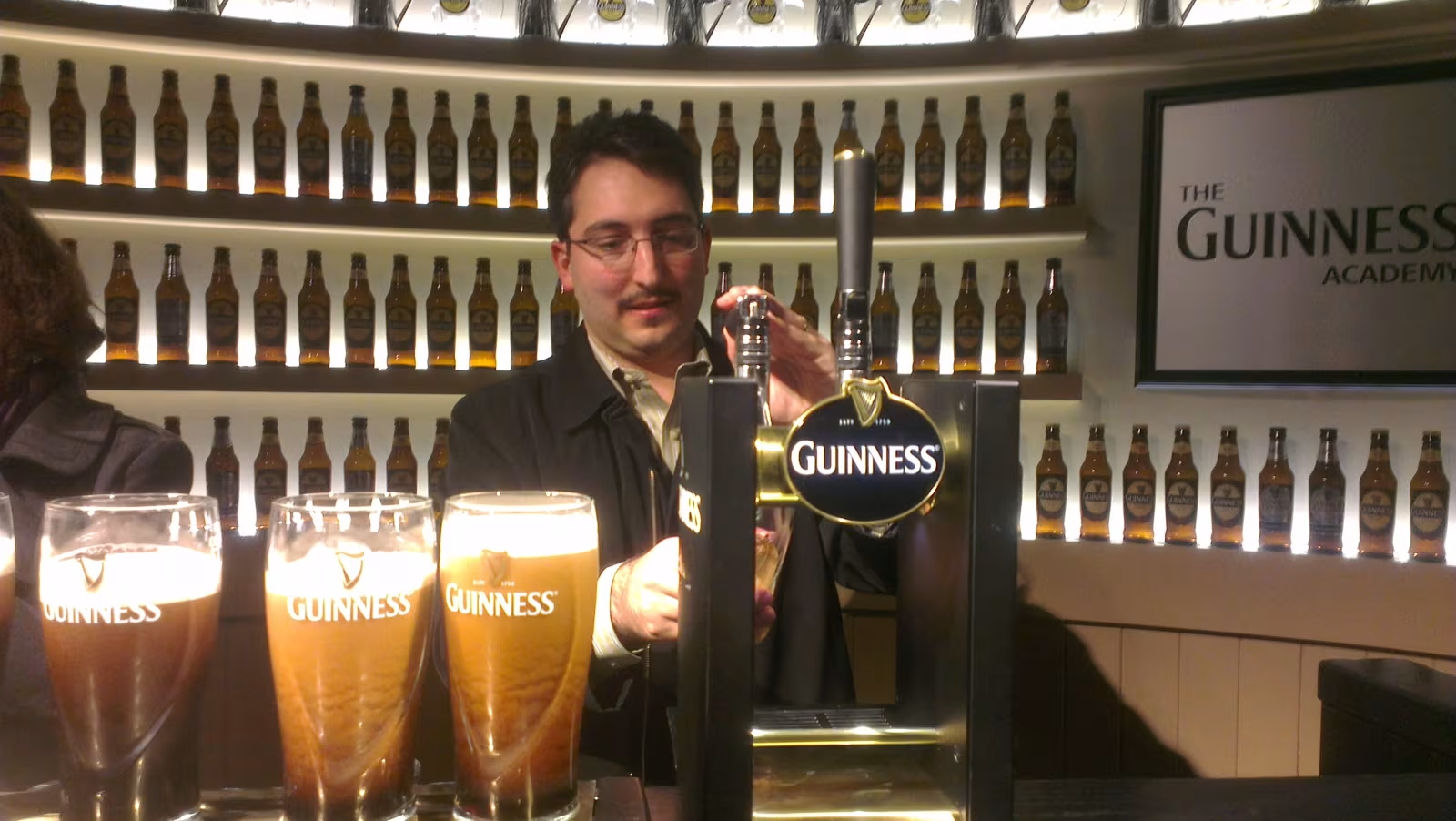
There's a pour-your-own-pint experience available at extra cost, where you get taught the two-part pour, the 119.5-second wait, and the specific angle that produces a flat top. It's a good thing to do if you're with someone who'd enjoy it, and it produces a genuinely acceptable pint. You do receive a certificate. Whether a certificate for pouring a pint is a thing you want on your wall depends entirely on you and on how you feel about your remaining wall space.
Is it worth going?
If you're in Dublin for two nights or more: yes, once. The advertising floor alone earns a solid portion of the ticket, the Gravity Bar is the best panoramic view of the city that doesn't require a helicopter, and the Arthur Guinness founding story is genuinely well told. The experience is openly commercial and doesn't try to hide what it is, which is at least honest. It's a world-class brand visitor centre, not a museum, and if you go in with that expectation clearly set, you'll come out happy.
If you're in Dublin for 24 hours and haven't been to Kilmainham Gaol yet, do that first. The Kilmainham guide covers what you're walking into. It offers a different kind of historical weight, and the Storehouse will still be there on a longer visit.
The city's pub scene, which is the natural continuation of a Guinness education, is covered in the Dublin pubs beyond Temple Bar guide. There are several places in the Liberties and Portobello worth walking to from the Storehouse gates. If it's bucketing down and you want a broader list of covered Dublin options, the full indoor Dublin guide covers what's worth your time on a wet afternoon.
How much does the Guinness Storehouse cost?
Adult tickets cost approximately €28 to €32 depending on the time slot and how far in advance you book, with some early slots offering a small online discount. The price includes entry to all seven floors and one pint at the Gravity Bar. A connoisseur upgrade adding the pour-your-own experience and a guided tasting costs around €40. Children under 13 are not permitted in the Gravity Bar due to licensing. Family and student rates are available. Always check the Guinness Storehouse website for current pricing before you book, as prices are adjusted seasonally and can change from year to year.
How do I get to the Guinness Storehouse from Dublin city centre?
Dublin Bus routes 13, 40, and 123 all serve James's Street and the surrounding area. The walk from Dame Street in the city centre takes around 25 minutes on flat ground. The Luas Red Line stops at Fatima, which is a short walk from the entrance. A taxi from O'Connell Street takes about ten minutes in normal traffic. There is no DART connection nearby. Parking at the Storehouse itself is limited and the walk or public transport is the more practical option for most visitors arriving from the city centre.
Is the Guinness Storehouse worth visiting?
For most visitors staying two nights or more in Dublin, yes. The Gravity Bar panorama is one of the best public views of the city, the advertising exhibition is genuinely excellent, and the founding story of the brewery is well presented. The visit is a polished commercial experience rather than an independent museum, and it works best when approached with that understanding. If you have only one day in Dublin and need to choose, Kilmainham Gaol and the Book of Kells at Trinity College offer a different kind of historical depth. For a second day or a longer stay, the Storehouse earns its ticket price.
Do I need to book in advance for the Guinness Storehouse?
Yes. Between May and September, booking ahead is strongly recommended as the Storehouse draws its largest crowds and peak-hour queues without a ticket can run to 30 or 45 minutes. Online booking also secures your preferred time slot and occasionally offers a small price saving. Outside summer, walk-in visits are more feasible, but booking in advance removes any uncertainty and is generally the sensible approach regardless of the time of year.
How long does the Guinness Storehouse take?
Allow two hours for a visit that takes in all seven floors and includes a pint at the Gravity Bar. You can move through in 90 minutes if you push, but rushing past the advertising floor to reach the pint sooner is the single most reliably regrettable decision visitors make in this building. The pint is there when you get there. The advertising floor is the good part.