
You won't regret coming here, but you should know what you're in for. Kilmainham Gaol is not a fun afternoon. It is genuinely moving in parts, slow and deliberate in the best way, and probably the most important thing you can visit in Dublin if you want to understand the country you're standing in. Book it early, give it ninety minutes, and don't skip the execution yard even if the sky opens.
A quick word on why it matters
The gaol opened in 1796 as a county prison and never stopped filling up with people the British administration considered a problem. Every major rebellion between 1798 and 1916 sent people through its gates: United Irishmen, Young Irelanders, Fenians, Land Leaguers. Parnell did a stint in 1881 and 1882. Robert Emmet was held here before his execution in 1803. Anne Devlin, his housekeeper, was imprisoned here for three years and subjected to torture she refused to break under, which is the kind of story you don't forget five minutes after hearing it.
The 1916 Easter Rising is where the gaol becomes something else entirely. In the weeks after the Rising, fourteen of its leaders were executed in the small courtyard at the back of the building. Among them: Patrick Pearse, Thomas Clarke, Thomas MacDonagh, Joseph Plunkett. James Connolly was so severely wounded from street fighting that he couldn't stand. He was shot strapped to a chair. The night before Plunkett was executed, he married Grace Gifford in the gaol chapel with ten minutes allowed for the ceremony and armed soldiers as witnesses. The gaol closed in 1924, having held the Free State's prisoners during the Civil War, and sat empty for decades before restoration began in the sixties.
What the tour is actually like
The tour is guided only, which is the right call. The guide you get will make or break the experience, and in practice the guides here are excellent. Ninety minutes, starting with an audio-visual presentation in the West Wing and moving through the cells, the chapel, and into the Victorian East Wing. The tour ends in Stonebreakers' Yard.
The older part of the prison, the West Wing, is cold and tight and dark. The cells are small enough that you stop, half-convinced the walls stepped forwards while you weren't looking. The guide will explain how many people were held in each cell during the Famine period and you'll do your own mental arithmetic and come out wrong because the number is impossible. The building was designed for 100 prisoners. In the late 1840s it held over 9,000.
Kids who are interested in history take to this very well. Kids who aren't won't be bored either, because a Victorian prison is still a Victorian prison and that's inherently dramatic. The under-12s are free (though they still need a ticket, because that's the system), so there's no excuse not to bring them. Just know that the execution yard is the last stop and it's worth a quiet five minutes there.
The East Wing
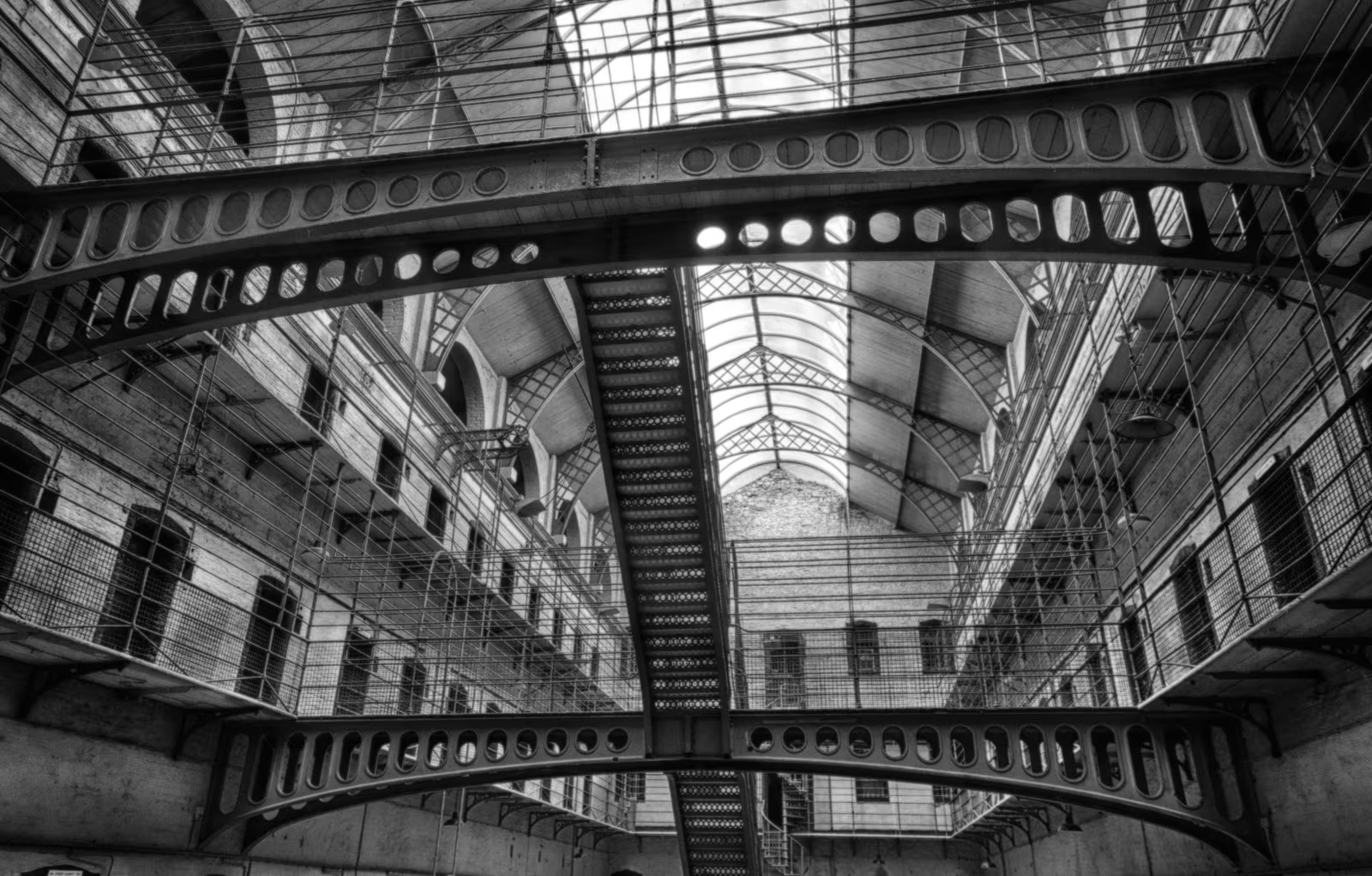
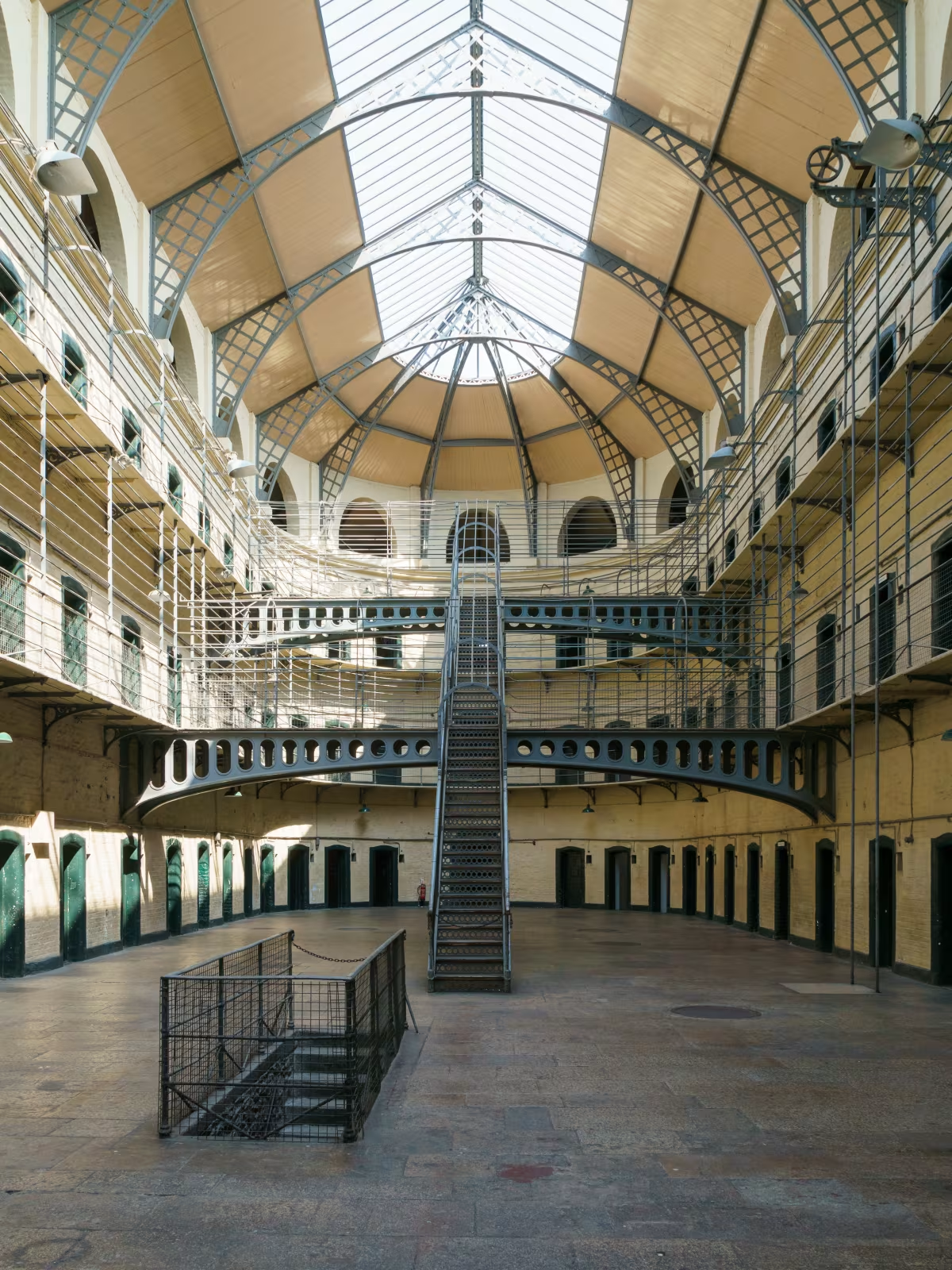
The Victorian East Wing was added in 1861 and it's the part that ends up in every photograph. The central atrium is three tiers of cast iron walkways curving up to a vaulted glass ceiling, with the cells opening off each level. It was designed in the panopticon style so that a single warder could stand in the middle and see every cell door at once. It works. You can see every cell door at once and it makes you slightly uncomfortable in a way the architect presumably intended for different reasons.
This is also where political prisoners of some standing were held, which meant conditions were somewhat better than the West Wing. Parnell's cell is pointed out. The contrast between the two wings tells you something about how the system worked: the old cells for the poor, the newer wing for the political class, everyone there because the same government wanted them out of the way.
The execution yard
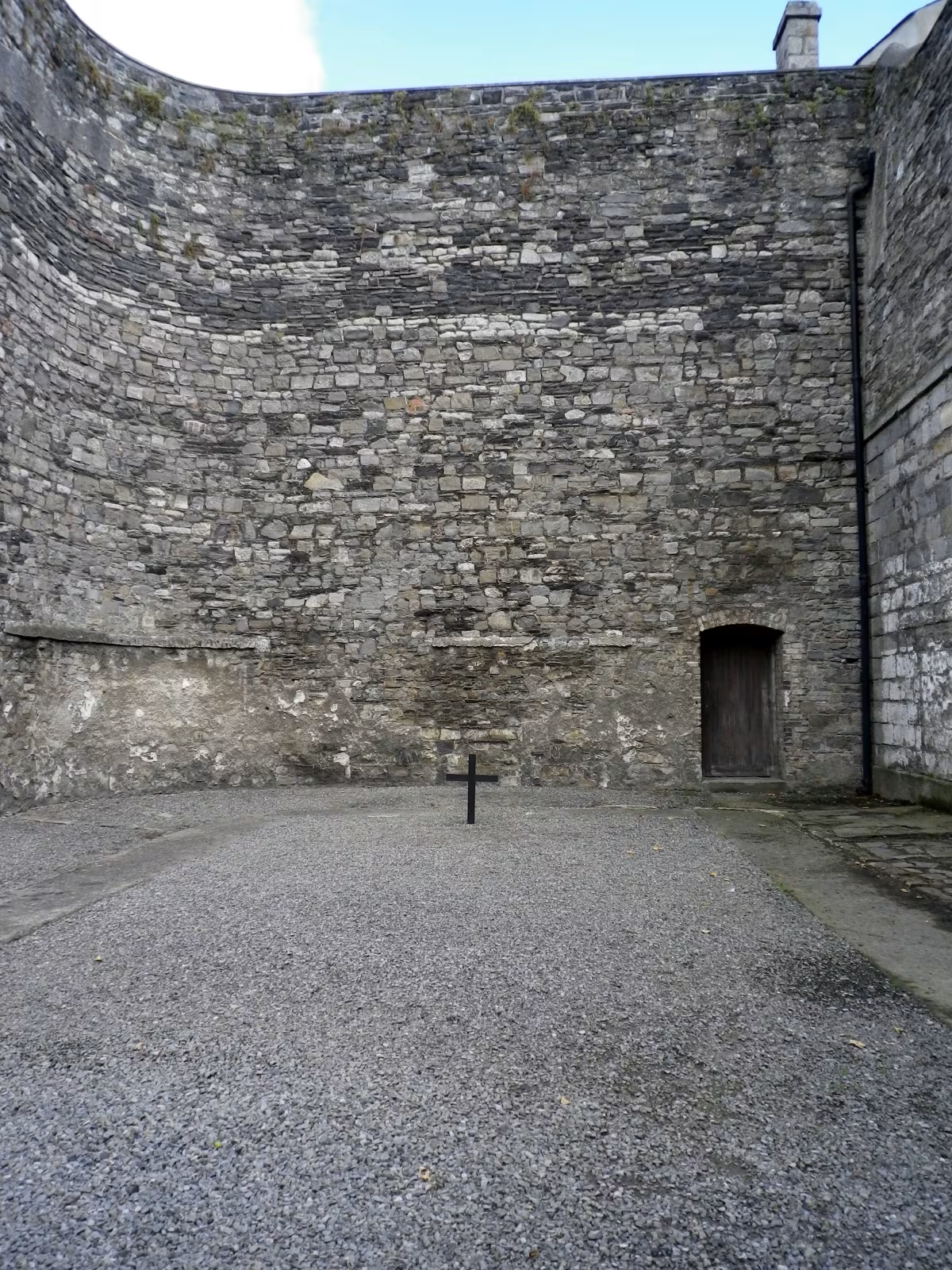
Stonebreakers' Yard is a small, enclosed courtyard and it stops you the way a small, enclosed place with that particular history tends to. The fourteen executions took place between the 3rd and 12th of May, 1916. The last was James Connolly, who was carried to the yard on a stretcher and shot while strapped to a chair. Public opinion in Ireland, which had been largely hostile or indifferent to the Rising itself, shifted dramatically after news of the executions spread. The British government's decision to execute the leaders in secret, without jury trial, is widely credited with turning Irish public opinion toward independence in a way the Rising itself had failed to do.
The guide finishes here. You get some time in the yard before the tour ends. It's the right place to finish. Give it the five minutes.
Booking, timing, and getting there
Pre-booking is not a suggestion. In summer the tours sell out weeks in advance, sometimes months. The only legitimate booking site is kilmainhamgaolmuseum.ie. There are third-party resellers that charge a fee on top, and they're not worth it. Adult admission is €8. Seniors pay €6, students and children aged 12 to 17 pay €4 each, and under-12s are free with a ticket. A family of two adults and up to three children between 12 and 17 pays €20. The museum opens at 10:30 AM year-round, closing at 5:15 PM October to March and 5:45 PM April to September. The visitor centre opens at 9:00 AM if you want to arrive early. Allow ninety minutes for the tour, plus time to look around the museum before or after.
The gaol is on Inchicore Road, about 3.5 kilometres west of the city centre. A bus from the city takes fifteen to twenty minutes. The Luas Red Line to Heuston Station leaves you a fifteen-minute walk away, which is grand if the weather is with you. A taxi from the centre takes about ten minutes and costs around €12 to €15. On foot from the city it's a forty-minute walk west through the Liberties, which is a decent way to arrive and costs nothing.
The Phoenix Park is a twenty-minute walk north of the gaol, so the two make a natural pairing for a full day in this part of Dublin. If you're putting together a list of indoor things to do in Dublin, Kilmainham sits near the top. For figuring out how to reach it and similar spots, the guide to getting around Dublin without a car covers the buses and Luas well. Afterwards, head back toward the Liberties and find somewhere decent for a pint, which you'll have earned.
Do I need to book Kilmainham Gaol in advance?
Yes, and this is non-negotiable in summer. Tours sell out weeks or months ahead during the busy season. Tickets are only available through the official website at kilmainhamgaolmuseum.ie. There is no walk-in admission. If you arrive without a booking you will not get in. Book as early as possible, particularly for weekend visits between June and August.
How long is the Kilmainham Gaol tour?
The guided tour lasts approximately ninety minutes, including an audio-visual presentation at the start. It covers both wings of the prison, the chapel, and ends in Stonebreakers' Yard where the 1916 leaders were executed. Allow at least two hours for your visit to include the museum and time at your own pace before or after the guided section.
How do I get to Kilmainham Gaol from Dublin city centre?
Kilmainham Gaol is on Inchicore Road, Dublin 8, approximately 3.5 kilometres west of the city centre. Buses from the city centre take fifteen to twenty minutes. The Luas Red Line to Heuston Station is about a fifteen-minute walk from the gaol. A taxi takes around ten minutes and costs €12 to €15. It is also walkable from the centre in about forty minutes, heading west through the Liberties district.
What is the East Wing of Kilmainham Gaol?
The East Wing is the Victorian section added to the original prison in 1861. It features a central atrium with three tiers of cast iron walkways and a vaulted glass ceiling, built in the panopticon style so a single guard could observe all cell doors simultaneously. It held many prominent political prisoners including Charles Stewart Parnell. The wing is the most photographed part of the gaol and houses the museum collection on the upper level.
Who was executed at Kilmainham Gaol in 1916?
Fourteen leaders of the 1916 Easter Rising were executed at Kilmainham Gaol between May 3rd and May 12th, 1916: Patrick Pearse, Thomas Clarke, Thomas MacDonagh, Joseph Plunkett, Edward Daly, Michael O'Hanrahan, William Pearse, John MacBride, Éamonn Ceannt, Michael Mallin, Con Colbert, Seán Heuston, Seán Mac Diarmada, and James Connolly. Connolly, badly wounded during the Rising, was carried to the yard on a stretcher and shot while strapped to a chair. The executions, carried out without jury trial, significantly shifted Irish public opinion toward independence.