
Kylemore Abbey is a Victorian castle in Connemara that a wealthy Manchester doctor built in the 1860s because he loved his wife and apparently had very specific ideas about how to show it. It is one of the most photographed buildings in Ireland, and when you see it for the first time, sitting against the slope of the Twelve Bens with its reflection in Pollacapall Lough, you will understand exactly why. You will also have your phone out within about forty-five seconds, fierce predictable of you, and that is grand.
The story behind it
Mitchell Henry was a Manchester-born surgeon who inherited a textile fortune, married a woman called Margaret Vaughan in 1861, and spent the rest of his married life trying to build her the nicest possible house. The site in Connemara had been a temporary fishing lodge when the couple honeymooned there in 1852. Mitchell bought the surrounding land and between 1867 and 1868 built the castle you see today, plus a working farm, a walled garden, and eventually a miniature cathedral on the grounds. He also became an MP and brought fresh water and better roads to Connemara. By the standards of Victorian landlords in rural Ireland, your man was actually sound.
Margaret died in Egypt in 1874, catching a fever while the couple were on holiday. She was forty-five. Mitchell brought her body home and built the Gothic Church, a scaled-down version of Christchurch Cathedral in Dublin, as her mausoleum. It took four years to finish. He sold the estate in 1903 and never came back.
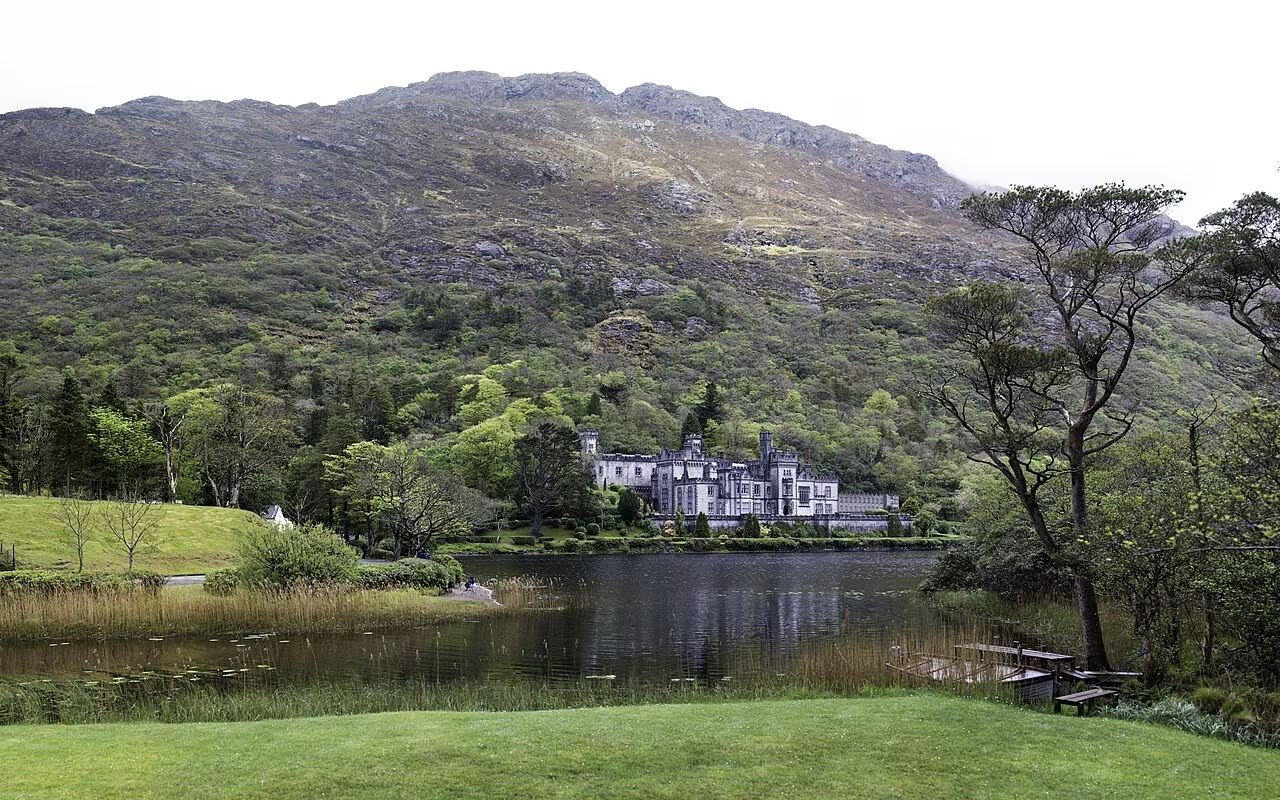
The Belgian chapter is equally strange and worth knowing. In 1914, a community of Irish Benedictine nuns had been running a school in Ypres for centuries. When the German army invaded Belgium, the nuns fled with their students across Europe and eventually arrived in Ireland in 1916, seeking a permanent home. They bought Kylemore in 1920, ran a boarding school there until 2010, and the community is still there, still working. The monastery is active and the nuns are real, not a heritage display.
The Gothic Church
Walk from the main abbey building toward the lake and you will reach the Gothic Church after roughly fifteen minutes on foot. It looks improbably grand for what it is. Mitchell spent more on this memorial church than most people spend on houses, and it shows. The proportions are near-cathedral inside, with detailed stone carvings and good stained glass, and the family mausoleum is just off the main nave. It is, by any accounting, a lot of church for one memorial.
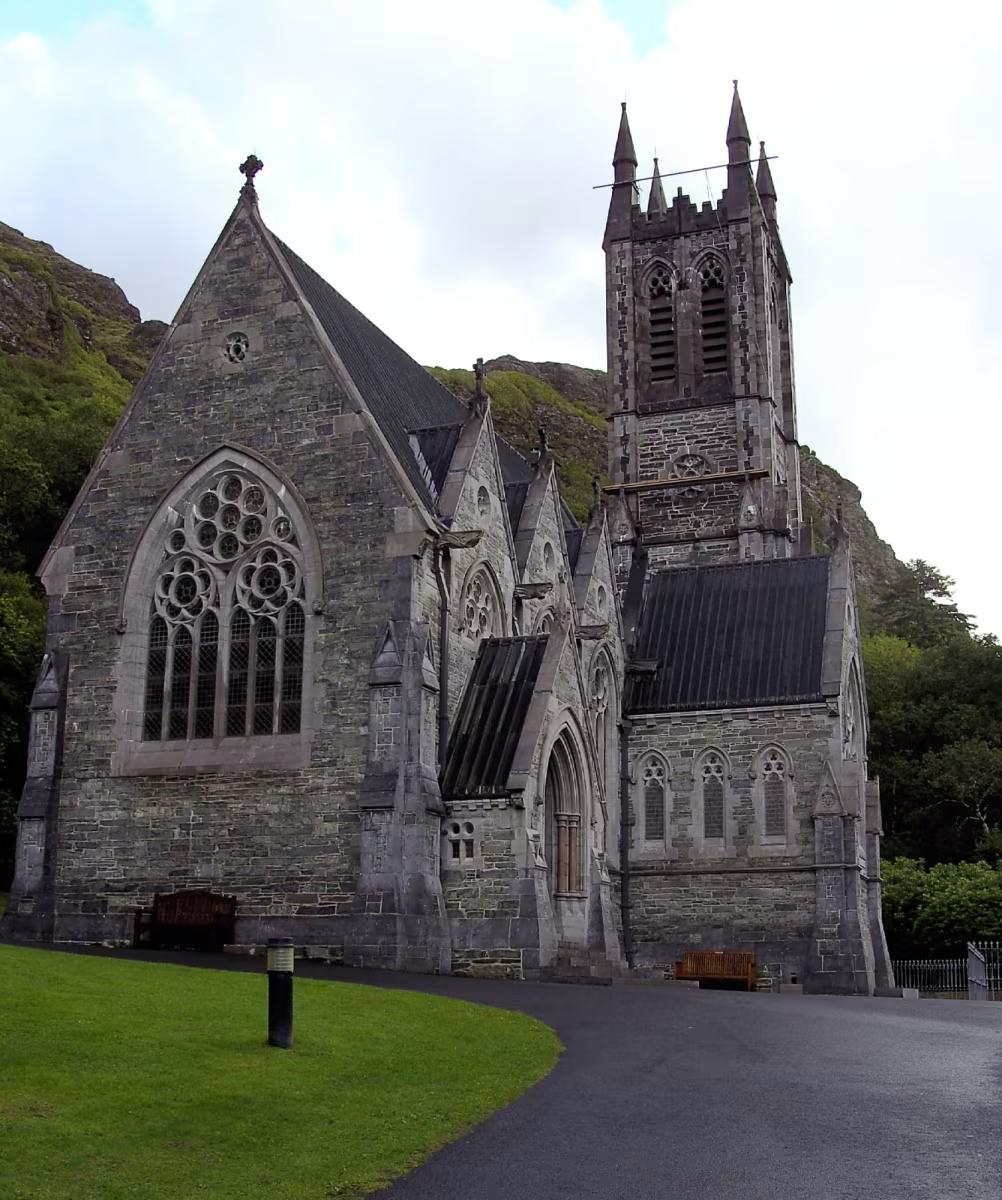
The church is fully restored and included in the standard admission. The path down to it follows the lough shore, which on a still morning is properly lovely. On a wet morning it is still worth doing. Bring your waterproofs regardless, because this is Connemara and the weather has its own schedule.
The Victorian Walled Garden
The walled garden is about six acres and originally required around forty staff to maintain. Mitchell Henry built twenty-one glasshouses at the peak. The whole thing fell into ruin after he sold up, and the nuns did not have the budget to restore it, so it stayed overgrown until the 1990s when a major restoration programme began.

Today it is properly working again, with heritage fruit and vegetables, cut flowers, and several of the original glasshouses replanted. There is a head gardener who takes it seriously. It is one of the better restored Victorian kitchen gardens in Ireland, and the fact that it sits in the middle of a mountain landscape rather than behind a standard country house makes it feel pleasantly incongruous. A six-acre walled garden in Connemara is the sort of thing that makes you wonder what Mitchell Henry was actually like, and whether he ever slept.
What is inside the abbey
The ground floor of the main building is open to visitors. You get a museum about the Benedictine community, the original entrance hall, a drawing room, and a dining room, all restored and furnished in period style. The nuns occupy the private areas of the building, so you are not wandering through the whole thing. The context provided about the Belgian nuns and the school they ran is genuinely interesting and not presented in a way that feels like a lecture.
There is a craft shop and a tea room. The scones are worth getting. After a circuit of the walled garden and the walk to the Gothic Church, you will want them, and they will not let you down.
Getting there
Kylemore is on the N59, about 67 kilometres from Galway city, which takes roughly ninety minutes by car. The road passes through the Inagh Valley between the Twelve Bens and the Maumturks, and it is one of the better drives in the country. This is not a consolation prize for the distance.
If you are without a car, Healy Tours and Lally Tours both run full-day coach trips to Connemara from Galway that stop at Kylemore. The large coaches are on a fixed timetable; a smaller operator gives you more flexibility. Full practical details are in the guide to day trips from Galway.
Parking at Kylemore is ample and free. Admission in 2026 is around fifteen euros for adults; check ahead as pricing shifts by season. Children and students are cheaper. The full visit, including the walled garden and the Gothic Church walk, takes two to three hours at a comfortable pace. Most people treating Kylemore as part of a broader Connemara day use it as a morning anchor and continue west toward Clifden from there.
If you are in Galway for a day or two before the Connemara trip, the Galway on foot guide covers the city centre walk from Shop Street to the Spanish Arch, which takes about two hours and needs no transport. For where to eat when you get back, the Galway food guide has the current picture from the Saturday market to the Michelin-starred end. And if the evening calls for something livelier, the guide to trad pubs in Galway is worth reading before you go out.
How much does it cost to visit Kylemore Abbey?
Admission in 2026 is around fifteen euros for adults, with reduced rates for children, students, and groups. The price includes access to the main abbey building, the Gothic Church, and the Victorian Walled Garden. Check the Kylemore Abbey website for current seasonal pricing before you visit.
How far is Kylemore Abbey from Galway city?
Kylemore is about 67 kilometres from Galway city centre, which takes roughly ninety minutes by car on the N59 via Oughterard and the Inagh Valley. From Clifden, on the western end of Connemara, it is about 20 kilometres east, or twenty to twenty-five minutes by car.
Is there a tour from Galway to Kylemore Abbey?
Yes. Several operators run full-day coach tours to Connemara from Galway that include Kylemore Abbey as a stop. Healy Tours and Lally Tours both depart regularly from Eyre Square. A smaller operator is better if you want more time at the abbey and flexibility over the schedule.
Can you go inside Kylemore Abbey?
Yes. The ground floor of the main building is open to visitors and includes a museum about the Benedictine community, the restored Victorian rooms, and an exhibition on the history of the site. The upper floors and the nuns private quarters are not accessible. The Gothic Church and the full Victorian Walled Garden are both included in the standard admission.
How long should I allow for a visit?
Two to three hours covers the abbey interior, the Gothic Church walk, and a full circuit of the walled garden at a comfortable pace. If you want time in the tea room or to linger in the garden, allow three hours. Most visitors combining Kylemore with a broader Connemara loop treat it as a two-to-three-hour morning stop before continuing west.