The murals in Belfast are not decorative. They are the city talking to itself, and to you, and they have been doing it since the 1970s. There are over three hundred across West Belfast alone, and the ones that end up in every travel article are just the introduction. Spend a morning on the Falls Road and the Shankill Road and you will understand more about the last fifty years of Northern Ireland than you would from any museum exhibit. Not because anyone is trying to make you feel anything, but because this is what the walls actually say, and there are a lot of walls.
The Falls Road
The Falls Road is the main artery of West Belfast's nationalist and republican community. The murals cover everything: Irish history, the 1981 hunger strikers, solidarity with Palestine and the Basque Country, Celtic mythology, the Irish language. The visual tradition is painterly and detailed, and the best of them are genuinely striking work, whatever you think of the politics behind them.
The Bobby Sands mural on Sevastopol Street, just off the Falls Road, is the most famous. It covers the entire gable end of the Sinn Féin constituency offices and has been there since 1981. Your man was twenty-seven years old when he died. That is the thing that hits you standing in front of it. The portrait itself is calm, almost gentle, which makes it more difficult to look at.
The International Wall
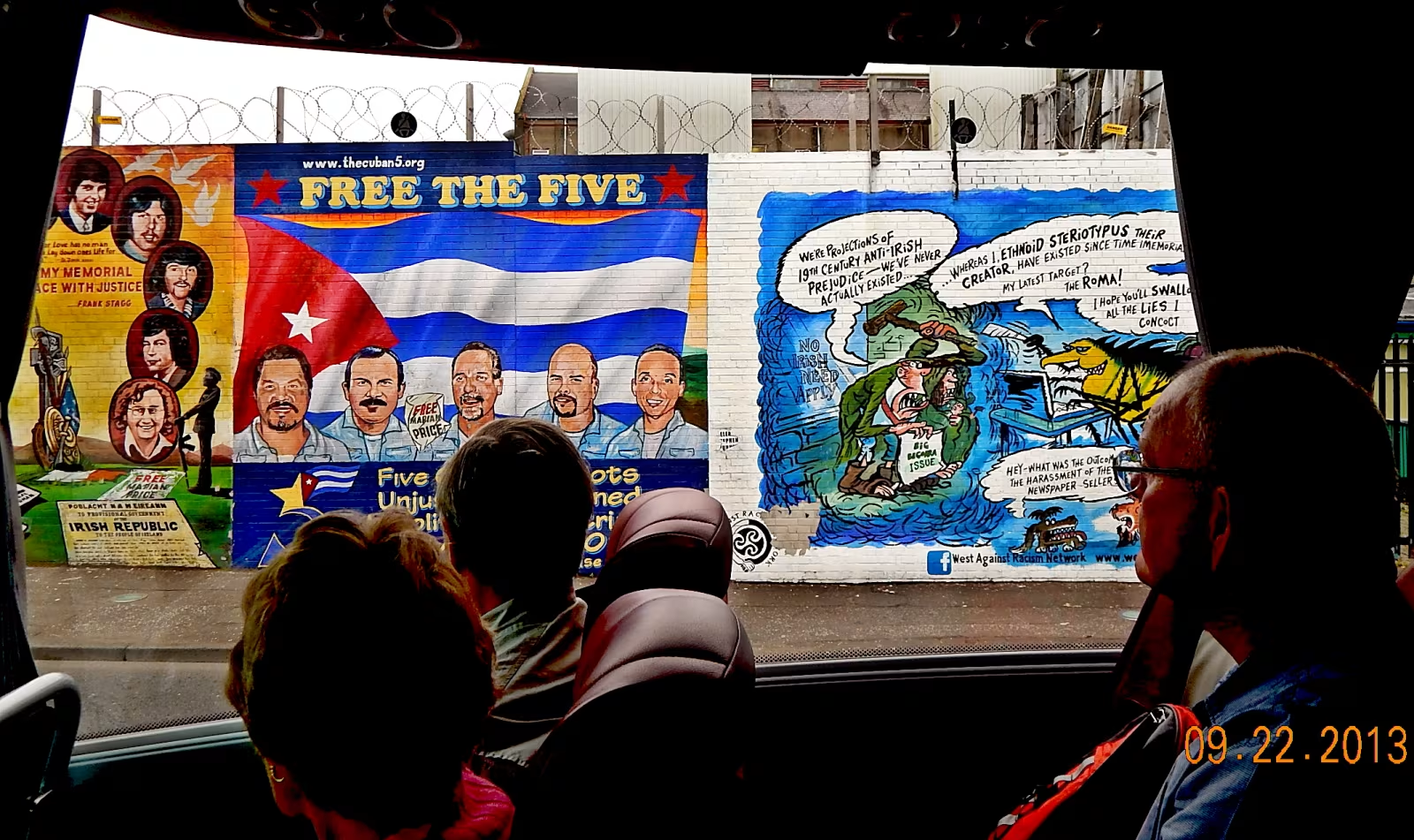
A few minutes further along the Falls Road you hit the International Wall on Divis Street. This section changes regularly as the community repaints with new subjects. On any given visit you might find murals on the Zapatistas, the Palestinian cause, the 1916 Rising, the anti-apartheid movement, or a portrait of a local person recently lost. It is the most alive part of the circuit, and photographing it is absolutely fine, there is nothing shy about these murals.
The Shankill Road
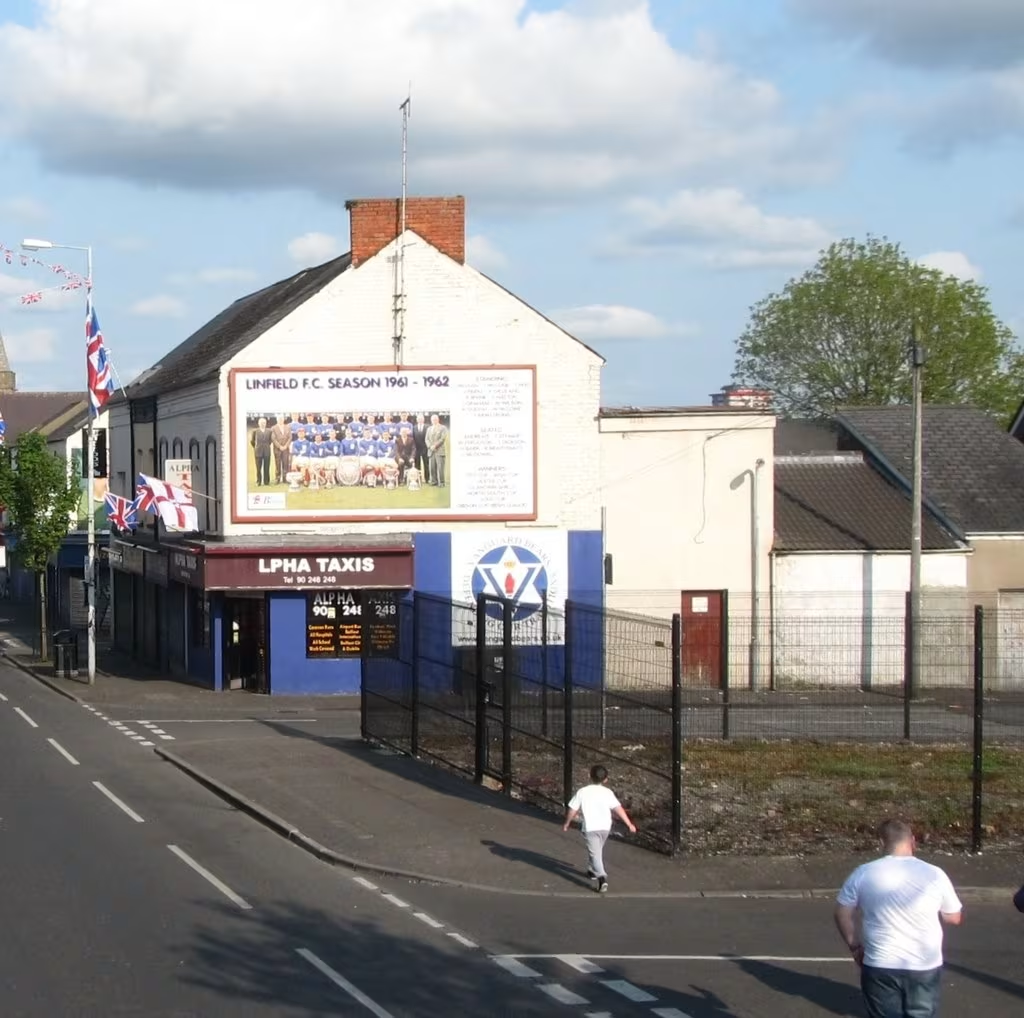
The Shankill Road is five minutes from the Falls Road, and a world apart. The loyalist murals here operate in a different visual tradition: union flags, crown imagery, paramilitary commemorations, and Battle of the Boyne iconography. Where Falls Road murals are often painterly and figurative, the Shankill ones lean harder on heraldry and text. Both are honest about what they believe. That is either uncomfortable or clarifying, depending on what you came expecting.
Walking from the Falls Road to the Shankill takes about ten minutes through the backstreets, past the peace walls. If you are doing this on foot, walk through the Northumberland Street gate. If you are in a Black Cab, your driver will run both directions and field questions. That second option has things the first one does not.
The Peace Walls
The interface barriers between nationalist and loyalist streets are called the peace walls, which is one of those names that rewards a moment's thought. The first ones went up in August 1969, built as temporary measures after rioting. There are still over ninety in greater Belfast, which tells you something about what temporary means here.
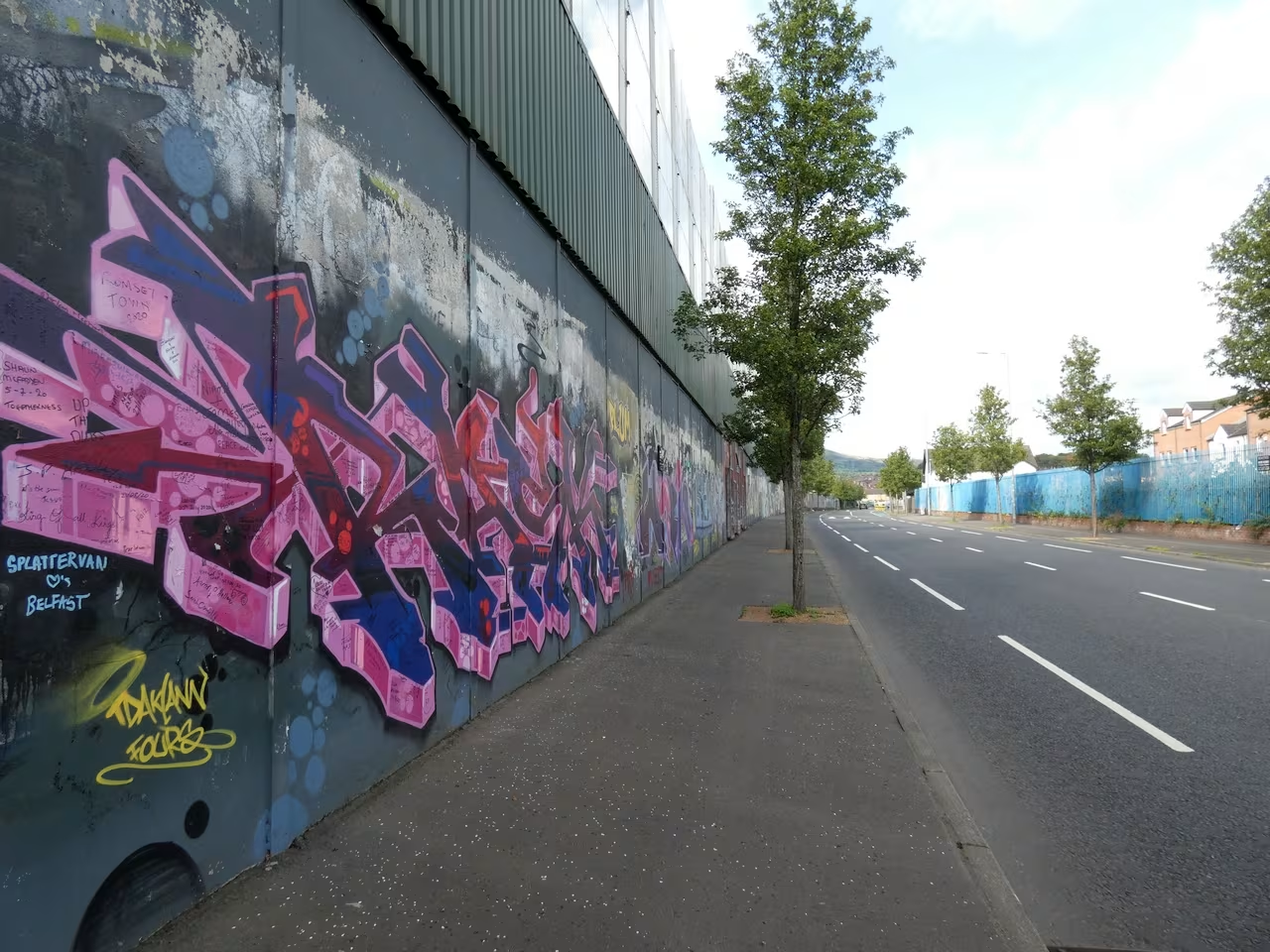
The biggest stretch runs along Cupar Way and Northumberland Street. Both sides of the wall are covered in signatures and messages of peace from visitors over the decades. Former heads of state, school groups from Japan and Brazil, people who came on a wet Tuesday and left something behind. The gates are still opened and closed daily in some spots, a habit from the height of the Troubles that nobody has quite gotten round to discontinuing. You are absolutely welcome to add your name. A biro is a grand thing to have with you.
The Black Cab Tour
You can walk all of this yourself, and it is straightforward to do. But the Black Cab tour is worth the money because of who is sitting in the front seat. The drivers, often people who grew up in these streets and lived through the worst of it, give context that no walking tour or printed map can match. You get the name behind a mural, the story of the street where something happened, the name of the person your driver knew personally. For the first-time walk through the city centre, you are on your own two feet and that is grand. West Belfast is different. The cab is worth it here.
A shared tour runs around forty pounds per person and takes ninety minutes to two hours. A private cab for up to four people is typically a hundred to a hundred and twenty pounds, and the conversation is usually better when it is just your group. Most tours cover both the Falls Road and the Shankill, though you can ask for one or the other. Book through your hotel, the tourist office on Donegall Place, or just flag a cab on the Falls Road itself. Most drivers on that road know the circuit, or will point you to the right one. The craic on a good tour is genuinely mighty, which is saying something given the subject matter.
Doing it on your own
From the city centre it is a twenty-minute walk or a short bus ride to the start of the Falls Road (Glider service or bus number 10). Walk west along the Falls from Divis Street, take in the International Wall and the Bobby Sands mural on Sevastopol Street, then continue to the Northumberland Street gate and cross through to the Shankill. Walk the Shankill east and get the bus back in. Allow two to three hours at a comfortable pace.
A free murals map is available from most hotels and hostels, and from the West Belfast Visitor Information point. It marks the main pieces with brief notes. Not as good as a driver who was there for the thing it depicts, but solid for finding your way around. After the murals, the food scene in Belfast city centre is twenty minutes away. Treat yourself to lunch. If you are making a full day of it, the Titanic Belfast museum fits well as an afternoon complement, the two halves of the city's modern story seen in one day. Between them, you will have seen something real.
Is it safe to visit the Falls Road and the Shankill Road?
Yes. Both are normal residential and commercial streets and visitors are completely welcome. The Good Friday Agreement was signed in 1998 and while underlying tensions remain, West Belfast is not dangerous for tourists. Thousands of people visit every week without incident. Use ordinary city sense: be respectful, do not photograph individuals without asking, and keep your voice down in any pub that is clearly a local. You will be absolutely fine.
How much does a Black Cab tour cost in Belfast?
A shared Black Cab tour covering both the Falls Road and the Shankill Road costs around £35 to £45 per person and takes about ninety minutes. A private cab for up to four people runs approximately £100 to £120 for a two-hour tour. Prices vary slightly between operators. Book through your hotel, a tourist information office, or by speaking to a driver directly on the Falls Road.
Can I see both the Falls Road and the Shankill on one tour?
Yes, and most operators offer this as the standard option. A full Black Cab tour covers the Falls Road murals, the International Wall on Divis Street, the Cupar Way and Northumberland Street peace walls, and the Shankill Road murals. Seeing both sides is what makes the experience worthwhile. If an operator only offers one, ask whether the other is available before you book.
Can I visit the peace walls without a guided tour?
Yes. The main peace walls on Cupar Way and Northumberland Street are publicly accessible and there is no admission charge. Walk there from the Falls Road or approach from the Shankill side via Lanark Way. Information boards are posted near the main gates. You can photograph the wall, add your signature, and explore at your own pace. The gates are generally open during daylight hours.
Photo credits: Bobby Sands mural © Darrin Antrobus, CC BY-SA 2.0. International Wall murals © Suzanne Mischyshyn, CC BY-SA 2.0. Shankill Road murals © Eric Jones, CC BY-SA 2.0. Cupar Way peace wall © Gerald England, CC BY-SA 2.0.