
Here's what most people do in Belfast: Titanic Quarter, murals tour, a feed in the Cathedral Quarter, maybe St George's on a Saturday. Here's what most people miss: the Ulster Museum, which is free, half an hour from the city centre by bus, and which has an Egyptian mummy who has been in Belfast longer than any of us can properly conceptualise. Takabuti has been on Stranmillis Road since 1835. The queue for the Titanic museum forms around the block in July. The Ulster Museum on a Wednesday afternoon is often just you and the dinosaurs. This is, in every sense, the correct way to do things.
The Botanic Gardens first
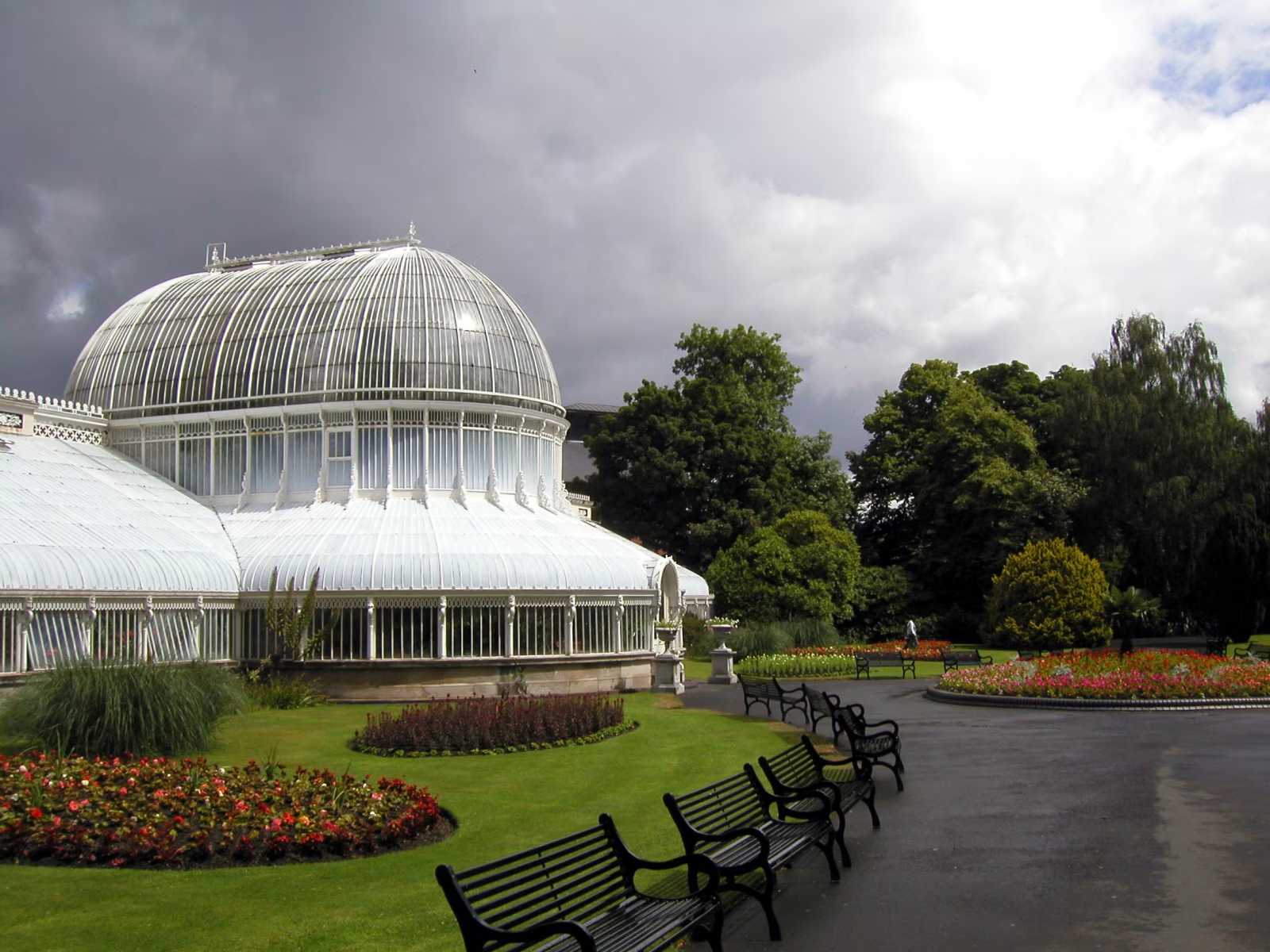
You'll arrive through the Botanic Gardens unless you specifically engineer it otherwise, and you shouldn't engineer it otherwise. Belfast Botanic Gardens are free, open from eight in the morning, and the Palm House alone is worth the detour. The glasshouse was built in two phases between 1839 and 1852 by Richard Turner, the same man who built the Palm House at Kew Gardens. It's a cast-iron curved structure on a scale you don't expect when you turn the corner from the Stranmillis Road gate, and it's full of tropical plants that have absolutely no business thriving this close to the Mourne Mountains. The hibiscus alone. Honestly.
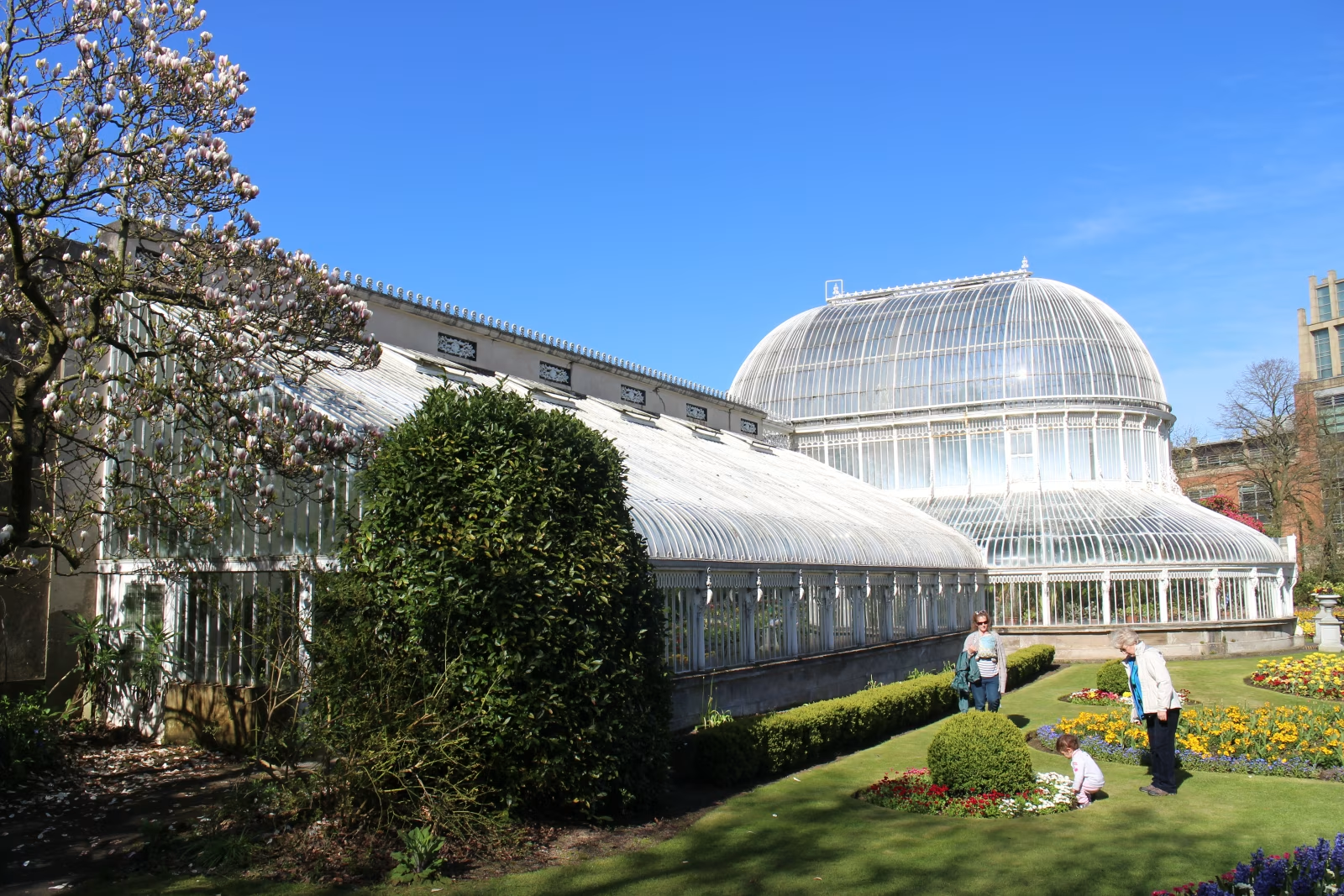
The Rose Garden is out front of the museum building. Queen's University is immediately next door, so on a good afternoon you have students reading on the lawns and people walking dogs and someone always doing something optimistic with a frisbee. It's the kind of public space Belfast does quietly well without making any kind of fuss about it.
The building and what to expect
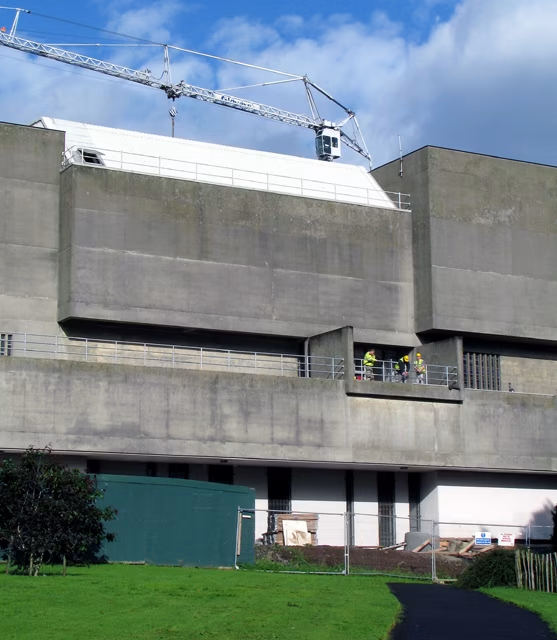
The current Ulster Museum building is the fourth to stand on this site. The main facade dates from a 1972 extension. It's one of those buildings that rewards walking in rather than photographing from the outside. Free to enter, Tuesday to Sunday, ten in the morning until five in the afternoon. Mondays are a day off for everyone in the building, including the mummies.
There's no timed entry, no booking system, no queue management. You walk in, get a free map at the desk, and go. The café does sandwiches and hot drinks. The gift shop is the usual thing. Neither of these is why you're there.
Takabuti
She arrived in Belfast in 1835, purchased at auction in Thebes by Thomas Greg, a local landowner who brought her home like a very particular kind of souvenir. She is approximately 2,500 years old. She has been studied more often and more thoroughly than almost any Egyptian mummy outside Egypt itself, and every decade's technology finds something the previous decade missed.
CT scanning in the early 2000s revealed a single wound between her ribs consistent with a knife entry. Genetic analysis published in recent years confirmed she was of Northern European ancestry on her mother's side, had red or auburn hair, and came from a middle-class family. She was in her twenties when she died. The case for murder is not exactly made, but it is made the way a raised eyebrow is sometimes the most efficient response available. Her case is in the Ancient Egypt gallery on the ground floor. She is completely worth the bus fare.
The Girona
In October 1588, a Spanish Armada galleas called the Girona wrecked on Lacada Point near the Giant's Causeway in a storm, taking around 1,300 men with her. For nearly four hundred years she lay on the seabed. In 1967, a Belgian marine archaeologist named Robert Stenuit found her.
What he brought up over two years of diving is now in the Ulster Museum: gold chains, jewelled pendants, pocket watches, a lapis lazuli and gold salamander brooch, a ring inscribed with "no tengo mas que darte" (I have nothing more to give you). Personal items from men who did not come home. The Ulster Museum holds the largest collection of Spanish Armada artefacts in the world, and it's in Belfast, and it's free to look at, and most visitors to the city have never heard of it. This is a genuine tragedy and also completely your gain.
Natural history and geology
The natural history collection covers Irish flora and fauna, geology, and a decent set of dinosaur fossil casts in the upper gallery. The geology section is worth slowing down in if you have any interest in where the land under your feet came from. The Giant's Causeway is a hexagonal rock formation famous the world over; the reasons it exists are a story that starts around sixty million years ago with a lava flow and gets genuinely strange. The Ulster Museum tells it with specimens you can stand next to, without dumbing it down.
The Irish wildlife section covers native species that died out in England hundreds of years ago and are quietly thriving up here: red squirrels, pine martens, breeding pairs of things you wouldn't expect this far north. It puts the hedgerows and bogs you've been driving through into a context that makes you look at them differently on the way back.
The art collection
The gallery upstairs runs from medieval to contemporary and has a solid Irish collection including works by Jack B. Yeats (brother of the poet, and a better painter than the poet was a poet, if that's a hill anyone wants to stand on) and Paul Henry, whose Connemara paintings look precisely like the landscape they depict, which sounds obvious until you notice how rarely that's true. The contemporary collection covers Northern Irish art across the twentieth century and is worth taking time with. It's quieter than the historical rooms downstairs and rewards a slower pace.
The museum's temporary exhibition programme brings in touring shows throughout the year. Worth a quick check of the website before you visit to see whether anything extra is running. The permanent collection alone is a full morning. Add an hour or so if there's a special exhibition on.
Getting there and planning your visit
The museum is on Stranmillis Road in the Queen's Quarter, directly next to Queen's University. From the city centre, the Glider G2 rapid transit or the number 8 bus from Donegall Square will get you there in around twenty minutes. On foot it's a thirty-five-minute walk through the university area along Bradbury Place and Stranmillis Road, which is a pleasant route if the weather is playing ball and, honestly, sometimes even when it isn't.
For food after your visit, the Ormeau Road and Stranmillis Road both have good options, and the full guide to eating in Belfast covers the best of the city. If you're building a full day, the Ulster Museum in the morning and the murals and peace walls in West Belfast in the afternoon covers a lot of ground in a single day (fifteen minutes by taxi between the two). Alternatively, a visit to Titanic Belfast in the afternoon gives you the city's two great free and paid institutions side by side, and the contrast says something real about what Belfast keeps and what it charges admission for. If this is your first visit to Belfast altogether, the essential first-day walk through the city centre is worth doing the day before, so you arrive here with a bit of a feel for the place already.
Is the Ulster Museum free?
Yes. Admission to the Ulster Museum is free for everyone, with no booking required. Temporary special exhibitions may occasionally charge a separate admission fee, but the permanent collection across all galleries is always free to enter. Opening hours are Tuesday to Sunday, 10am to 5pm. The museum is closed on Mondays.
How long should you spend at the Ulster Museum?
Two to three hours covers the main permanent galleries at a comfortable pace. Add another thirty to forty minutes for the Botanic Gardens before or after. If a temporary exhibition is running during your visit, allow an extra hour. The full experience, including the gardens, is a generous half-day.
What is the most famous exhibit in the Ulster Museum?
Takabuti, an Egyptian mummy brought to Belfast in 1835, is the most celebrated exhibit. She is approximately 2,500 years old and has been studied extensively, including CT scanning and genetic analysis that has revealed significant detail about her life and death. The museum also holds the largest collection of Spanish Armada artefacts in the world, recovered from the wreck of the Girona off the Antrim coast, which is equally significant in international terms.
Can children visit the Ulster Museum?
Yes, and the museum is well suited to children of most ages. The Egyptian mummies, the dinosaur fossil casts, and the natural history displays are all popular with younger visitors. Entry is free for all ages and no booking is needed. The Botanic Gardens immediately beside the museum have open lawns and paths that are good for children to move around in after time spent inside.
How do I get to the Ulster Museum from Belfast city centre?
The Glider G2 rapid transit and the number 8 bus from Donegall Square both stop close to the Botanic Gardens entrance on Stranmillis Road. Journey time is around twenty minutes. By taxi from the city centre it is five to ten minutes. On foot the walk is thirty to thirty-five minutes south along Bradbury Place and Stranmillis Road, passing Queen's University on the way.